At one minute past eight on a weekday morning, the telephone line at a GP surgery is already engaged. By then a fair number of its patients have had their first consultation, usually the night before, with a chatbot. They entered details of a rash or concerning pain into a consumer app and received a plausible explanation along with advice on the next steps. Some may never contact their GP surgery, while others may arrive with a list of possible diagnoses already in hand.
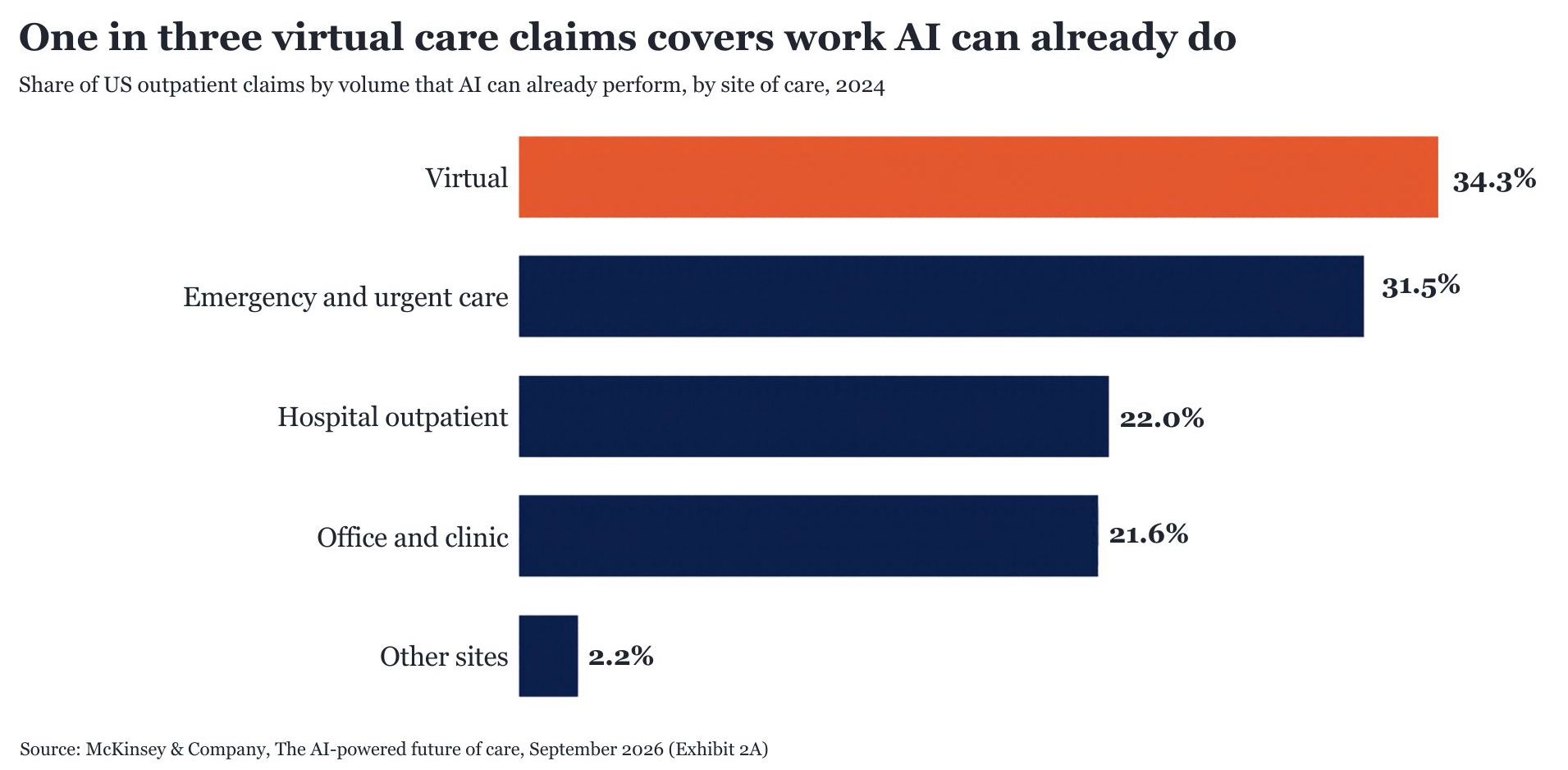
That behaviour sits behind a new American analysis of AI in outpatient care. It estimates that between 16 and 22 percent of US outpatient claims cover work, mainly low-complexity consultations and the reading of test results, that clinical AI could already perform. Close to a third of American adults consult chatbots about their health at least monthly. The report is written for US insurers, and British readers may be tempted to file it under foreign problems. That would be a mistake.
The NHS has no claims to lose, and its structural position is different. A single payer holds the longitudinal record and the referral pathway, the very assets that American insurers and technology firms are racing to assemble. The 10 Year Health Plan already casts the NHS App as the front door to care, with AI assistance promised inside it. Yet the front door patients actually use is increasingly commercial, built by companies with no duty to the waiting list and no obligation to route anyone into NHS capacity. The state's advantage is real only if it is exercised before habits harden.
Exercising it is harder than strategy documents suggest. Patient data sits across thousands of organisations and a long tail of supplier systems, and a single patient record remains an ambition. The reorganisation that folds NHS England into the Department of Health and Social Care and shrinks integrated care boards is absorbing the managerial capacity a national deployment would need. Leaders will be asked to deliver transformation with fewer people to run it.
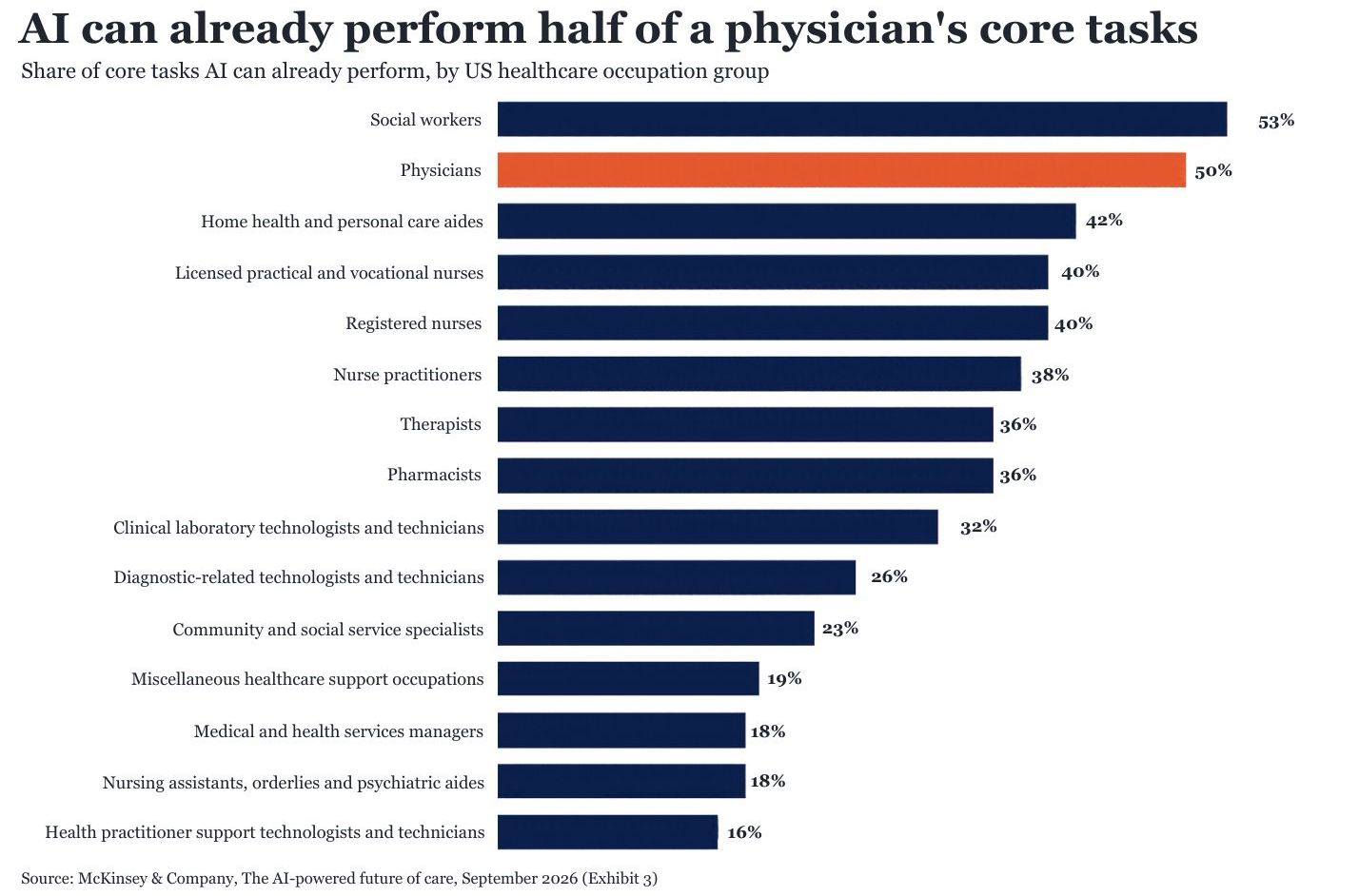
The capacity question deserves particular care. In an American fee-for-service market, automating low-acuity visits threatens income. In the NHS it threatens nothing of the kind, because demand outruns supply by millions of appointments and the elective waiting list is still measured in millions. The danger lies with the Treasury, which will be tempted to treat measured productivity gains as headcount savings before a single patient has been seen sooner. Resident doctors have struck over pay and conditions. A workforce told that software can already perform half of a physician's core tasks will hear a message about job security, whatever ministers intend. The research itself expects total workforce numbers to hold, since demand rises with access. NHS leaders should hold the government to that logic in writing, inside workforce planning.
Accountability is where the position is least settled. If a triage tool misses an evolving sepsis, who answers: the trust, the supplier, the clinician who accepted the output, or the regulator that cleared the product? The MHRA's approach to software as a medical device was designed for something more static than a model that updates itself. The research also flags deskilling, the slow erosion of unassisted clinical judgement among those who rely on the tool. Medical royal colleges and trusts should write supervised unassisted practice into training now.
Public trust is the scarce resource, and the American survey data carries a warning for it. A substantial share of people who turn to AI for medical advice say they do so because they could not afford a doctor, felt dismissed by a clinician or could not get an appointment. Those reasons describe access failures and a loss of confidence in the service. In Britain, where the public still expects care to be free at the point of use and quick to reach, the same pattern would be a political liability as much as a clinical one.
The commercial platforms will keep improving whether or not Whitehall is ready. What remains open is who sets the terms on which AI meets NHS patients, and those terms are choices. Common data standards and a clear allocation of liability come first, followed by a firm commitment that freed capacity shortens waits. Without them the service will inherit a front door it did not design, serving patients it still has to treat.