
As we enjoy the last days of Summer and head into September, one of the clearest shifts we are seeing across life sciences is a surge in demand for patient preference science. Some of that momentum reflects the work of Kielo Health, Sanius Health’s preference science division, led by Dr Tommi Tervonen, Chief Scientist. The question behind the science is simple but increasingly important: when treatment choices involve trade-offs, what do patients actually value most today?
Medicine has become remarkably sophisticated at measuring whether treatments work. We can quantify survival, progression, response, toxicity and biomarkers with extraordinary precision. What those measures do not always tell us is how patients value the trade-offs between them. A clinical endpoint that looks modest on paper may represent a profound improvement in someone's daily life, while a treatment risk that appears unacceptable to an observer may be entirely different when considered by someone living with the disease. Patient preference science makes those choices measurable. Discrete choice experiments quantify the relative importance patients place on benefits, risks, convenience and treatment burden, moving the patient voice from qualitative insight towards evidence that can inform development decisions. This is no longer peripheral research. Tommi's March 2026 review shows preference evidence being used from early clinical development through market authorisation and commercialisation, with regulators and health technology assessment bodies accepting valid patient preference data.
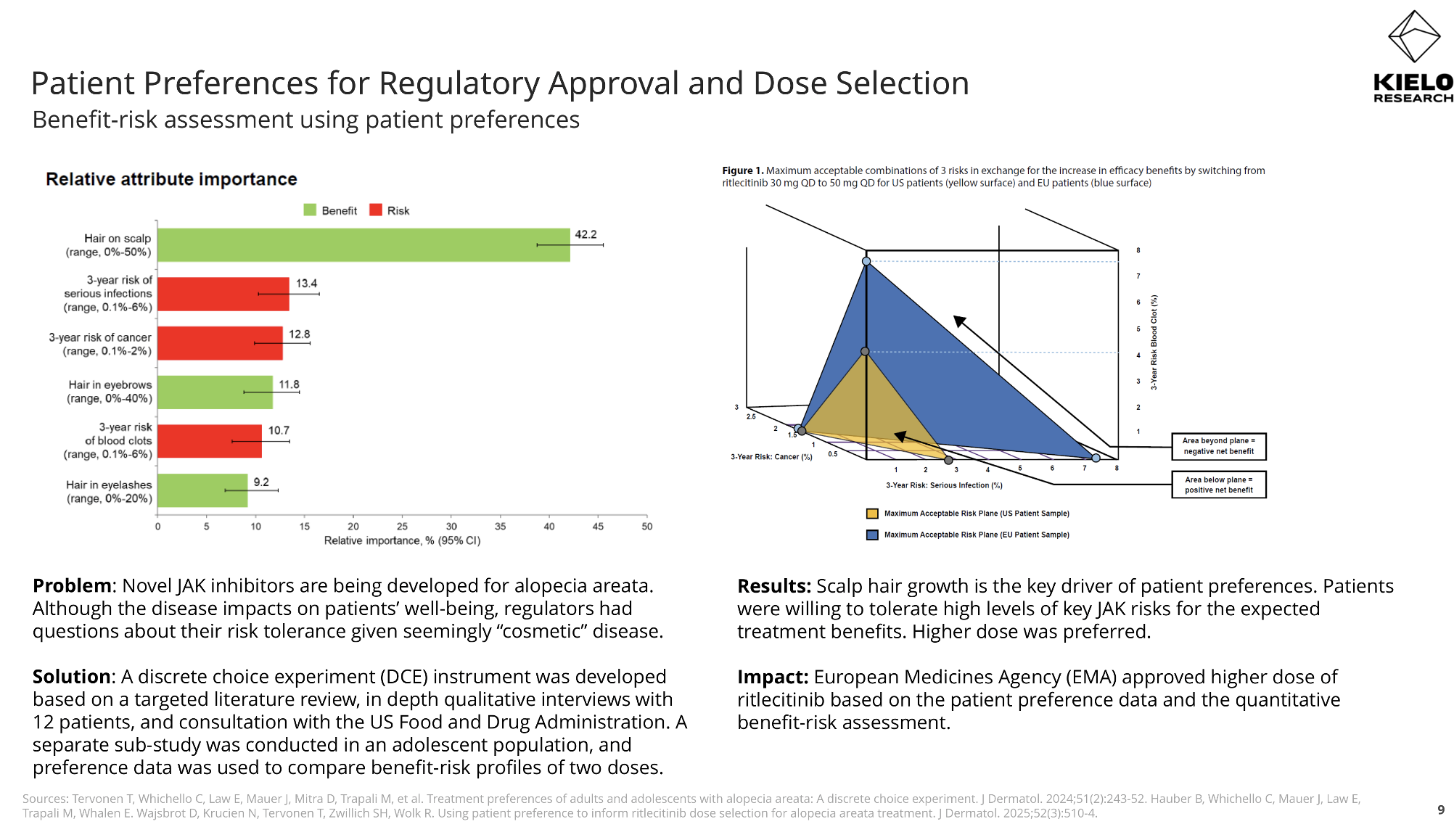
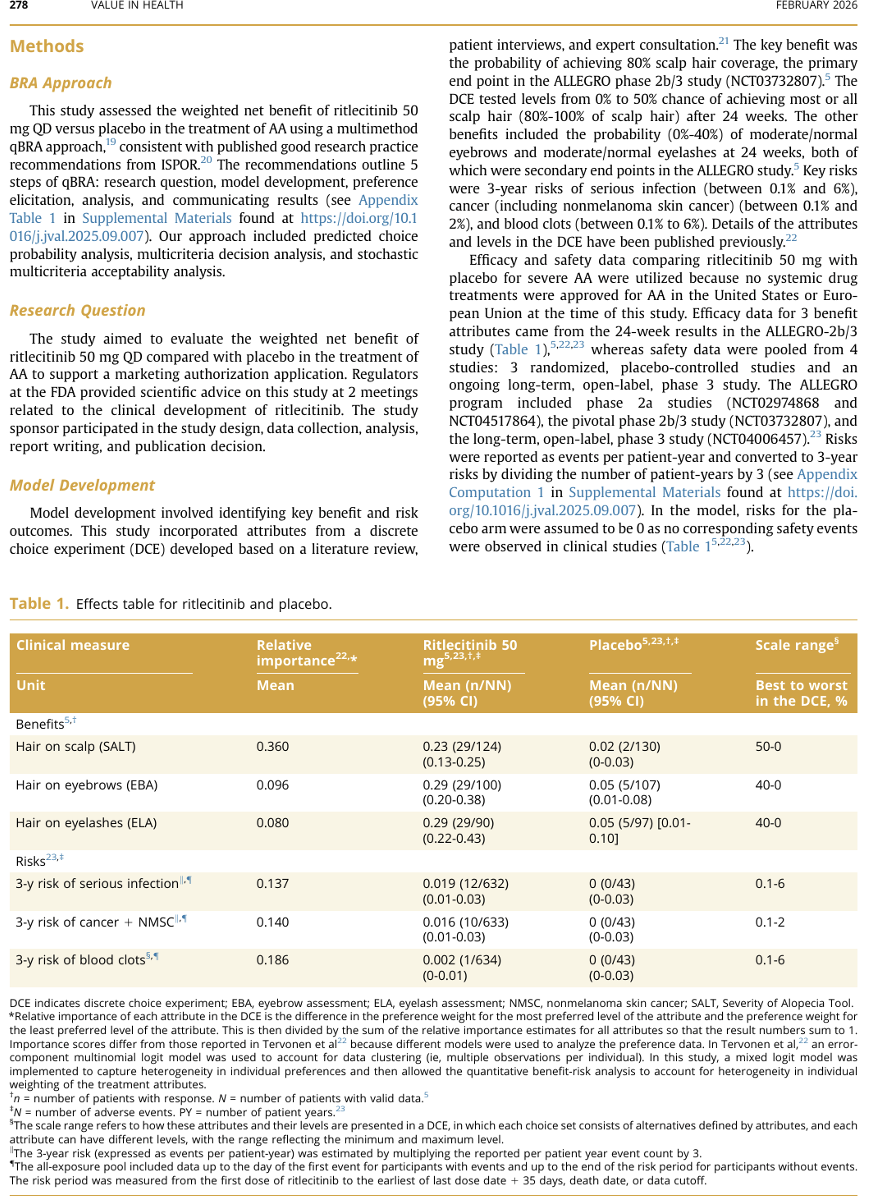
One of the strongest examples is Tommi's work in alopecia areata, a condition that can be perceived externally as cosmetic but carries profound social and emotional consequences. In a discrete choice experiment involving adults and adolescents across the United States and Europe, substantial scalp hair regrowth was the most important treatment attribute. For a 20% increase in the probability of achieving 80% to 100% scalp hair regrowth, adults were willing, on average, to accept a 7.4% three-year risk of serious infection, a 2.5% risk of cancer and a 9.3% risk of blood clots. Those numbers expose the difference between how a condition may be viewed from the outside and how treatment value is experienced by patients. The work then went further. Preference data was combined with clinical efficacy and safety evidence for ritlecitinib in a quantitative benefit-risk analysis. The analysis estimated a 70.9% predicted choice probability for ritlecitinib 50 mg over placebo and a 78% probability of positive weighted net benefit. Kielo's Regeneron seminar also highlights the European Medicines Agency's use of preference and quantitative benefit-risk evidence in ritlecitinib dose selection, showing how patient preference science can move from listening exercise to consequential regulatory decision evidence.
This connects directly with how Sanius Health has been built. Across the UK, US and Asia, Sanius’s patient ecosystems give us direct access to people living with cancer, rare disease and chronic illness, supporting patients between hospital visits while capturing patient-reported outcomes, treatment burden, symptoms, adherence, quality of life and longitudinal real-world evidence. Preference science adds another layer: it tells us which outcomes patients value and what they are prepared to trade to achieve them.
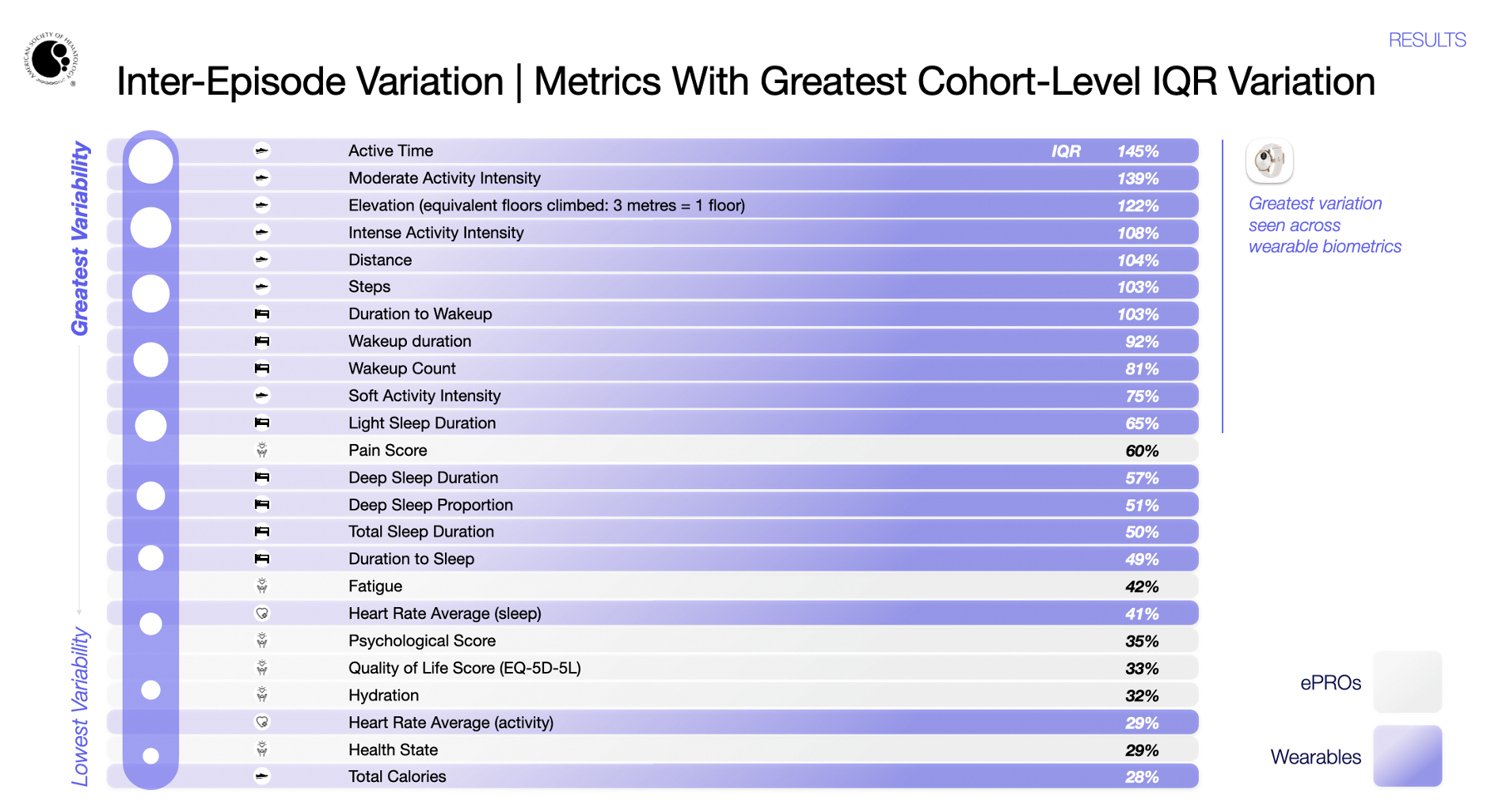
The opportunity is to connect these worlds much earlier in drug development. Preference science can help identify which benefits matter most, which risks patients will tolerate and which outcomes deserve greater attention. Longitudinal patient-generated data can then show how those outcomes evolve outside the controlled environment of a trial, while clinical and real-world data can demonstrate what happens to treatment effectiveness, utilisation and disease progression.
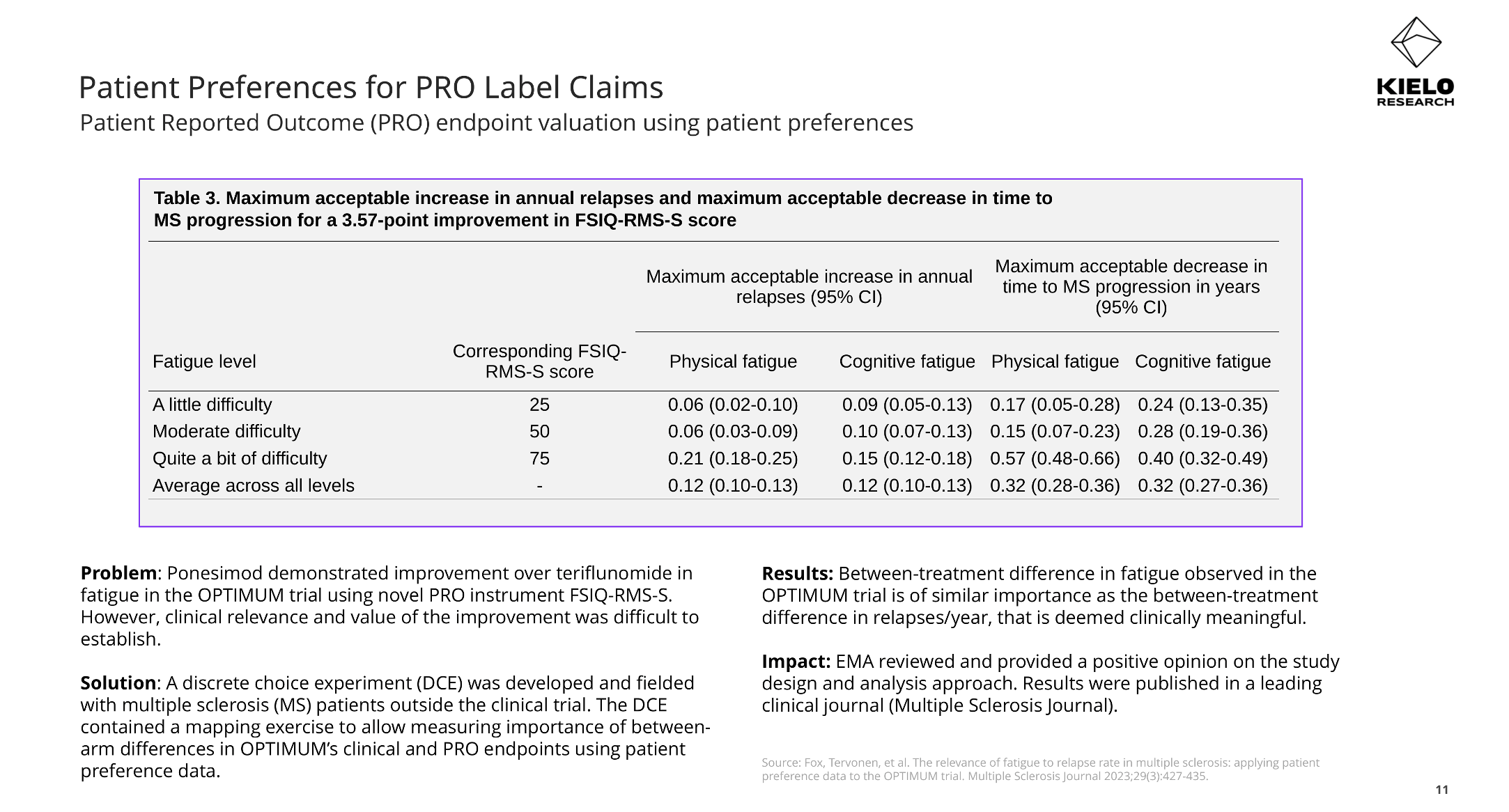
Tommi's multiple sclerosis work makes this clear. In a study of 817 people with relapsing MS, physical fatigue and cognitive fatigue were valued at 22.3% and 22.0% relative importance respectively, comparable with relapses at 20.7% and progression at 18.4%. Patients were willing to accept trade-offs to improve fatigue, an outcome that can be underrepresented when clinical priorities dominate the conversation. This is why surge in preference research heading into September matters. Patient centricity cannot mean inviting patients into an advisory board once the major decisions have already been made. The next era of drug development will combine clinical evidence, real-world data and scientifically robust preference evidence from the start. Better treatments will increasingly be defined not only by what medicine can measure, but by what patients tell us is worth measuring.
Source material used
• Kielo Research. State of the Art of Patient Preference Research, Regeneron lunch and learn session, 30 March 2026.
• Tervonen T, Whichello C, Law E, et al. Treatment preferences of adults and adolescents with alopecia areata: A discrete choice experiment. Journal of Dermatology.
• Mauer J, Whichello C, Hauber B, et al. A Patient Preference-Weighted Quantitative Benefit-Risk Analysis of Ritlecitinib for Alopecia Areata to Inform Medical Decision Making. Value in Health. 2026;29(2):277-284.
• Tervonen T, Fox RJ, Brooks A, et al. Treatment preferences in relation to fatigue of patients with relapsing multiple sclerosis: A discrete choice experiment. Multiple Sclerosis Journal - Experimental, Translational and Clinical.



.jpg)
.jpg)
.jpg)