
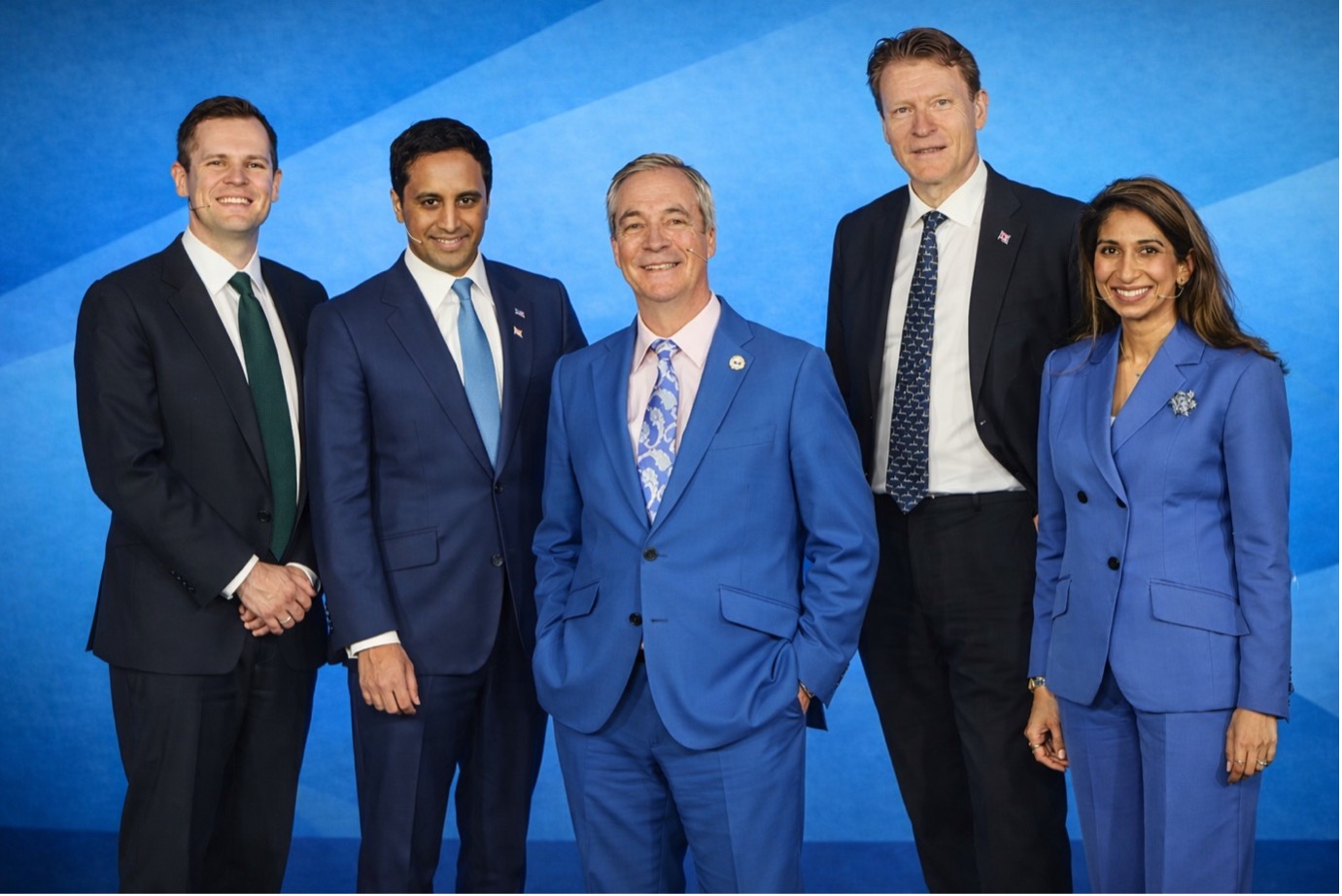
When Nigel Farage unveiled his new top team it felt more like political theatre than serious statecraft: grand titles, confident podiums and a wash of glowing blue light. It made for a striking image. But beneath the choreography sits a harder question, one that matters far more than the colour of the backdrop or the theatricality of the titles. Is any of this good for the NHS?
The NHS does not exist in isolation. It is stitched tightly into the fabric of local government. Adult social care, public health, children’s services, housing support, early intervention, community wellbeing programmes: these are not peripheral services. They are structural supports. When they function well, hospitals flow better, GPs manage demand more sustainably and community care becomes viable. When they falter, pressure cascades straight into A&E corridors and elective backlogs.
Reform UK is no longer simply an insurgent voice on the sidelines. In a number of councils across England it now holds power. That shift from commentary to control is significant. It allows voters and health leaders alike to examine what Reform governance looks like in practice. The early evidence from councils it leads shows turbulence: resignations, internal disputes, controversial decisions, budget strain and a heavy emphasis on symbolic politics. These are not trivial matters. They speak to whether a party can translate slogans into stable public administration.
Kent County Council, one of Reform’s flagship gains, offers a case study. Leadership change was swift and messaging confident. Yet reports have highlighted internal tensions and a focus on culture-driven gestures rather than the unglamorous mechanics of statutory service delivery. Libraries, flags and identity politics have dominated headlines. What has not dominated headlines is a coherent plan to stabilise adult social care budgets, integrate with local NHS trusts on discharge planning or strengthen preventative health provision. That imbalance matters.
Adult social care is one of the NHS’s most critical pressure valves. When councils cannot fund packages of care quickly and effectively, patients remain in hospital beds longer than medically necessary. Delayed discharge is not simply an operational irritation. It blocks capacity, increases costs and degrades patient experience. Reform-run councils have promised efficiency savings and reduced waste. But local government finance is not a spreadsheet abstraction. The majority of council budgets are consumed by statutory obligations: social care, safeguarding, education support. Cutting deeply without harming essential provision is extraordinarily difficult. The Institute for Government’s performance tracking shows that local authorities across England are already under extreme demand and funding pressure. Instability at the top only amplifies that strain.
There is also the issue of leadership culture. Reports of councillor suspensions, departures and internal discipline disputes in Reform-controlled authorities suggest governance structures still bedding in under pressure. For the NHS, consistency and predictability in local partners is vital. Integrated care systems depend on sustained collaboration between NHS leaders and council executives. Commissioning decisions, prevention strategies and workforce planning all require trust and continuity. Political volatility undermines both.
Healthcare is complex, technical and financially constrained. It requires alignment rather than antagonism between tiers of government. When a council leadership becomes consumed by headline-grabbing disputes or ideological signalling, strategic alignment with health partners can drift. That drift has consequences. Public health budgets, often managed by local authorities, fund smoking cessation, weight management, sexual health services and early mental health intervention. These programmes reduce long-term hospital demand. They are not optional extras. If attention shifts away from strengthening them, the NHS inherits the cost later.
Supporters of Reform argue that disruption is precisely what entrenched systems need. They claim traditional parties have overseen stagnation and that bold leadership can unlock efficiencies. There is some force in the argument that bureaucracy can calcify. Yet disruption without operational depth is risky in services as fragile as health and care. The NHS is currently managing record waiting lists, workforce gaps and demographic pressure from an ageing population. It cannot absorb additional instability from weakened local authority partnerships.
Financial claims also warrant scrutiny. Reform leaders have touted significant savings in councils under their control. Independent analysis has questioned how much of those savings are clearly evidenced and how much remains aspirational. In local government finance, projected efficiencies often collide with legal duties. When projections fail to materialise, councils face stark choices: increase council tax, reduce discretionary services or seek emergency support. Each option carries downstream consequences for health.
The broader rhetorical framing is equally revealing. Reform’s national messaging frequently centres on reducing the size of the state and curbing public spending. For the NHS, which remains one of the largest publicly funded health systems in the world, such framing raises fundamental questions. If the state is inherently inefficient, does that include the NHS? If waste is the dominant narrative, how will that translate into complex clinical environments where cost control must coexist with safety and quality? Healthcare is not a business in the conventional sense. Margins are human outcomes.
There is also the question of workforce. Councils influence local labour markets through housing policy, training partnerships and regional development strategies. If governance becomes unpredictable or if economic strategy lacks clarity, recruitment and retention in health and social care can suffer. Already the NHS struggles to attract and retain nurses, GPs and allied health professionals. Social care, chronically underpaid and under-resourced, faces even deeper shortages. Political energy spent on spectacle rather than stabilisation does not help.
None of this suggests that existing arrangements are flawless. The NHS and local government both require reform. Integration has been patchy. Funding models are contested. Productivity varies. But reform in health requires granular understanding: commissioning frameworks, workforce pipelines, capital planning, digital infrastructure, prevention science. It requires leaders who can sit for hours in budget committees and clinical governance boards. The evidence so far from Reform-run councils suggests a party still finding its administrative footing.
The NHS depends on strong, competent local government. It depends on councils that can fund care packages promptly, manage safeguarding without scandal, coordinate with trusts on winter planning and protect public health budgets when fiscal storms hit. Grand unveilings and theatrical podiums do not deliver those outcomes. Disciplined administration does.
Nigel Farage’s superheroes may wear blue and speak confidently about shaking up the system. The real test is not presentation but performance. In the councils where Reform already governs, the signs are mixed at best and troubling at worst. For a health service already operating at full stretch, that should prompt caution rather than applause. The NHS needs partners grounded in delivery, not politics performed for effect.



.jpg)
.jpg)
.jpg)