
The UK’s National Health Service has had nine chief executives of NHS England since the organisation’s formal creation, with Sir David Nicholson as its first and Sir Jim Mackey as the most recent. Each has presided over a defining era of challenge: Nicholson through the Lansley reforms and the “Nicholson Challenge” of unprecedented efficiency savings, Simon Stevens through the Five Year Forward View, structural reorganisation and the early shock of COVID, and Amanda Pritchard through the brutal aftermath of the pandemic and the ballooning elective backlog. Along the way, the service has weathered some of its most painful crises, from the Mid Staffordshire scandal to repeated workforce and performance failures.
Sir Jim has been brought in explicitly as a turnaround chief, tasked with confronting the full weight of England’s healthcare pressures: stabilising NHS England itself, restoring financial control, accelerating elective recovery, untangling data and digital complexity, improving safety and delivering on the politically charged promise of new hospitals.
The NHS is under orders to deliver multi-billion-pound savings while absorbing over £1 billion in redundancy costs that will be pulled forward from future budgets. In recent comments about whether he might remain in post beyond October 2026, Sir Jim made clear that his focus is not legacy-building but stabilisation and succession, to fix what must be fixed and leave a system capable of being led for the long term. His motivation, by all accounts, remains simple and consistent: a deep belief in the NHS and a determination to protect it for patients, families and the country.
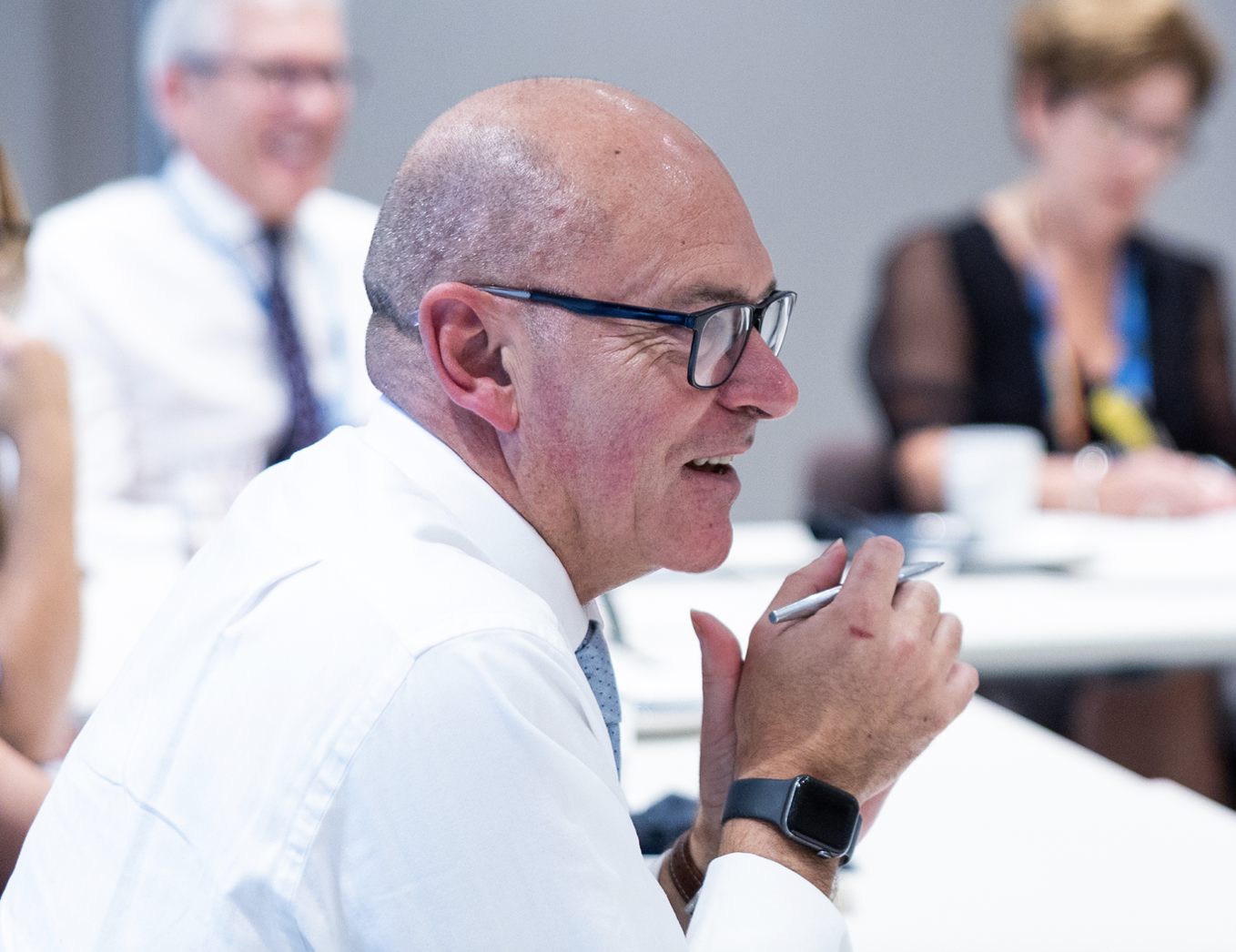
On the occasions we have met him, what stands out is not the severity his photographs suggest, but an unexpected warmth. He is measured, attentive and listens carefully, yet speaks with a directness that leaves no doubt where he stands. It is the sort of authority that feels calm rather than crushing, decisive without being domineering. That combination helps explain why he is so highly rated by his peers. He is not an outsider parachuted in but a long-serving NHS executive, shaped by the system he now leads. His turnaround team is drawn from senior leaders who still run major health systems across the country, lending credibility to both his approach and his judgement. In a service that rarely hands out praise lightly, Mackey is regarded not just as capable, but as fundamentally trustworthy; and, as many quietly note, an all-round good guy.

Across senior ranks, there is growing consensus that the national voice has begun to reconnect with operational reality. The tone is firmer but more grounded. Expectations still stretch hard but they no longer feel detached from feasibility. One senior leader described the change not as dramatic, but as corrective. Another called it a return to seriousness.
That sentiment is now supported by evidence. A recent insights study of NHS chief operating officers and senior executives, together responsible for around eighty percent of NHS spend and nearly ninety percent of national performance delivery, found that seventy five percent considered Mackey’s leadership to be stronger than that of his predecessors. These are not casual respondents. They represent the group upon whom the system ultimately stands or falls. Their judgement carries weight.
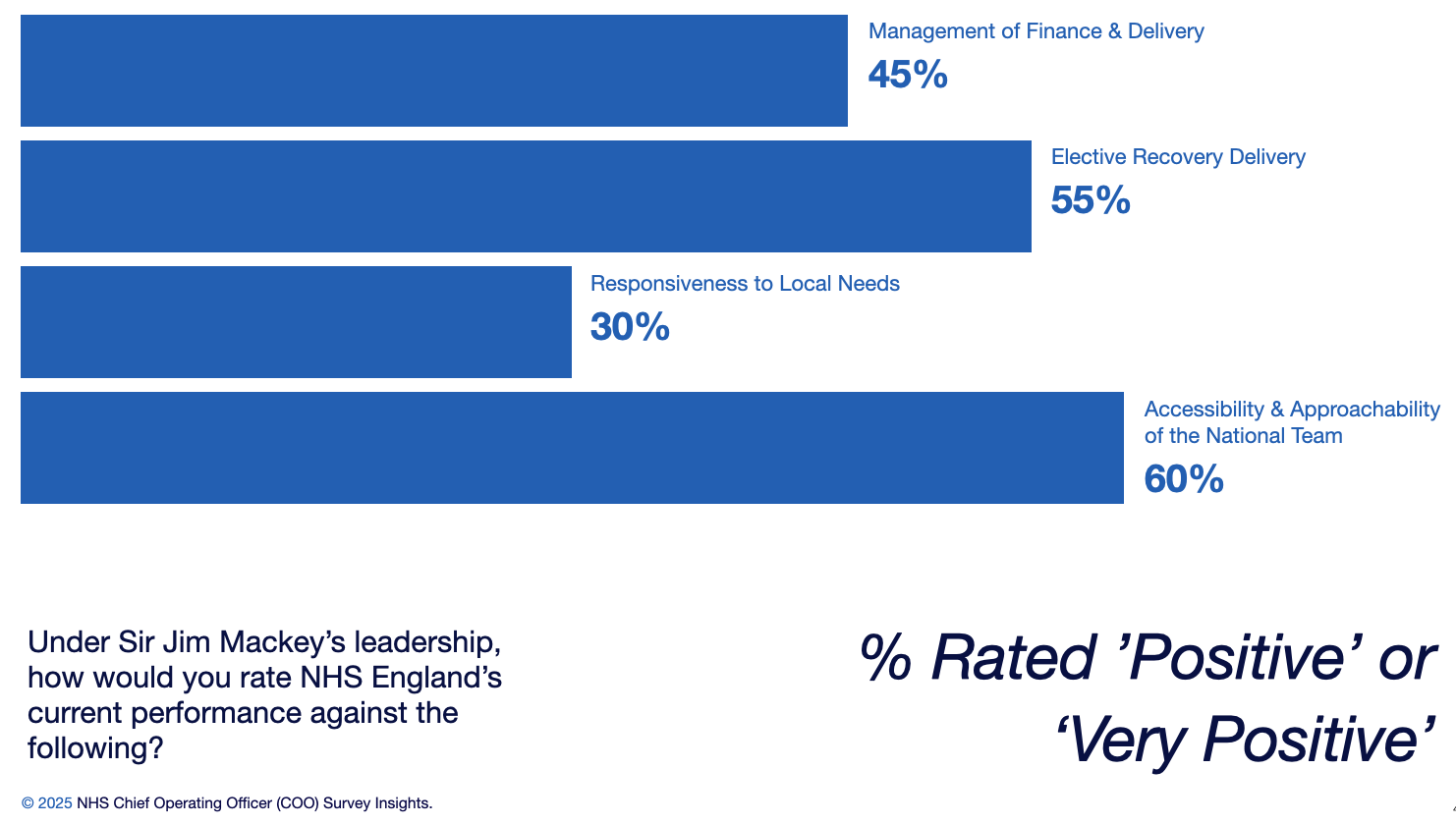
Further detail reveals the nature of this recalibration. Sixty percent now rate the accessibility of the national senior team positively. More than half report increasing confidence in the direction of elective recovery. Forty five percent believe national oversight of finance and delivery is improving. These figures do not suggest relief. They suggest renewed coherence. A centre that is beginning, once more, to sound as though it understands what it asks of the service.
This should not be mistaken for a sudden easing of conditions. Morale remains brittle. Financial recovery is tenuous. Flow remains unpredictable. Demand continues to outstrip capacity and the legacy of structural upheaval still weighs heavily. Senior leaders remain clear in their expectations. Reduce administrative burden. Stop creating new reporting layers. Use the data already in the system. These pressures form the true backdrop to any assessment of leadership.
What has altered is the perception that the centre is now approaching these realities with greater honesty. At the NHS COO Strategic Round earlier this year, operational leaders pointed to clearer signals from NHS England and more direct engagement with those charged with delivery. Around forty percent said expectations now feel more realistic. A further twenty seven percent cited improved tone and visibility at national level. Communication has become more transparent. Direction more intelligible. The system does not feel less demanding. It feels better led.
The message from the frontline is notably pragmatic. Leaders are not asking for radical reinvention. They want funding that reflects actual demand. Incentives aligned with real outcomes. Less duplication, fewer distractions, more focus on delivery. Above all, they want a centre that operates as a partner rather than a distant adjudicator.
Mackey’s approach reflects that mood. He has resisted the easy pull of rhetoric. He speaks with clarity and restraint. He is less interested in grand declarations than in restoring operational discipline. His focus lies in coherence, execution and reducing friction in the system. It is a style that feels deliberate rather than dramatic. And it appears to be effective.
The coming year will determine whether this equilibrium holds. Progress will depend on consistency of national guidance, affordability of capital plans, and whether digital adoption becomes simpler rather than more burdensome. Above all it will depend on whether the centre continues to trust and support those delivering the bulk of NHS performance.
The NHS remains under profound strain. That has not changed. What has changed is the sense that leadership now understands the scale and texture of the challenge before it. There is less performance, more purpose. Less choreography, more command. In a system where confidence has been eroded over years, that quiet shift in tone may prove to be Mackey’s most consequential contribution of all.



.jpg)
.jpg)
.jpg)