
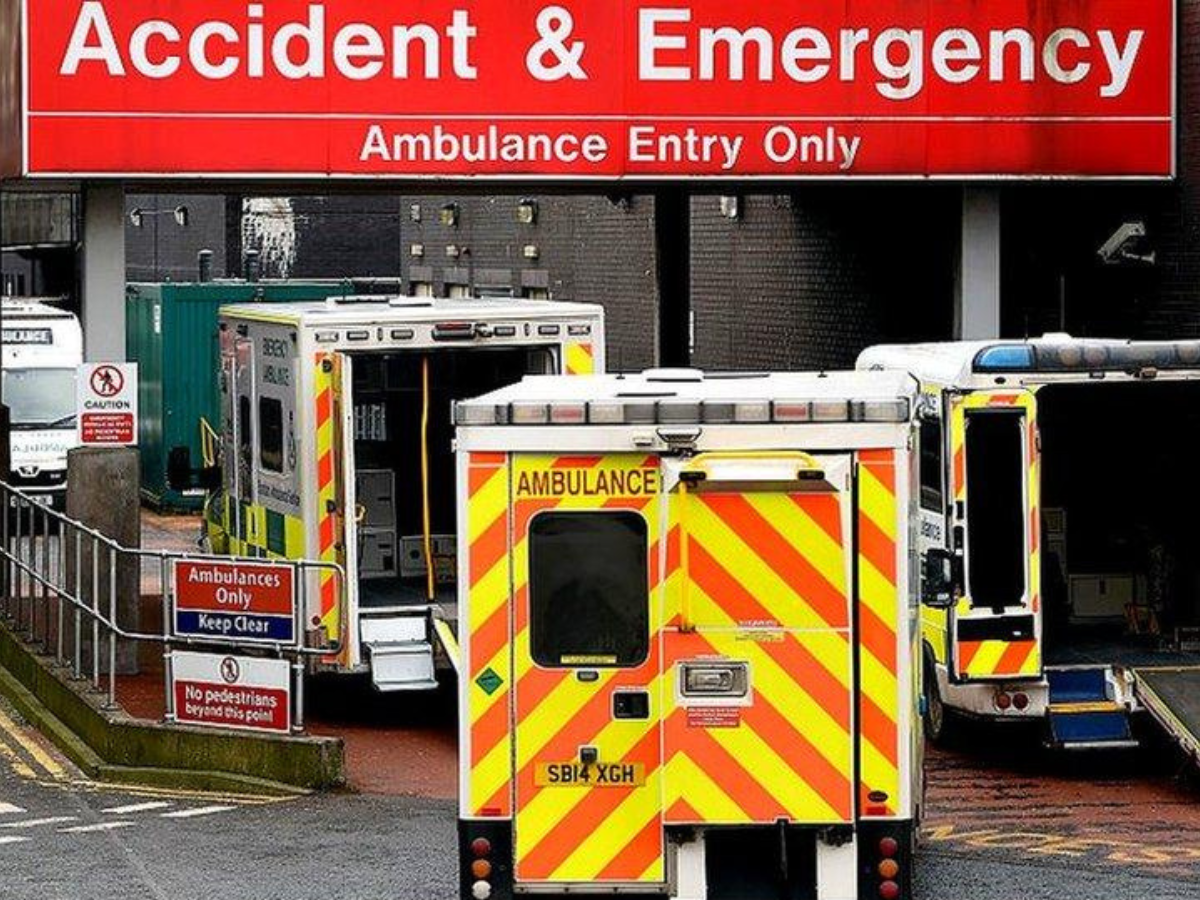
The National Health Service recorded its strongest accident and emergency performance in nearly five years during March, with the proportion of patients seen within four hours reaching 77.1 per cent — just short of the 78 per cent target set for the month by NHS England. The figures arrived alongside record-breaking demand, with a total of 2.43 million people attending A&E facilities across England in March, the highest monthly figure ever recorded.
The four-hour target, which requires patients to be admitted, transferred or discharged within four hours of arriving at an emergency department, has not been met at the national level of 95 per cent since July 2015. NHS England’s operational planning guidance for 2025/26 set a more modest recovery threshold of 78 per cent by March 2026. At 77.1 per cent, the service came within one percentage point of that mark — its best showing since July 2021.
The surge in patient numbers was partly attributed to a meningitis outbreak reported in mid-March, which drove a notable spike in demand. The health service described the period as a “prolonged winter” for emergency care.
Ambulance Response Times
A similar pattern emerged in ambulance performance. Ambulances attending the most critical incidents, including suspected heart attacks and strokes, achieved an average response time of 26 minutes and 18 seconds during March — the swiftest response since May 2021. The Category 2 target, which covers serious but non-immediately-life-threatening conditions, requires an average response time of no more than 30 minutes across the full financial year.
During the 2025/26 period from April 2025 to January 2026, the average response time for Category 2 calls stood at 30 minutes and 27 seconds, only slightly above the objective of 30 minutes. London Ambulance Service, the country’s busiest, reported that its average Category 2 response time across the financial year was 30 minutes and 16 seconds — just seconds outside the 30-minute national target, and more than two minutes inside its locally agreed performance threshold of 32 minutes and 30 seconds.
Fleet capacity contributed to the improvement. A record 1,141 new or replacement double-crewed ambulances were delivered to NHS ambulance trusts across England between April 2025 and March 2026, the highest annual total since records began.
Elective Backlog
Progress in urgent and emergency care has not been matched in elective services. NHS England’s planning guidance set an interim target for 65 per cent of patients on the elective waiting list to begin treatment within 18 weeks by March 2026. The latest referral-to-treatment figures show the waiting list at 7.25 million cases in January 2026, with approximately 2.79 million patients having waited more than 18 weeks.
Projections from the Health Foundation suggest the 65 per cent threshold was unlikely to be reached. On current trends, the percentage of waits lasting less than 18 weeks was projected to reach 63.4 per cent by March 2026 — narrowly missing the interim target — while only 38 per cent of NHS trusts were on track to deliver the required five percentage point improvement.
The government has set a further target for the proportion of patients waiting over 52 weeks to fall below 1 per cent of the total list. The proportion of waits longer than 52 weeks, based on current trends, was set to fall to 2.2 per cent by March 2026, some way short of the 1 per cent interim target.
Outlook
The March emergency care data offers the clearest evidence yet that recovery plans introduced over the past year are beginning to take effect. Improvements in patient discharge and hospital flow have contributed to better front-door performance in A&E. Yet the system remains under strain, and the narrowness of the margins against both emergency and elective targets signals that sustained pressure on staffing, bed capacity and demand management will continue into the next financial year.
The government has pledged to restore the 18-week constitutional standard for elective care — currently standing at 92 per cent — by March 2029.



.png)
.png)
.jpg)