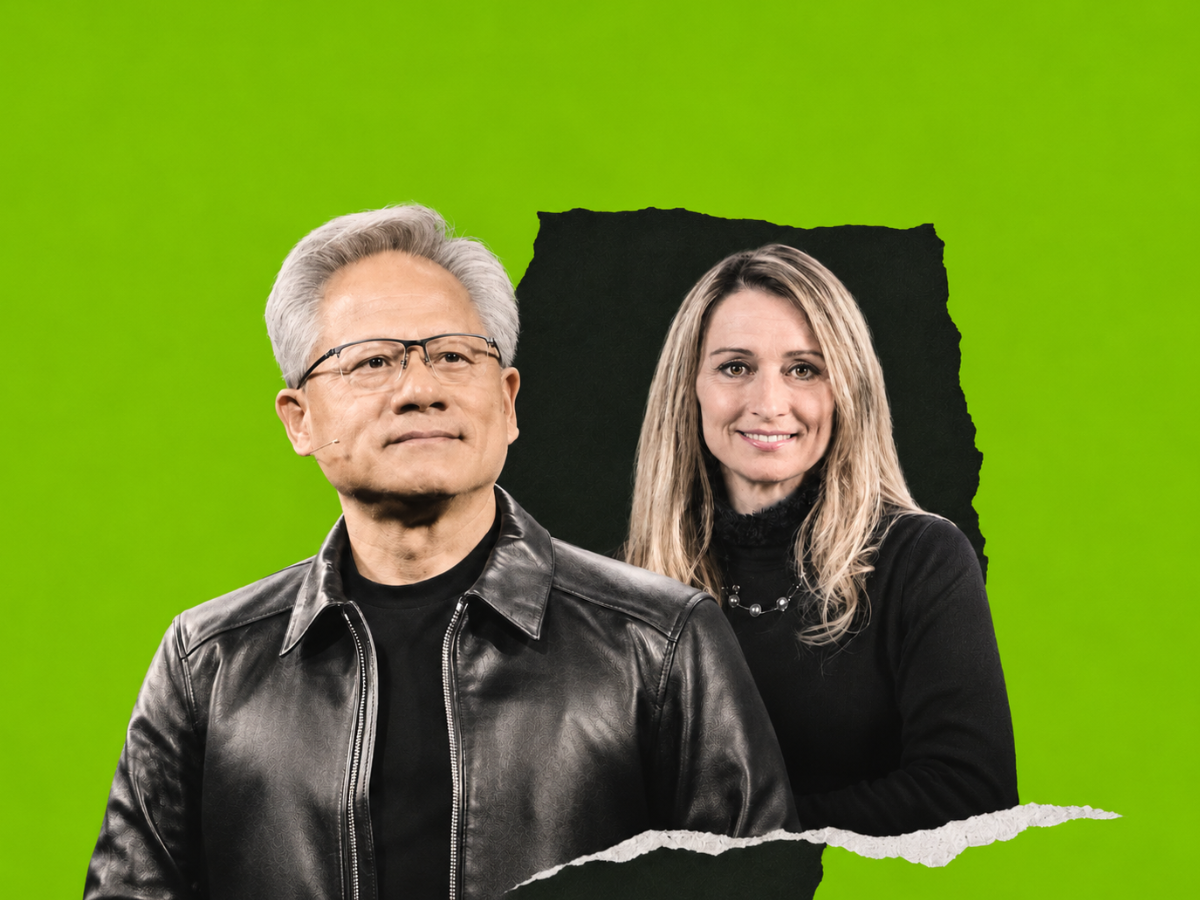
For 33 years, Jensen Huang was NVIDIA. The leather jacket, the carefully cultivated public persona and the conviction that artificial intelligence would reshape the global economy became inseparable from the company he founded. Investors bought into the technology, certainly, but they also bought into the man. That relationship has now suffered a spectacular rupture. On 12 November, Huang resigned with immediate effect as president and chief executive, leaving the world's most influential AI chipmaker facing an unexpected leadership transition amid a deeply damaging controversy.
The circumstances make this considerably more serious than an ordinary change at the top. Reports of Huang's alleged relationships, including one involving a woman suspected of having links to Chinese intelligence, prompted NVIDIA's board to commission an independent investigation. The company has said it has no reason to believe that its national security interests or commercial secrets were compromised. Huang's departure nevertheless raises questions that extend well beyond his personal conduct. For a company whose technology has become strategically important to governments and businesses worldwide, the judgement exercised by its chief executive is a matter of corporate and geopolitical significance.
The board's handling of the affair deserves particular scrutiny. On 8 November, it publicly expressed confidence in Huang and his leadership team while announcing the investigation. Four days later, the founder was gone. The speed of that reversal invites difficult questions about what the directors knew, what changed and whether the company had adequately assessed the risks surrounding its most important executive.
A board cannot reasonably be expected to anticipate every personal controversy involving a chief executive. It can, however, be expected to have procedures capable of protecting the business when one emerges. NVIDIA's predicament suggests how difficult that becomes when the executive concerned is also the company's founder, dominant public representative and principal strategic figure.
There is a further complication. Huang is leaving the board as well as the executive office, meaning the departure removes him from the very institution responsible for overseeing the company. The appointment of Harvey C. Jones as NVIDIA's first board chair introduces a clearer separation between executive leadership and board oversight. That is a sensible structural development, although its timing inevitably invites questions about why such arrangements were not established earlier.
The immediate succession decision is equally revealing. Colette Kress, NVIDIA's chief financial officer since 2013, has been appointed interim chief executive while retaining her financial responsibilities. Her experience at Cisco and Microsoft, alongside more than a decade overseeing NVIDIA's finances, gives her considerable institutional knowledge. Yet asking one executive to manage the company's finances while running its entire global operation during a leadership crisis is an extraordinary arrangement.
The distinction between maintaining financial discipline and providing technological direction matters here. NVIDIA's competitive position rests on an exceptionally complex ecosystem of processors, software, developer relationships and infrastructure partnerships. Its next chief executive will have to understand the engineering decisions shaping the company's product roadmap as well as the commercial commitments underpinning its growth. Kress may provide stability during the transition, but the board still has to demonstrate that a credible longer-term succession plan exists.
For investors, the concern is straightforward. NVIDIA has become one of the most valuable businesses in the world, and its valuation reflects expectations that its dominance in AI computing will endure. Its share price fell sharply as the leadership crisis developed, with losses extending across parts of the wider AI investment market. The immediate commercial damage may prove manageable. Demand for its processors does not disappear because its founder leaves. However, uncertainty surrounding leadership can affect customer confidence, strategic partnerships and the assumptions on which long-term investment decisions are made.
The more uncomfortable question is whether NVIDIA became too dependent on Huang in the first place. His influence was central to the company's transformation from a graphics processor manufacturer into the dominant supplier of hardware for artificial intelligence. That achievement is considerable. But a business of this scale should be capable of functioning independently of the individual who built it. When a founder's sudden departure becomes an existential question for investors, customers and employees, it suggests that institutional resilience may have lagged behind commercial success.
This has implications for Britain, too. NVIDIA's position in the global AI supply chain reaches far beyond Silicon Valley. UK technology companies, universities, financial institutions and healthcare organisations are increasingly exploring AI systems that depend, directly or indirectly, on the computing infrastructure supplied by a relatively small number of major technology businesses.
For the NHS, the connection is emerging rather than immediate. AI applications in medical imaging, diagnostics, clinical research and administrative operations depend on reliable computing infrastructure, software support and long-term commercial relationships. NHS organisations are already under pressure to improve productivity while managing constrained budgets and growing demand. The government's ambitions for digital transformation and wider adoption of AI make the stability of the technology supply chain increasingly relevant.
A leadership crisis at NVIDIA does not mean NHS services are suddenly at risk. It does, however, illustrate the exposure created when public institutions build important capabilities around concentrated private-sector suppliers. Healthcare leaders and policymakers need to understand who controls the underlying infrastructure, how dependent their systems are on particular platforms and what happens if a supplier changes its strategic direction. Procurement decisions involving AI should account for continuity, interoperability and the ability to move between providers.
There is also a national security dimension. The investigation surrounding Huang has brought renewed attention to the relationship between commercial technology, foreign intelligence and restrictions on advanced semiconductor exports. Britain cannot afford to treat these matters as remote American corporate concerns. Its ambitions in AI, defence, life sciences and scientific research depend on access to sophisticated computing infrastructure, much of which is controlled by businesses operating within wider geopolitical tensions.
NVIDIA's board now has a responsibility to demonstrate that it can govern a business whose importance has outgrown the personality of its founder. Its immediate priority will be to protect operations and reassure customers, while establishing a credible account of the circumstances surrounding Huang's departure. Investors will also expect greater clarity about succession and the company's exposure to executive risk.
The scandal may eventually prove less damaging to NVIDIA's commercial position than the initial market reaction suggests. Its technological advantages remain substantial. But the affair has exposed a weakness that years of extraordinary growth could easily conceal: a company can become indispensable to the world while remaining surprisingly dependent on one individual.
For NVIDIA, the real test begins after Huang's departure. Its next chapter will depend on whether the board can establish that the institution is stronger than the man who built it.