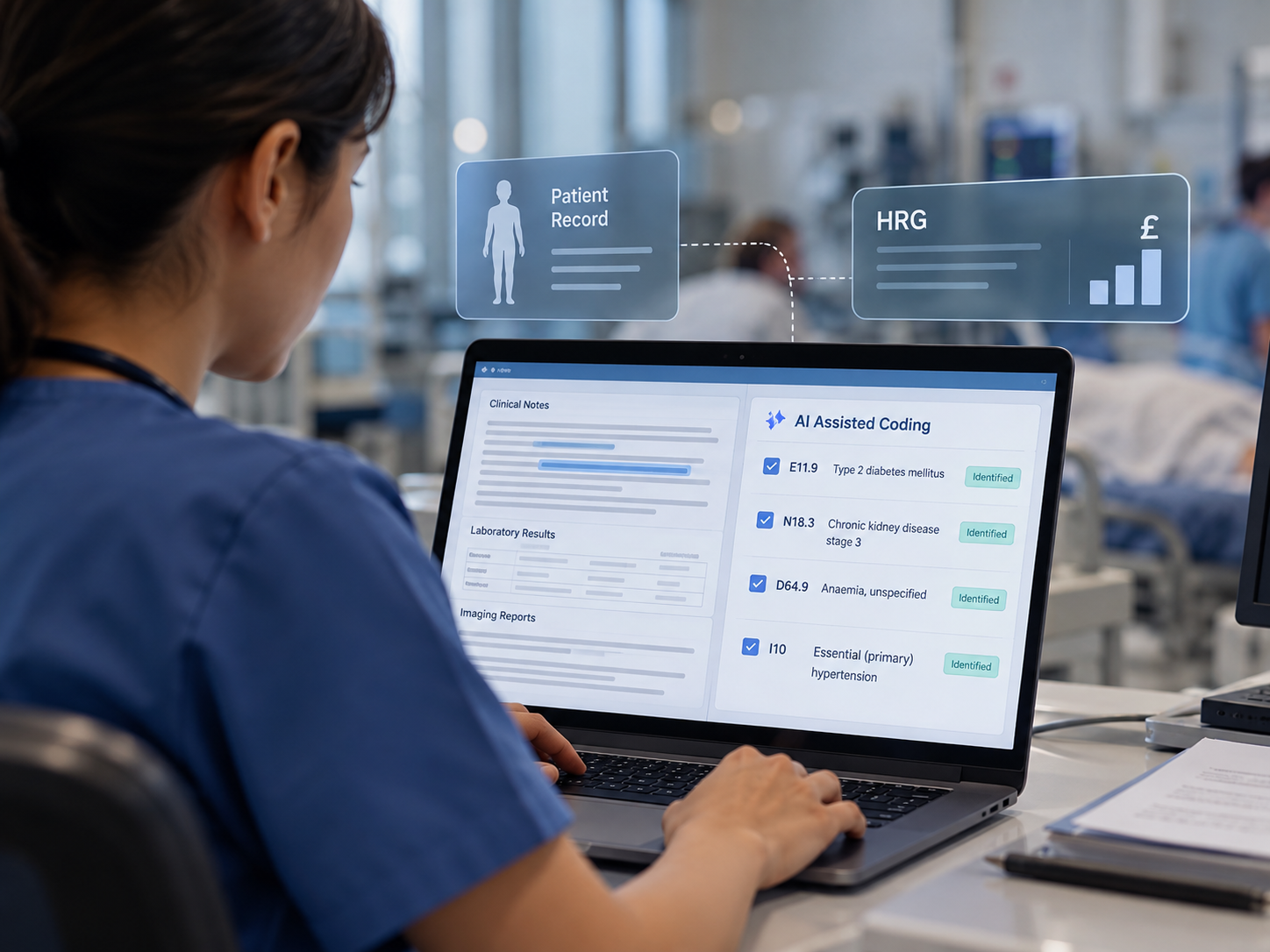
Artificial intelligence developed by Google is showing significant promise in transforming cancer screening, with new research indicating the technology can outperform individual human doctors in detecting breast cancer on medical scans. The findings, emerging from large-scale studies involving the NHS and leading UK universities, suggest AI could play a major role in improving early diagnosis while easing pressure on overstretched radiology services.
The research, published in Nature Cancer in March 2026, analysed mammography screening data from more than 125,000 women and compared the performance of human radiologists with an AI system developed by Google Health. Results showed the AI identified more cases of invasive breast cancer than individual clinicians and produced fewer false positives during screening.
How the AI technology works
The system is based on deep learning, a branch of machine learning that allows algorithms to analyse complex visual patterns in medical images. During development, the AI model was trained using hundreds of thousands of annotated mammogram images. By learning subtle visual signals associated with tumours, it can highlight suspicious regions on a scan that may be difficult for humans to detect. In the UK, breast screening traditionally relies on a “double-reading” system in which two radiologists independently assess each mammogram. The new research tested a hybrid model where a human reader was paired with an AI reader, allowing researchers to compare human-AI collaboration against traditional human-human review.
The results suggest that the technology can detect cancers that would otherwise go unnoticed. In particular, the AI identified around 25% of “interval cancers”, cases that appear between screening rounds after a previous scan was considered normal. Interval cancers are often more aggressive because they are discovered later, making early detection a critical factor in improving survival outcomes.
Improved detection and reduced workload
One of the most striking findings from the research was the improvement in detection rates. In some analyses, the AI found around two additional cancers per 1,000 women screened compared with human radiologists reviewing scans alone. The technology also showed operational advantages. AI could analyse mammograms far faster than clinicians, potentially reducing reading times and enabling screening programmes to process significantly larger volumes of scans. Studies indicate that incorporating AI into screening workflows could cut radiologists’ workload by as much as 40% , allowing specialists to focus on complex cases requiring clinical judgement. For healthcare systems such as the NHS, where radiology workforce shortages are a persistent challenge, these efficiency gains could be transformative.
Potential impact on NHS cancer screening
Breast cancer remains one of the most common cancers affecting women in the UK. Early detection is crucial: when diagnosed at an early stage, survival rates are significantly higher and treatment options are less invasive. The NHS Breast Screening Programme currently invites millions of women for mammograms every year, with each radiologist reviewing approximately 5,000 scans annually. Increasing screening demand and workforce shortages have created mounting pressure on diagnostic services.
AI-assisted screening could help address these challenges by acting as a second reader in the diagnostic process. Instead of replacing clinicians, experts envision AI functioning as a decision-support tool, flagging suspicious patterns while leaving the final diagnosis to trained specialists. Researchers involved in the project say the technology could help detect cancers earlier and accelerate patient pathways. Earlier diagnosis may reduce waiting times for results and allow treatment to begin sooner.
Challenges in deploying AI in clinical practice
Despite the promising results, experts caution that widespread adoption will require careful evaluation. Screening programmes must ensure that AI systems are calibrated for different imaging equipment, patient populations and clinical workflows. Some studies have also highlighted that when AI flags suspicious cases more frequently, it can lead to additional reviews by a third specialist, known as arbitration, in situations where AI and human readers disagree. Regulatory approval, clinician training and integration with hospital IT systems are also key hurdles before large-scale deployment.
The future of AI in cancer detection
The latest research reflects a broader trend in healthcare technology, where AI is increasingly being used to analyse medical images across fields such as radiology, pathology and ophthalmology. Experts say the next phase of development will focus on explainable AI systems, which allow clinicians to understand how algorithms reach diagnostic decisions. Improving transparency is considered essential to building trust among healthcare professionals and patients.
For the NHS, the promise of AI lies not only in improved diagnostic accuracy but also in the ability to scale screening programmes as demand grows. With cancer incidence expected to rise in the coming decades, technologies that enhance early detection could become a cornerstone of modern healthcare. While AI is unlikely to replace doctors, its growing role in medical imaging suggests a future in which human expertise and machine intelligence work together to deliver faster, more accurate diagnoses, and potentially save thousands of lives each year.


.jpg)