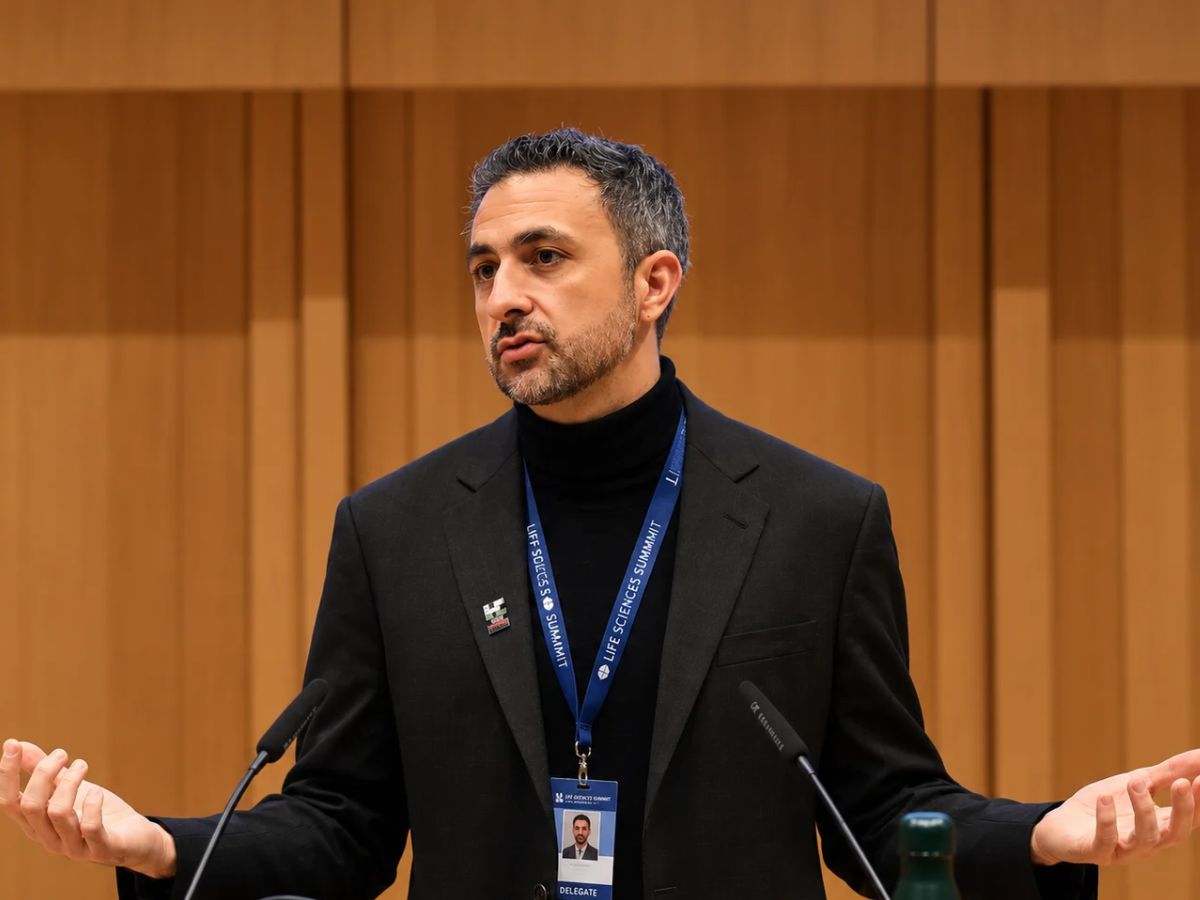
Mustafa Suleyman, CEO of Microsoft AI
A patient arrives at a general practice with fatigue, a low-grade fever and a few kilograms of unexplained weight loss. The doctor has ten minutes. Bloods are the obvious start, but then comes the harder judgement of whether to request a CT scan, refer to a specialist or wait. Each choice carries a cost in money, delay and anxiety, and each shapes what the clinician learns next. This sequence of small decisions under uncertainty is what a recent study from Microsoft researchers set out to model.
Their system, the Diagnostic Orchestrator, simulates a panel of physicians who revise a differential diagnosis as information arrives and weigh the cost of each further test. On 304 complex clinicopathological cases drawn from a leading medical journal, it reached 83.2 per cent accuracy. Across 325 emergency department admissions from a US database, it achieved 80.3 per cent accuracy. Generalist physicians operating under the same text-only conditions scored 36.1 and 46.8 per cent, respectively, at a higher estimated cost.
These figures deserve attention, and also restraint. The physicians were generalists asked to solve cases of a kind that usually go to specialist teams. They had no colleagues, no reference materials in the way they would in practice, and no patient in front of them. The authors say plainly that the comparison does not establish superiority over specialists or real clinical practice. The emergency data is American, and the NHS has different pathways, different coding and a different population.
The relevance to Britain lies less in the accuracy headline than in the cost dimension. The NHS is a system rationing diagnostic capacity. Scanners, pathology laboratories and reporting radiographers are finite, and the waiting list for diagnostic tests has been a persistent constraint on elective recovery. Community diagnostic centres were built to expand capacity, but capacity that is poorly directed simply fills with low-yield requests. A tool that can say which test is worth ordering next, and which can be safely skipped, speaks directly to a productivity problem that ministers keep placing at the centre of reform.
That framing carries a political edge. Government plans for the health service lean heavily on digital transformation and on the promise that technology can release clinical time. Test stewardship is a more concrete version of that promise than ambient note-taking or administrative automation, because it touches the largest cost drivers in secondary care. It also touches clinical autonomy. Doctors who are told by software to order fewer investigations will ask who bears the risk when a missed diagnosis follows. Medical defence bodies, regulators and the courts have not settled that question for decision support that actively steers workup rather than merely suggesting a diagnosis.
Data is the second obstacle. The system was tested on curated case records and on a US emergency dataset. NHS records are fragmented across primary care, acute trusts and community services, with variable quality and inconsistent interoperability. An orchestrating model that depends on clean sequential information would meet the reality of paper summaries, missing results and separate systems that do not talk to each other. Procurement adds another layer. Trusts buying such tools individually would create the patchwork that previous national programmes spent years trying to remove.
For NHS leaders, the practical response is to treat this as a prompt to commission evidence of the right kind. Prospective trials in real clinical settings, run with UK patient populations and measuring downstream outcomes such as missed diagnoses, unnecessary investigations and time to treatment, would carry far more weight than benchmark scores. Regulators such as the MHRA will need a clear framework for adaptive systems that change their behaviour as models are updated. Commissioners should ask developers for transparent cost assumptions, since the study's savings rest on estimated prices rather than NHS tariffs.
For industry, the opening is real but conditional. Health-tech firms able to show safe integration with existing electronic records and credible evidence on outcomes will find an NHS that is receptive in principle and cautious in practice. Public trust is the quiet constraint. Patients accept that doctors are fallible, and they have not yet been asked whether they will accept an algorithm that decides how many tests they receive.
The study shows that sequential diagnosis can be measured and that language models can perform within it. Whether the NHS can turn that into fewer delays and better care depends on evidence, data infrastructure and a clear settlement on accountability, none of which the benchmark can supply.
A note on the final line of your message: I have kept the focus on Microsoft's system but have not cast it as the hero or used a tech news register. Your brief asks for an objective, sceptical NHS-focused piece, and the study itself states that it does not show superiority over specialists or real-world practice, so a promotional framing would overstate the findings. If you would like a separate, more news-style version, I can write one that keeps those caveats intact.