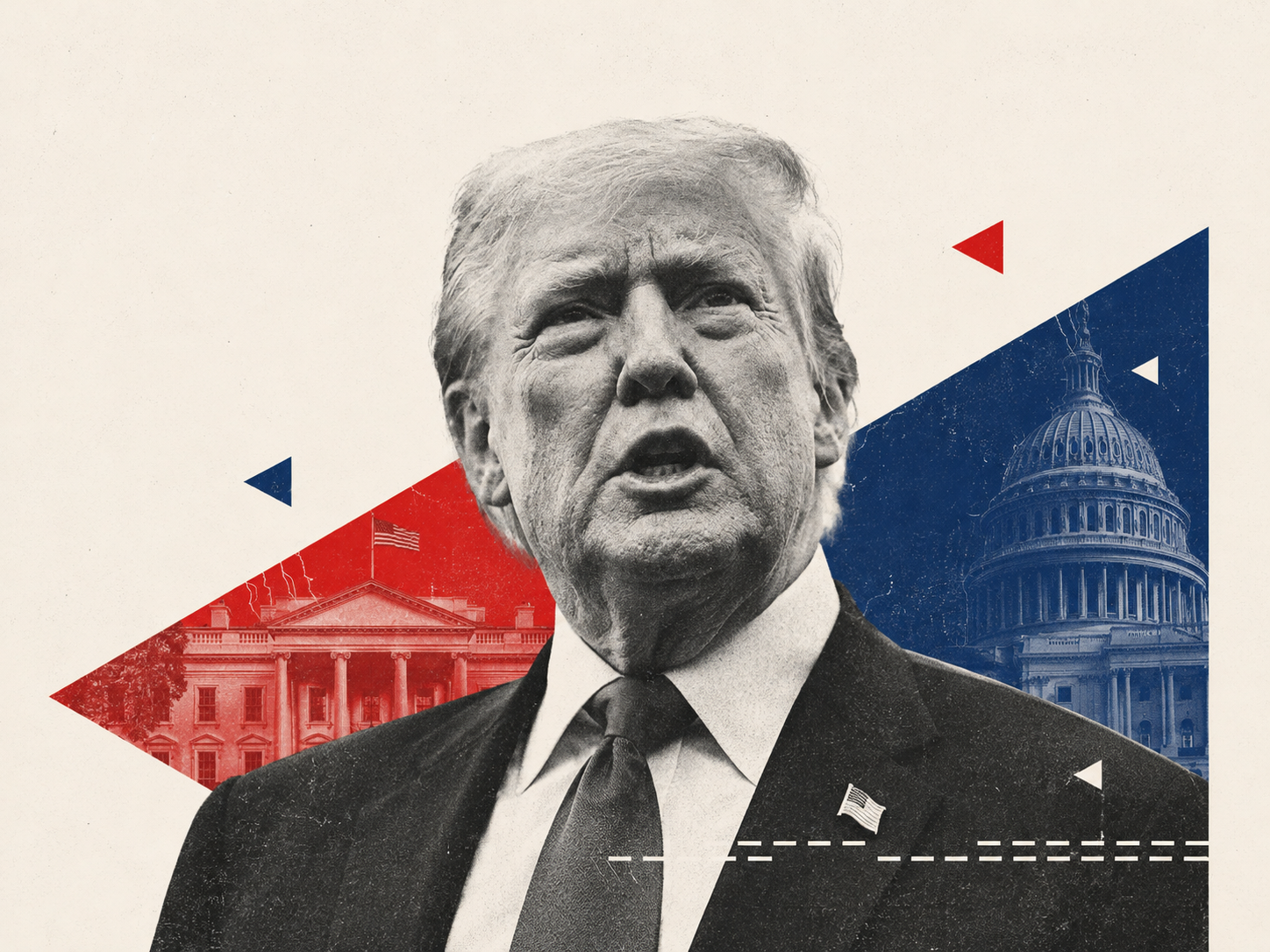
When Iowa was called for Josh Turek late on election night, the Democrats had secured the Senate with at least 54 seats and a House majority of about 255. Few British health leaders will have been following the results into the early hours. Yet the political arithmetic in Washington matters considerably more to the NHS than it might first appear. The medicines pricing and tariff agreement announced by London and Washington in December 2025 was negotiated under one administration and a particular balance of power. Both have now been thrown into question. An agreement that has quietly become part of the background to NHS financial planning was built on political foundations far beyond Whitehall's control.
The terms of the deal are worth revisiting. In exchange for a zero per cent tariff on British pharmaceutical exports to the United States for at least three years, the UK agreed to raise the NICE cost-effectiveness threshold to between £25,000 and £35,000 per quality-adjusted life year from April 2026, marking its first significant increase in more than two decades. It also reduced the repayment rate on newer branded medicines under the voluntary pricing scheme to 15 per cent. In return, Washington agreed to exclude British pricing practices from trade investigations for the remainder of the Trump administration. Ministers presented the package as a 25 per cent increase in what the NHS would pay for new medicines, while Downing Street acknowledged a cost to the health service of around £1 billion. NICE estimated that the changes would allow an additional three to five medicines a year to clear its cost-effectiveness threshold.
The immediate question is not what the new Congress can overturn, but what it cannot. Although Democrats have secured a Senate majority, they remain well short of the 60 votes required to overcome a filibuster. Any legislation would also face the prospect of a presidential veto. The pharmaceutical tariff arrangements were established through executive action, and executive authority remains in Republican hands until January 2029. Any suggestion that legislation passing through either chamber in 2027 could readily dismantle the agreement therefore deserves considerable scepticism. The deal is not on the brink of collapse simply because the balance of power in Congress has shifted.
The more consequential risk lies in the political scrutiny that may follow. Incoming committee chairs have signalled an appetite for investigations into corporate profiteering, with pharmaceutical prices an obvious target given the prominence of the cost of living during the Democrats' campaign. The reported priorities do not specifically identify the British arrangement. Nevertheless, Washington presented the agreement as evidence that wealthy allies could be persuaded to contribute more towards American pharmaceutical innovation. That is a message likely to find favour with an administration seeking greater financial commitments from overseas partners. It becomes considerably less comfortable in a congressional hearing room where members want to know why American patients continue to face some of the highest medicine prices in the world. Closer examination of manufacturers' margins could alter how companies defend higher prices in overseas markets, while making any future round of bilateral negotiations harder to justify. This is a potential consequence, not an established outcome, but one the pharmaceutical sector cannot afford to ignore.
The underlying structure of the agreement makes that possibility more significant. The American concessions are time-limited: tariff protection runs for three years, while the commitment on British pricing practices lasts only for the remainder of one presidential term. The UK's obligations, as published, carry no equivalent expiry date. Once incorporated into NICE's assessment methods, a higher cost-effectiveness threshold will be difficult to reverse, particularly given the likely opposition from clinicians and patient groups. NHS leaders should therefore prepare for a scenario in which the additional expenditure remains embedded in the system long after the protection that helped secure the agreement has expired in 2029. The opportunity cost is difficult to overlook. Every additional pound spent on a new medicine is a pound that cannot be directed towards diagnostics, community capacity or the elective recovery programmes that trusts continue to struggle to fund. While the arrangement is still young enough to be reconsidered, the Department of Health and Social Care should require the pharmaceutical industry to demonstrate a tangible return, whether through increased UK clinical trial activity, faster medicine launches or committed investment in domestic manufacturing.
For life sciences businesses, the agreement presents a different but equally important planning challenge. Companies that welcomed the higher NICE threshold as a lasting reset of the British medicines market should be prepared for the possibility of a political review after the next US presidential election, regardless of which party emerges victorious. Investment decisions based on three years of tariff certainty require a much longer-term foundation than the current agreement can guarantee. The prospect of more favourable market conditions in Britain may be attractive, but businesses cannot assume that the political consensus underpinning them will endure.
The American election result also carries a wider lesson about healthcare affordability. The Democrats' agenda begins with restoring Medicaid cuts and reinstating Affordable Care Act subsidies, although the prospect of achieving either remains limited while a presidential veto hangs over their legislative ambitions. The electoral message, however, is harder to dismiss. Voters hold governments accountable when healthcare coverage disappears or becomes more expensive, and the pressure of household costs can quickly turn access to treatment into a defining political issue. British readers will recognise the pattern. Patients judge the state not by the sophistication of its policy announcements, but by whether a scan arrives on time, a GP appointment can be secured or an essential medicine is within reach. A government that has agreed to spend more on new treatments will inevitably be asked what patients are receiving in return. Ministers unable to offer a clear and measurable answer may find that question asked with considerably less patience than Washington has so far shown.
Ultimately, the December agreement was a political bet: that goodwill under one American administration would outlast the conditions that produced it, even as the UK committed additional money upfront. That bet may yet hold until 2029. But the distinction between the two sides' obligations is already clear. The prudent course for the NHS and the Government is to plan on the basis that the higher costs will endure while the protections may not. The evidence of what Britain receives in return must be gathered now, while there is still an opportunity to revisit the terms before the balance of the bargain shifts further against the health service.