
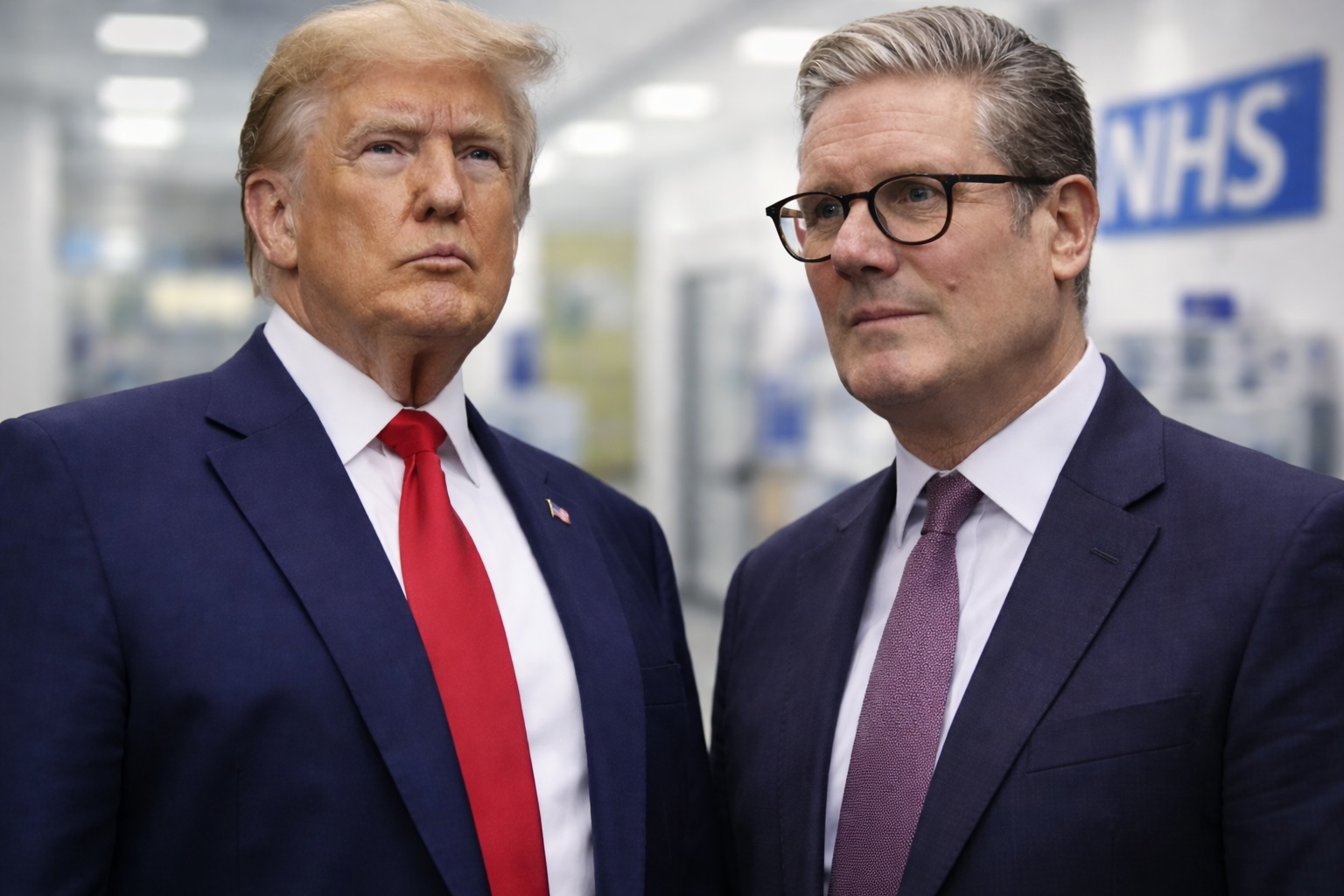
A forthcoming agreement between the UK and US governments to increase the price the NHS pays for medicines is drawing growing criticism from health policy experts, who argue it is based on flawed economic assumptions. The deal expected to be finalised in 2026 would see the UK pay significantly more for new patented drugs, with estimates suggesting increases of up to 25% on some treatments. In return, the UK has secured trade concessions, including reduced tariffs on pharmaceutical exports and commitments from global drug companies to increase investment.
However, critics warn that the financial burden will fall directly on the NHS budget rather than central government, with early projections indicating an additional £1 billion in costs over the next three years and potentially up to £9 billion annually by 2035. This has raised concerns that higher spending on medicines could come at the expense of other health services.
“Zombie ideas” underpinning policy approach
Health economists and commentators have argued that the deal is built on what they describe as two persistent but unsupported “zombie ideas”. The first is the belief that paying higher prices for medicines will directly lead to increased pharmaceutical investment in the UK. While industry leaders have linked pricing to investment decisions, evidence suggests the relationship is far more complex. Factors such as research infrastructure, workforce skills and regulatory environment often play a more significant role than pricing alone.
The second assumption is that newer, more expensive medicines necessarily deliver greater health benefits. Critics argue that while innovative treatments can be transformative in some cases, many offer only marginal improvements compared with existing therapies, often at significantly higher cost. Research cited by analysts indicates that spending on high-cost drugs can sometimes displace more cost-effective interventions, reducing overall health gains across the population.
Streeting defends balanced approach to pricing
Health Secretary Wes Streeting has defended the government’s broader approach to medicines pricing, emphasising the need to balance innovation with affordability. In previous statements on negotiations with the pharmaceutical industry, Streeting said: “I won’t allow big pharma to rip off our patients or taxpayers,” highlighting concerns about excessive pricing demands.
He has also acknowledged the importance of maintaining a strong life sciences sector, stating: “We’re committed to spending more on medicines… but we’re not a pushover.” While not directly addressing the “zombie ideas” critique, Streeting has consistently argued that the UK must remain an attractive destination for investment while ensuring value for money for the NHS.
Industry pressure and shifting global dynamics
The deal comes amid sustained pressure from pharmaceutical companies, which have argued that UK drug prices are too low compared with other developed markets. Executives from major firms, including Eli Lilly, have warned that the current pricing regime discourages investment and delays patient access to new treatments.
At the same time, the United States has pushed for international partners to contribute more to the global cost of drug development, a policy reflected in the agreement. This shifting landscape has placed the UK in a difficult position, balancing the need to attract investment with the imperative to control healthcare spending.
Implications for NHS finances and digital strategy
The potential financial impact of the deal is significant, particularly given existing pressures on NHS budgets. Health leaders have warned that increased spending on medicines could limit resources available for other priorities, including workforce expansion, service delivery and digital transformation.
For the health technology sector, the implications are twofold. On one hand, improved access to innovative treatments could drive demand for digital tools that support personalised medicine, data analytics and outcomes-based care. On the other, tighter overall budgets may constrain investment in digital infrastructure, particularly if rising drug costs crowd out other forms of spending.
A critical test for value-based healthcare
The debate over the UK–US drug pricing deal highlights a fundamental challenge in modern healthcare: how to balance innovation with value. The NHS has historically relied on institutions such as the National Institute for Health and Care Excellence (NICE) to assess cost-effectiveness and ensure that new treatments deliver meaningful benefits.
Changes to pricing structures and evaluation thresholds could reshape this approach, potentially altering how decisions are made about which treatments are funded. For critics, the concern is that abandoning established principles in favour of higher prices risks undermining the NHS’s ability to maximise health outcomes within finite resources.
Uncertain path ahead
As negotiations continue, the final shape of the deal, and its long-term impact remains uncertain. What is clear, however, is that the agreement represents a significant shift in UK health policy, with implications for patients, providers and the wider life sciences sector. For policymakers, the challenge will be to ensure that any increase in spending delivers tangible benefits, rather than simply inflating costs.
For the NHS, the stakes are high: getting the balance wrong could exacerbate financial pressures, while getting it right could improve access to cutting-edge treatments. The debate over “zombie ideas” may ultimately prove central to determining whether this policy shift delivers on its promises, or becomes a costly misstep in the evolution of UK healthcare.



.png)

.jpg)