
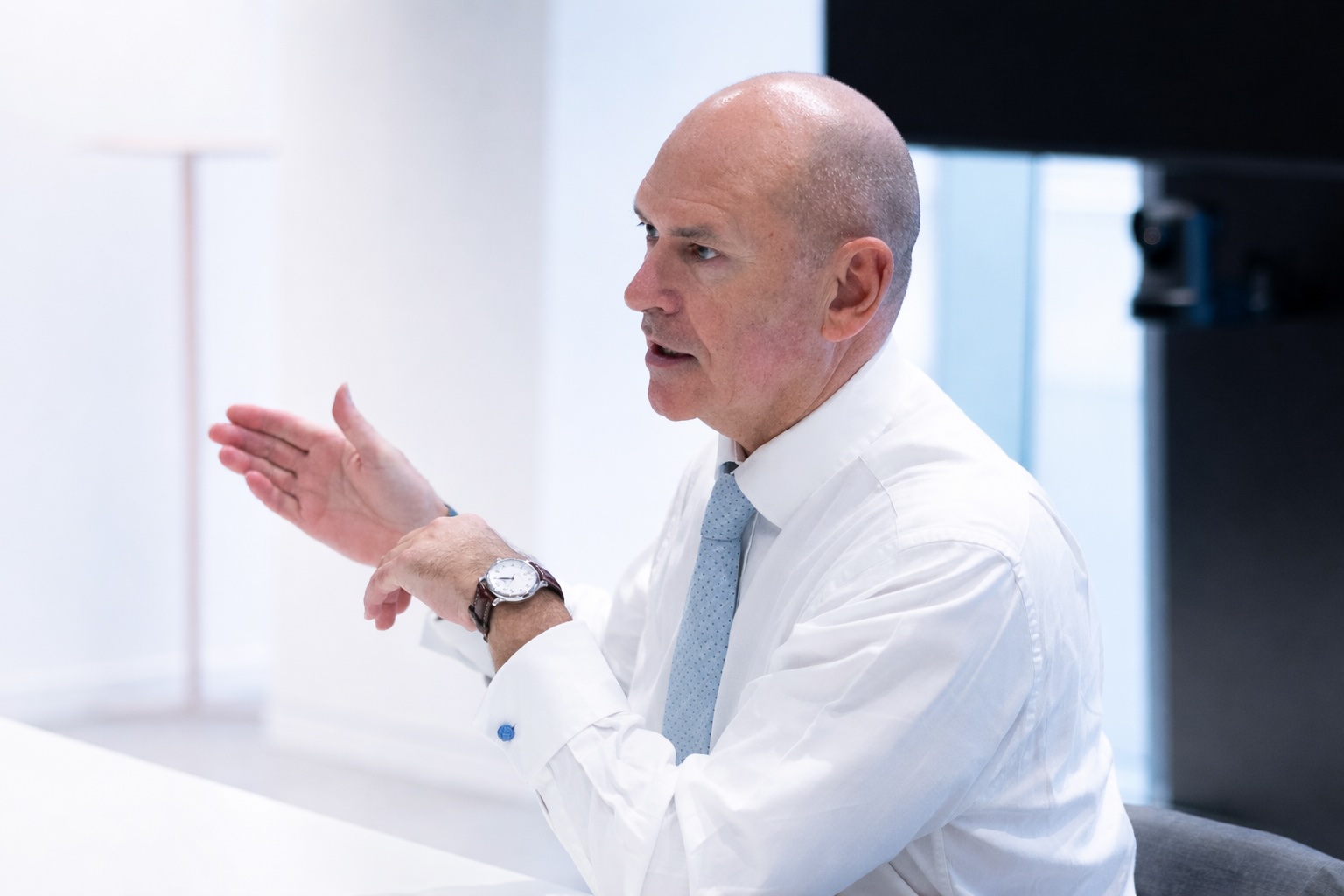
When Sir Jim Mackey took over as chief executive of NHS England in April 2025, he inherited a system under extraordinary strain, record waiting lists, workforce unrest, and declining public confidence. Now, in 2026, attention is turning to whether his leadership can translate into meaningful recovery. Early signals suggest a pragmatic reform agenda, but also highlight the scale of the challenge facing the NHS.
A reformer with a track record
Mackey’s appointment followed a period of upheaval, including the departure of his predecessor and a broader restructuring of NHS leadership. His reputation was built on turning around struggling organisations, notably improving performance at West Hertfordshire Teaching Hospitals without additional funding, lifting it from near-bottom rankings to among the best-performing trusts for A&E waits.
He has also led major organisations such as Newcastle Hospitals and Northumbria Healthcare, and previously played a national role in elective recovery following the Covid-19 pandemic. This operational credibility has shaped expectations that he will prioritise delivery over policy rhetoric. Mackey himself has emphasised realism, warning that the NHS has “maxed out” what is affordable and must now focus on productivity and value rather than simply seeking more funding.
A system under intense pressure
The context Mackey faces is arguably one of the toughest in NHS history. Performance remains fragile across key metrics, with A&E delays, elective backlogs and ambulance response times still falling short of national targets. At the same time, industrial action continues to disrupt services. NHS leaders, including Mackey, have warned that ongoing resident doctor strikes risk causing “maximum harm” to patients and prolonging recovery efforts.
Financial pressures are also intensifying. The NHS entered 2026 facing significant deficits, and external shocks such as global supply chain disruption linked to geopolitical tensions, threaten to push costs even higher. Mackey has already warned that such factors could create a “huge shock” to NHS finances. These overlapping challenges underline the complexity of the task: improving performance while maintaining financial discipline and workforce stability.
Technology and productivity at the centre of reform
A central pillar of Mackey’s approach is the use of technology and operational reform to drive productivity gains. He has advocated for wider adoption of digital tools, including integrated electronic patient records, data transparency and advanced surgical technologies such as robotics. This aligns with broader NHS strategy, where digital transformation is seen as key to unlocking efficiency, whether through better patient flow management, predictive analytics, or streamlined clinical workflows.
However, Mackey has also been clear that technology alone is not a solution. In speeches and internal communications, he has stressed the need to tackle cultural and structural issues, including what he described as the normalisation of substandard care in parts of the system. His focus on publishing more outcomes data and increasing transparency reflects a belief that accountability will be critical to driving improvement.
Structural reform and political uncertainty
Mackey’s tenure also coincides with significant structural change. The government has announced plans to bring NHS England more directly under ministerial control, effectively reversing a decade of operational independence.
This creates both opportunity and risk. On one hand, closer alignment with the government could accelerate decision-making and policy implementation. On the other hand, experts have warned that reorganisation could disrupt progress and affect staff morale if not carefully managed. Mackey’s role, therefore, extends beyond operational leadership to navigating a politically sensitive transition, balancing central direction with the need for local autonomy and clinical engagement.
Leadership style and cultural change
Colleagues and analysts frequently describe Mackey’s leadership style as calm, direct and focused on execution. He has placed particular emphasis on staff wellbeing and organisational culture, arguing that sustainable improvement depends on engaged and supported teams. This includes efforts to reduce bureaucratic burden, improve working environments, and prioritise prevention alongside acute care. Such measures are seen as essential in addressing workforce retention, one of the NHS’s most pressing long-term challenges.
Can he fix the NHS?
The question of whether Mackey can “fix” the NHS may ultimately be the wrong one. The scale of the crisis spanning funding, workforce, infrastructure and demand means that no single leader can deliver transformation alone. What Mackey can influence is the direction of travel. His emphasis on realism, productivity and technology-driven reform offers a coherent strategy, but its success will depend on sustained political support, workforce buy-in and adequate resources.
As 2026 unfolds, early progress is likely to be incremental rather than transformational. Yet in a system as complex as the NHS, even incremental gains, if sustained could mark the beginning of a broader recovery. For now, Mackey’s tenure represents a test not just of leadership, but of whether the NHS can adapt to modern pressures while preserving the principles on which it was founded.



.png)
.jpg)