
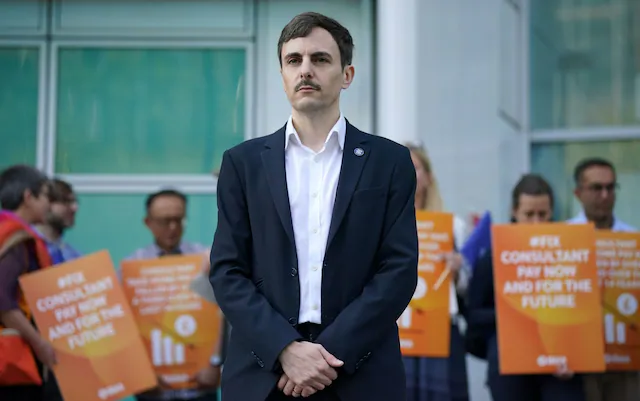
The NHS has entered one of its most dangerous moments since the pandemic, caught between an aggressive early flu surge and the looming threat of a five day walkout by resident doctors. As hospitals report rapidly rising admissions and winter pressures intensify, the British Medical Association has taken the extraordinary step of urging the service to cancel large volumes of planned care to prevent what senior figures warn could become a systemic failure.
Dr Tom Dolphin, chair of the BMA council, said that elective procedures which can be safely postponed, including hip and knee replacements and some diagnostic scans, should be stood down to free senior clinicians to manage the influx of flu patients. The recommendation reflects the scale of the pressure now facing hospitals. NHS data shows flu admissions climbing sharply in recent days, with daily numbers up by more than half in a single week and intensive care capacity beginning to tighten in several regions. Dolphin described the situation as a “superflu” season arriving earlier and with greater force than anticipated.
This advice lands as resident doctors prepare for a five day strike beginning at 7am on 17 December, the third round of industrial action this year. The timing has become the focus of a bitter political dispute. Dolphin rejected claims that the walkout was deliberately scheduled to coincide with the busiest winter period or to disrupt Christmas discharges, arguing that the dates were set well before Christmas pressures were clear. He insisted that the BMA had acted responsibly and that contingency plans, including redeploying senior doctors from elective work, would allow urgent and emergency care to be maintained.
The government takes a starkly different view. Health Secretary Wes Streeting has accused the BMA of a cynical attempt to wreck Christmas and of scaremongering at a moment when the NHS is already facing what he has called a tidal wave of flu. He warned publicly that the combination of strikes and infection rates risks pushing services close to collapse. Labour leader Sir Keir Starmer echoed that assessment, describing the planned action as reckless given the scale of the outbreak.
In a last minute attempt to avert the strike, Streeting has put forward a fresh offer, now being put to a vote of resident doctors. The proposal includes legislative priority for UK trained doctors in specialty training, the creation of 1,000 new training posts next year with more promised over the following three years, and government funding for mandatory professional fees. Ministers have framed the package as a serious response to workforce bottlenecks and training frustrations that have dogged junior doctors for years.
Within the BMA, however, there is little optimism. A deputy chair said it was difficult to see members accepting an offer that does nothing on pay. At the heart of the dispute is the union’s demand for a 26 per cent pay rise to restore earnings to their real terms value in 2008. That sits on top of the 28.9 per cent uplift doctors have already received since 2022, a figure ministers point to as evidence they have moved further than any previous government. On headline pay, the Treasury has made clear there will be no further concessions.
For Dolphin, this narrow focus on numbers misses the point. He argues that the dispute is not simply about salary but about a deep rooted sense of grievance and dissatisfaction that has spread across the medical workforce. Morale, he said, has hit rock bottom. Doctors increasingly feel undervalued, overworked and unsupported, making high risk decisions daily because of staff shortages, lack of beds and missing equipment. Those are the kinds of compromises he associates with health systems close to collapse, not with a service that claims to be resilient.
He has also warned that a deal centred on training places risks deepening divisions within the workforce. While expanding specialty posts may help younger doctors in the long term, it does little for more senior clinicians who have seen their pay eroded year after year and their working conditions steadily deteriorate. Addressing what Dolphin calls the “jobs issue” alone fails to grapple with the broader loss of trust between doctors and the state.
Behind the immediate drama of strike ballots and winter flu graphs lies a more chronic crisis. Long waits in emergency departments, patients stranded for days on trolleys and delayed discharges stretching beyond 48 hours have become routine throughout the year, not just during winter peaks. Dolphin argues these failures are driven primarily by sustained underfunding and workforce gaps, not by industrial action. In his view, the current confrontation has simply exposed how fragile the system has become.
As the vote on Streeting’s offer continues and hospitals prepare for the possibility of mass cancellations, the NHS finds itself making stark choices between different groups of patients. Planned operations are postponed to protect emergency care. Senior doctors are pulled from one part of the system to shore up another. The political battle over who is to blame may dominate headlines, but the underlying question is harder and more uncomfortable. Whether the service can retain its staff, restore morale and cope with rising demand without fundamental change is no longer theoretical. It is being tested, day by day, on wards already close to breaking point.



.jpg)
.jpg)
.jpg)