.jpg)
A San Francisco-based healthcare technology company announced this week that it has built an AI platform intended to sit at the centre of clinical care, connecting the workflows of doctors, insurers and medical researchers through a single system. Abridge made the announcement at a keynote event in New York City, where it outlined a broad expansion of its existing transcription product into what it described as a clinician intelligence platform.
The company already operates across more than 300 health systems in the United States, supporting over 100 million clinical conversations each year. The New York event marked a significant shift in how Abridge is positioning itself, from a note-generation tool into something considerably more ambitious.
The problem it is attempting to solve will be familiar to any NHS clinician. Doctors and nurses spend substantial portions of their working day on administrative tasks: writing notes, entering data into electronic records, coding diagnoses. A 2023 British Medical Association survey found that physicians in England spent an average of three hours daily on paperwork, time that is not spent with patients. Abridge's founding argument is that AI embedded directly into clinical workflows can return that time to clinicians without sacrificing the accuracy that records and compliance require.
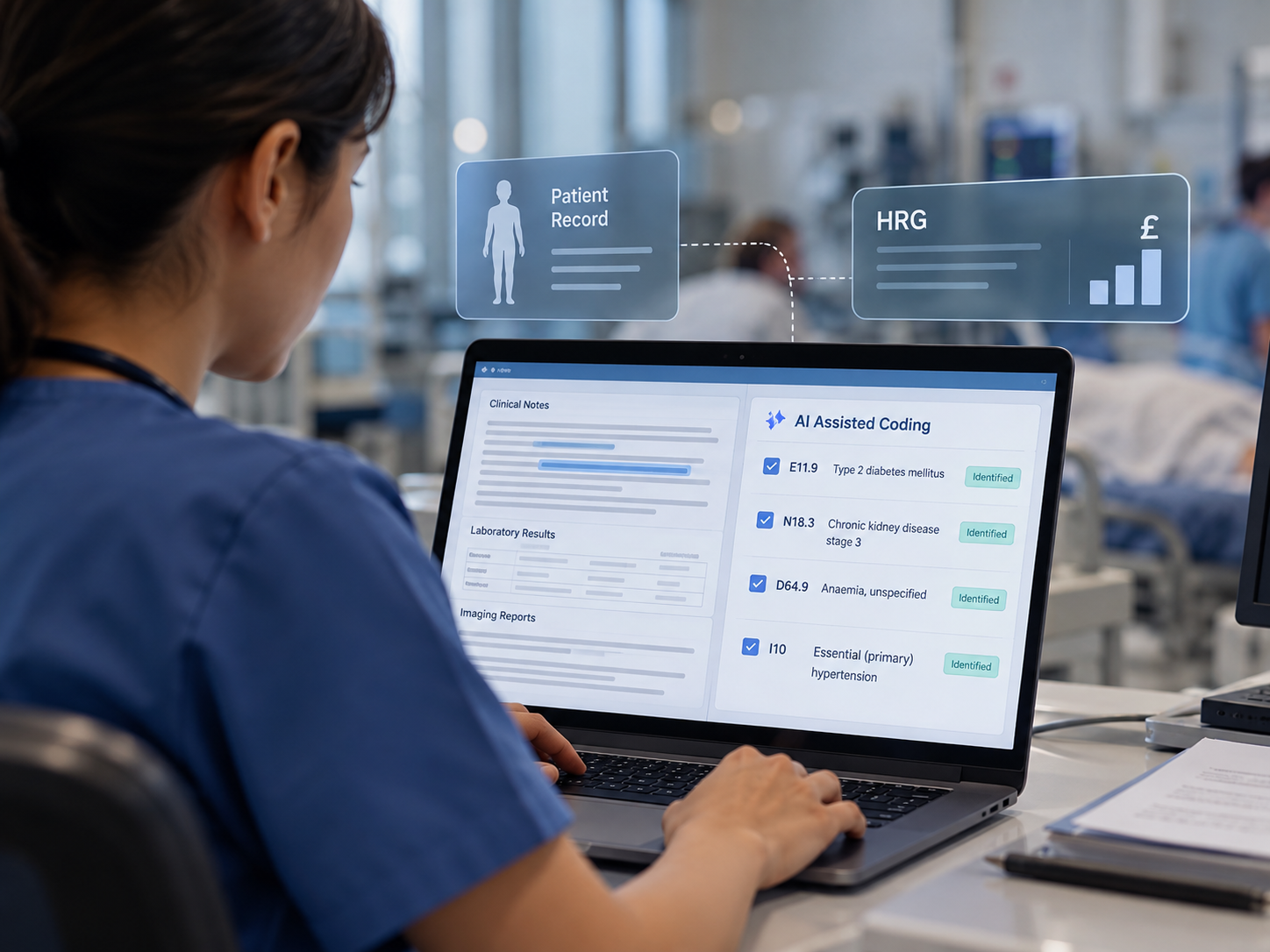
The platform operates across three stages of a clinical encounter. Before a consultation, it generates preparatory notes drawn from a patient's prior records, flagging chronic conditions and care gaps relevant to that visit. During the consultation, it transcribes the conversation in real time across more than 28 languages, and can surface evidence-based guidance without requiring the clinician to leave the interface. After the visit, it produces draft clinical notes, billing codes and patient summaries for review before submission to the electronic health record.
The platform has also been extended to nursing staff. Abridge captures nurse-patient conversations during inpatient care and converts them into structured draft documentation. Reid Health, one of the health systems using the tool, reported reducing its nursing vacancy rate from 18 per cent to 8.6 per cent and cutting incidental overtime by 70 per cent on participating teams, attributing part of that improvement to reduced documentation burden.
On the financial side, the company is pursuing real-time alignment between clinical documentation and insurance claims processing. At the keynote, executives from Emory Healthcare and Cigna Healthcare discussed how documentation generated at the point of care could accelerate payment decisions between providers and insurers. That specific mechanism does not translate to the NHS, which does not operate on an insurance model. However, the underlying principle has some relevance: clinical coding in England directly influences tariff payments under NHS Payment Schemes and shapes integrated care board budgets. Incomplete or inaccurate documentation has measurable financial consequences for trusts, a problem that better ambient documentation could in theory address.
Abridge has struck content partnerships with the New England Journal of Medicine, JAMA, the American Diabetes Association and the American Heart Association, allowing the platform to surface relevant clinical guidance during consultations contextualised to the individual patient's record. In life sciences, the company outlined plans to help identify patients eligible for clinical trials at the point of care, with Alzheimer's disease cited as an early focus. The company also confirmed a collaboration with NVIDIA to develop a foundation model built specifically for clinical conversations, trained on de-identified data.
For UK readers, the honest qualification is this: Abridge has not announced NHS partnerships and was not built with the British healthcare system in mind. NHS trusts operate under data governance frameworks, including UK GDPR and NHS England's data security standards, that would require careful scrutiny of any system processing patient conversations at this scale. Procurement would involve NHS England, integrated care boards and potentially the Medicines and Healthcare products Regulatory Agency depending on how clinical decision support functions are classified.
Whether a platform of this kind could be adapted for NHS use is a question worth asking. The administrative burden it targets is, if anything, more acute in British general practice and secondary care than in the US systems where Abridge currently operates. That the answer has arrived from America, built around a healthcare model Britain does not use, says something about where investment in health technology continues to flow.