The Pan American Health Organization (PAHO) has revoked the United States' measles elimination status, formally classifying the disease as endemic for the first time in 26 years. More than 5,400 infections and eight deaths have been recorded in 2026, making it the worst domestic outbreak since 1991.
The ruling followed closed-door epidemiological reviews. Investigators used patient contact tracing and viral genome sequencing to confirm sustained local transmission. A country keeps elimination status only while it can show that continuous spread has been interrupted for at least 12 months. The United States could no longer do so.
Measles is among the most contagious human viruses. One infected person can pass it to as many as 18 unvaccinated people, and the virus can remain airborne in a room for up to two hours after that person has left. Stopping sustained spread requires roughly 95 per cent of a community to be immune. Coverage has fallen below that level in many parts of the country.
Public health officials attribute the decline to missed routine childhood appointments during the pandemic and to two decades of vaccine misinformation that has kept evolving online. The American Medical Association and the Big Cities Health Coalition have described the resurgence as a preventable public health failure. Two doses of the combined measles, mumps and rubella (MMR) vaccine give lasting protection to the great majority of recipients.
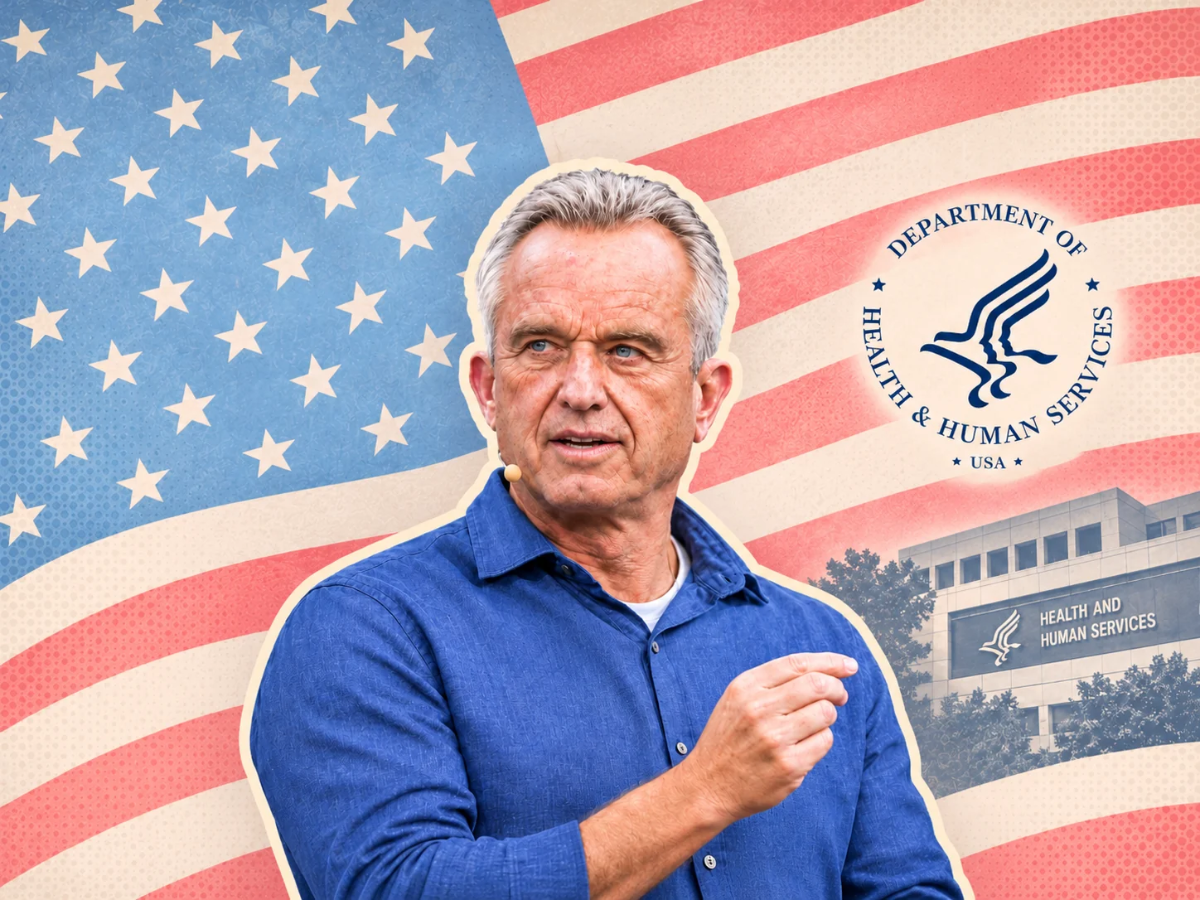
The outbreak has drawn political scrutiny. Critics have pointed to President Donald Trump and Health and Human Services Secretary Robert F. Kennedy Jr., who have both made past remarks questioning the safety of the MMR vaccine. Incoming Democratic lawmakers and several epidemiologists have said federal health leadership carries responsibility for the loss of status. Other experts caution that vaccine hesitancy predates the current administration, and that vaccination rates began slipping years ago.
Kennedy has publicly committed to curbing the outbreak. He has described the MMR vaccine as the primary means of preventing infection and said his department will work with local healthcare providers to rebuild public trust.
The United States is one of several countries to have lost the designation. Mexico, Bolivia, the United Kingdom and parts of Europe have also seen elimination status withdrawn. Public health researchers have documented how the virus moves across borders in North America, with linked cases appearing in the United States, Canada and Mexico. Canada lost its own status in 2025 and has since gone 60 days without domestic transmission, which suggests that control is achievable with sustained effort.
For ordinary citizens, endemic status means a higher chance of meeting the virus in everyday settings such as schools and workplaces. Adults who were vaccinated decades ago may need to check their immunisation records, because documentation from childhood is often incomplete or lost. A person exposed to a case who lacks immunity can be asked to quarantine for 21 days, the length of time in which symptoms may still appear.
Experts say regaining elimination status would require a coordinated national strategy that is communicated clearly to the public. Dedicated funding from Congress would be needed to support it. Federal officials would also have to endorse routine immunisation without qualification, since mixed messages from public figures have complicated earlier outreach efforts.
Even with those measures in place, the earliest the country could regain the designation is after a further 12 months without continuous transmission. Health authorities say the first step is to raise childhood coverage back above the 95 per cent threshold, community by community.