
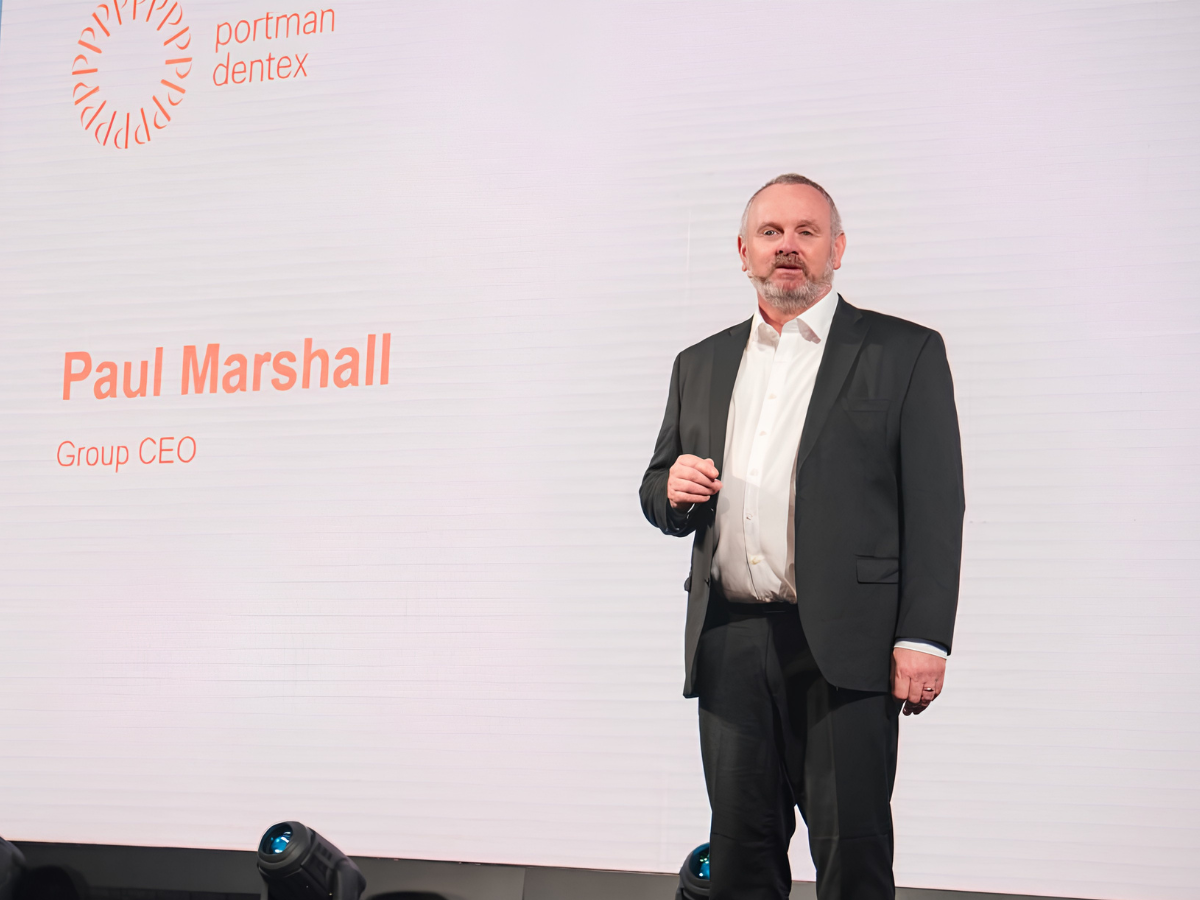
PortmanDentex has announced a major two-year partnership with Heidi Health, marking one of the most significant deployments of clinical artificial intelligence in dentistry across the UK and Ireland to date. The agreement will see Heidi’s AI-powered clinical tools rolled out across the dental group’s extensive network of practices and clinicians, positioning the initiative as a flagship example of AI adoption in specialist healthcare settings.
The programme builds on a successful pilot conducted in 2025, where selected practices reported strong clinician engagement and measurable improvements in administrative efficiency. Following these results, the rollout is now scaling rapidly, with around 60 clinicians being onboarded onto the system each month.
As one of the UK and Ireland’s largest dental groups, PortmanDentex’s adoption of AI at this scale signals a broader shift within dentistry towards digital transformation, mirroring trends already seen in primary care and hospital settings.
How clinical AI is reshaping dental workflows
At the core of the partnership is Heidi’s “clinical scribe” technology, an example of ambient voice AI. The system listens to patient consultations in real time and automatically generates structured clinical notes, referral letters and follow-up documentation.
This approach aims to significantly reduce the administrative burden on clinicians, who often spend substantial time on record-keeping. By automating documentation, the technology allows dental professionals to focus more directly on patient care, while still retaining full control over the final clinical record through review and approval processes.
In addition to documentation, Heidi’s broader AI suite supports evidence retrieval and workflow management, helping standardise records and improve consistency across practices. This is particularly relevant in dentistry, where variability in note-taking and compliance can affect both clinical outcomes and regulatory requirements.
Evidence from pilots and early adoption
Evidence from the initial pilot phase has been central to the partnership’s expansion. According to both organisations, early deployments demonstrated measurable reductions in administrative time and improvements in record quality.
Clinician uptake has also been strong, suggesting that the technology integrates effectively into existing workflows without disrupting patient interactions. The ongoing rollout pace, approximately 60 clinicians per month which offers a concrete benchmark for how quickly clinical AI can be scaled in a large, multi-site healthcare organisation.
Heidi Health itself brings substantial operational scale to the partnership. The company reports supporting millions of consultations weekly across multiple healthcare settings and is already widely used among NHS general practitioners, indicating a proven track record beyond dentistry.
A wider shift towards AI-enabled healthcare
The PortmanDentex–Heidi partnership reflects a broader trend across UK healthcare: the transition of AI tools from pilot projects into full-scale deployment. Ambient voice technologies, in particular, are gaining traction as a solution to clinician burnout linked to administrative workloads.
For the dental sector, this marks a significant step forward. Historically slower to digitise compared with other healthcare domains, dentistry is now beginning to adopt advanced AI tools that can enhance both efficiency and patient experience.
Industry observers suggest that the success of this rollout could influence adoption across other dental groups and specialist practices. If the model proves sustainable, it may serve as a blueprint for integrating AI into routine clinical workflows without compromising safety or clinician oversight.
Ultimately, the partnership underscores a central ambition shared across the NHS and private providers alike: leveraging AI to improve productivity while maintaining high standards of patient care. By reducing time spent on documentation and enhancing the quality of clinical records, initiatives like this aim to rebalance the clinician–patient relationship—placing greater emphasis back on direct care.



.png)
.png)
.jpg)