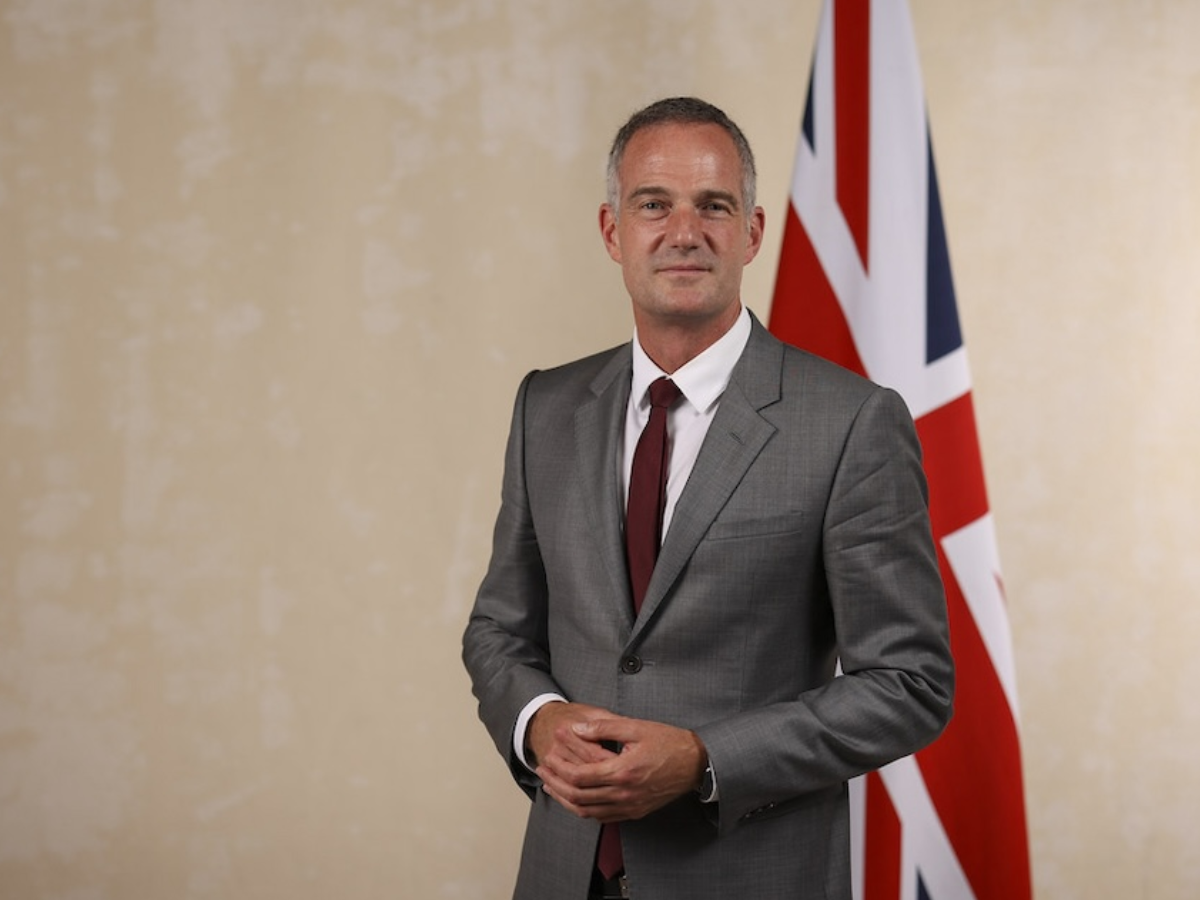
Britain's Business Secretary Peter Kyle has said he would have vetoed the sale of ARM Holdings to Japanese investment firm SoftBank had he been in government at the time, describing the 2016 acquisition as a missed opportunity for the United Kingdom. Speaking during London Tech Week, Kyle set out a series of government measures intended to retain fast-growing technology companies on British soil.
ARM Holdings, the Cambridge-based microchip designer, was sold to SoftBank for £24 billion in 2016. It was subsequently listed on the New York Stock Exchange in 2023 and is currently valued at approximately £285 billion. Kyle said the company could have been the largest on the London Stock Exchange had it remained in British hands. He also expressed regret over the 2014 acquisition of AI company DeepMind by Google, noting that while the firm continues to operate in the UK, the wealth it generates flows primarily to its American parent.
The remarks carry political weight given that both sales occurred under previous governments. Kyle was careful to frame his position not as a case for routine interventionism, but as a commitment to changing the underlying conditions that make British companies attractive to foreign buyers in the first place. "What I don't want to do is create the circumstances where they do not want to leave," he said.
To that end, the government announced a cross-departmental support service for scaling technology companies, designed to help them access skills, finance and regulatory guidance from a single point of contact. Kyle also confirmed a higher risk tolerance when it comes to public investment, signalling that the government is prepared to deploy taxpayer money more aggressively in promising firms. Recent recipients of public backing include energy software company Kraken, autonomous vehicle developer Wayve and a UK-focused technology investment fund, Playground Global.
The announcements come as several major American technology companies, including SpaceX, Anthropic and OpenAI, prepare for large share offerings on US markets. The contrast has not been lost on ministers, who are openly concerned that London is losing ground as a destination for high-growth listings.
Kyle acknowledged the tension between embracing new technology at pace and the risks that come with doing so. He described two distinct dangers: moving too slowly and failing to shape the direction of artificial intelligence, or moving quickly and making mistakes along the way. He said he was prepared to accept the latter.
The government's focus on the technology sector sits alongside more difficult conditions elsewhere in the economy. The hospitality industry has been under sustained pressure following increases to the national living wage and employers' national insurance contributions. Ministers recently confirmed that planned business rate rises for pubs would be introduced more gradually than originally scheduled, a concession to an industry that has lobbied hard against the additional costs.
Youth unemployment has also emerged as a concern. The number of young people not in employment, education or training has passed one million for the first time since the period following the 2008 financial crisis. Former Health Secretary Alan Milburn, who recently warned of a lost generation of young workers, is working with the government on potential responses. Kyle accepted that structural problems exist in the way young people enter the workforce, though he stopped short of outlining specific policy measures.
The overall picture Kyle presented was of a government willing to take a more active role in shaping the technology economy, while managing the political difficulty of sectors that are struggling under existing policy decisions. Whether the measures announced this week are sufficient to change the calculus for the next generation of British technology companies remains to be seen. The sales of ARM and DeepMind are now frequently cited in policy circles as cautionary examples of what can happen when strategic assets are allowed to leave without scrutiny. Kyle's comments suggest those cases will continue to inform government thinking for some time.


.jpg)
.jpg)