
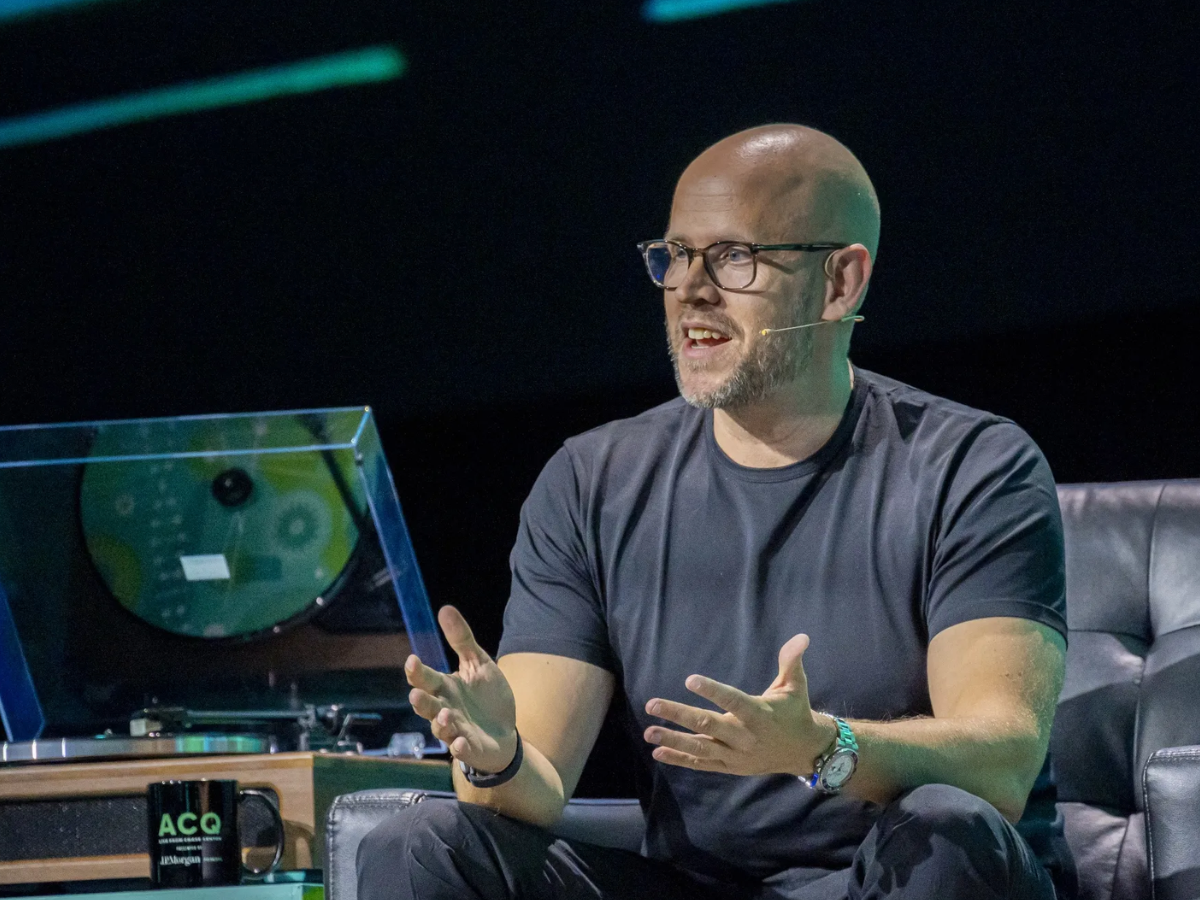
A member walks into a converted retail unit in Stockholm, lies down for an hour, and leaves with a body scan more detailed than most people receive across a decade of NHS contact. Somewhere in that hour, cardiovascular risk markers, skin lesions, body composition and wearable data are stitched together into a single clinical profile. The member pays for it, books the follow-up a year ahead, and rarely questions who else might eventually see the results. That quiet transaction, repeated now more than 100,000 times across Sweden and the UK, has just attracted $700 million from investors who believe it is worth a great deal more.
Neko Health, co-founded by Spotify's Daniel Ek, is heading to New York next, priced as an affordable alternative to America's luxury MRI clinics. The headline is expansion. The substance, for anyone watching British health policy, sits closer to home. This is a company that built its evidence base and its member trust in the UK and Sweden first, reached clinic-level profitability there, and is only now taking the model abroad. Britain was the proving ground. What Britain gets back from that is worth asking.
The NHS has spent years being cautious about exactly what Neko sells. The UK National Screening Committee does not recommend whole-body or opportunistic scanning for the general population, and for defensible reasons: false positives generate anxiety and unnecessary procedures, incidental findings clog specialist capacity that already has an eighteen-month tail on some referral pathways, and population-level scanning without a clear disease target tends to move cost downstream rather than remove it. That caution has often been read, fairly or not, as institutional timidity dressed up as evidence-based medicine. Neko's growth suggests a different reading is now available. A well-capitalised private market is stepping into exactly the space the NHS declined to enter, and it is not waiting for the National Screening Committee's permission.
The more consequential question is not whether affluent members in London and Stockholm should be allowed to buy a scan the NHS will not offer. It is what happens to the data once they do. Neko has said plainly that its long-term commercial plan involves brokering aggregated clinical datasets to health insurers. That is a governance model built entirely outside NHS consent structures, outside NICE evaluation, and outside any of the public accountability mechanisms that have made the Federated Data Platform such a contentious file inside DHSC. The NHS spent two years arguing, sometimes clumsily, about whether Palantir should be trusted with patient data under strict contractual and oversight conditions. Neko has built a comparable asset with considerably less scrutiny, using data volunteered by consumers who are, in practice, also NHS patients.
This is where the government's prevention rhetoric meets a harder test than any white paper anticipated. Every recent NHS strategy document, and every version of the shift-left argument since the last spending review, treats prevention as something the state will eventually deliver through better primary care, better risk stratification, better use of existing data. Neko's growth curve suggests the market may get there first, on its own terms, with its own commercial logic attached to the results. The NHS runs the risk of losing not only money but also the wealthiest and most motivated group of prevention-focused patients from whom a true population health plan would have to learn if a significant portion of the general public most involved with their own medical results shifts toward a private screening habit.
None of this requires the NHS to compete with Neko on price or convenience. It cannot, and should not try. But it does require an honest reckoning with why its own screening evidence bar exists, whether that bar still holds when a private alternative is absorbing hundreds of thousands of members without it, and whether Britain intends to have any claim at all on the value of health data grown on its own population before it is monetised somewhere else.



.jpg)
.jpg)
.jpg)