
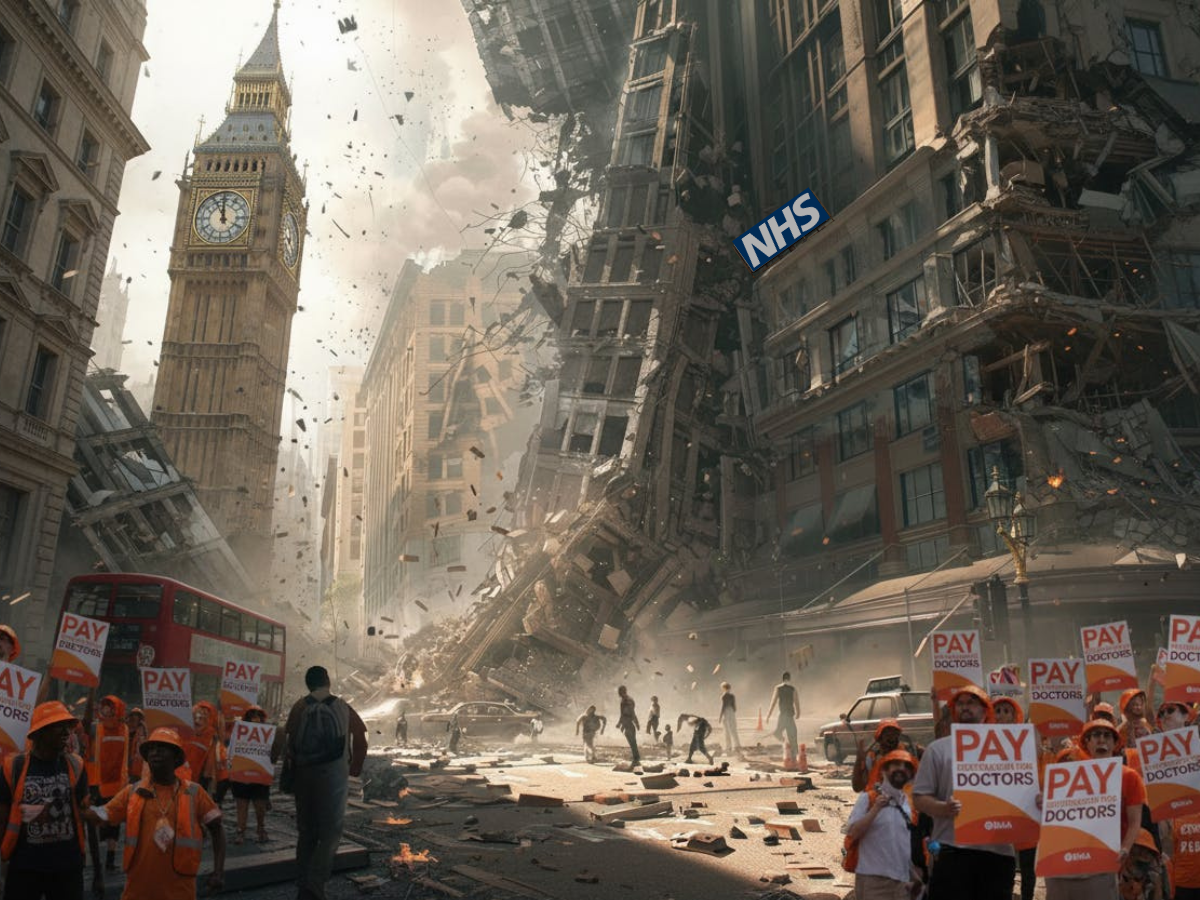
The UK government has sharply criticised the British Medical Association (BMA) after resident doctors announced a six-day strike from 7 to 13 April 2026, immediately following the Easter bank holiday weekend. In an official statement to Parliament, Wes Streeting expressed strong disappointment at the decision, particularly given the timing and the stage of negotiations.
Streeting also criticised the union’s decision to escalate action rather than continue discussions, stating that, “This announcement came just hours after its Resident Doctor Committee rejected a historic deal that would boost pay, create jobs, improve career prospects and put money back in the pockets of its members”
The walkout marks the latest escalation in a long-running dispute over pay and conditions, and is expected to place significant pressure on NHS services already dealing with seasonal demand.
Breakdown in negotiations over pay deal
The strike follows the collapse of negotiations between the government and the British Medical Association over a proposed pay settlement. The deal reportedly included a multi-year package worth around £700 million, alongside reforms to career progression, reimbursement of exam fees and the creation of thousands of additional training posts.
However, the BMA rejected the offer, arguing it failed to address long-term pay erosion and did not deliver “full pay restoration”, a central demand of its campaign. The union has maintained that pay for resident doctors has fallen significantly in real terms since 2008, while the government argues that recent awards already represent substantial increases. Streeting has insisted the offer was both fair and affordable, warning that further concessions may not be possible given wider economic pressures.
Impact on NHS services and patient care
NHS leaders have warned that the six-day strike could have serious consequences for patient care, with disruption expected across elective services, outpatient appointments and urgent care pathways. The timing, immediately after a long bank holiday weekend, has raised particular concern, as hospitals typically experience heightened demand during this period.
Senior NHS figures have suggested the strike risks causing “maximum harm” to patients, with delays to treatment and longer waiting times likely. The financial impact is also significant, with estimates suggesting the industrial action could cost the NHS up to £300 million in lost activity and contingency measures. For health system leaders, the dispute highlights ongoing challenges in workforce planning and retention, particularly as the NHS continues to recover from pandemic-related backlogs.
Streeting urges union to reconsider
In his official statement, Streeting urged the BMA to return to negotiations and reconsider its position before the strike proceeds.
He warned that, “As a direct result of their decision, and despite our best efforts, resident doctors will be worse off. Indeed, on the very day that 1,000 more specialty training places would have opened up for resident doctors with this deal, the BMA will be on strike demanding more job opportunities.”
The Health Secretary also suggested that rejecting the current offer could lead to missed opportunities, including investment in training and workforce expansion. Despite the strong rhetoric, Streeting indicated that the government remains open to dialogue, though he has described the existing proposal as a “final” offer in its current form. The BMA, meanwhile, has defended its decision, arguing that strike action is necessary to secure a fair deal for doctors and protect the long-term sustainability of the workforce.
Digital and operational pressures intensify
The latest round of strikes comes at a time when the NHS is increasingly reliant on digital tools to manage operational pressures. Hospitals are expected to use data-driven systems to prioritise urgent cases, reschedule appointments and maintain patient safety during the disruption.
However, repeated industrial action has exposed limitations in system resilience, including challenges in workforce rostering, capacity planning and real-time communication across organisations. Health technology leaders have emphasised the need for more advanced digital infrastructure, such as predictive analytics and integrated workforce platforms to better manage large-scale disruptions. The strike also raises questions about how digital transformation can support continuity of care during periods of industrial unrest.
Ongoing dispute signals deeper workforce tensions
The April strike will be the latest in a series of industrial actions stretching back several years, reflecting deeper tensions over pay, working conditions and workforce morale within the NHS. While both sides have expressed willingness to continue discussions, the current impasse suggests that a resolution may not be imminent.
For policymakers, the dispute underscores the importance of aligning workforce strategy with long-term NHS reform, including investment in training, retention and modernisation. For patients, however, the immediate concern is the impact on access to care. As the health service prepares for another period of disruption, the coming weeks will be critical in determining whether negotiations can be revived, or whether the conflict will continue to escalate.



.png)

.jpg)