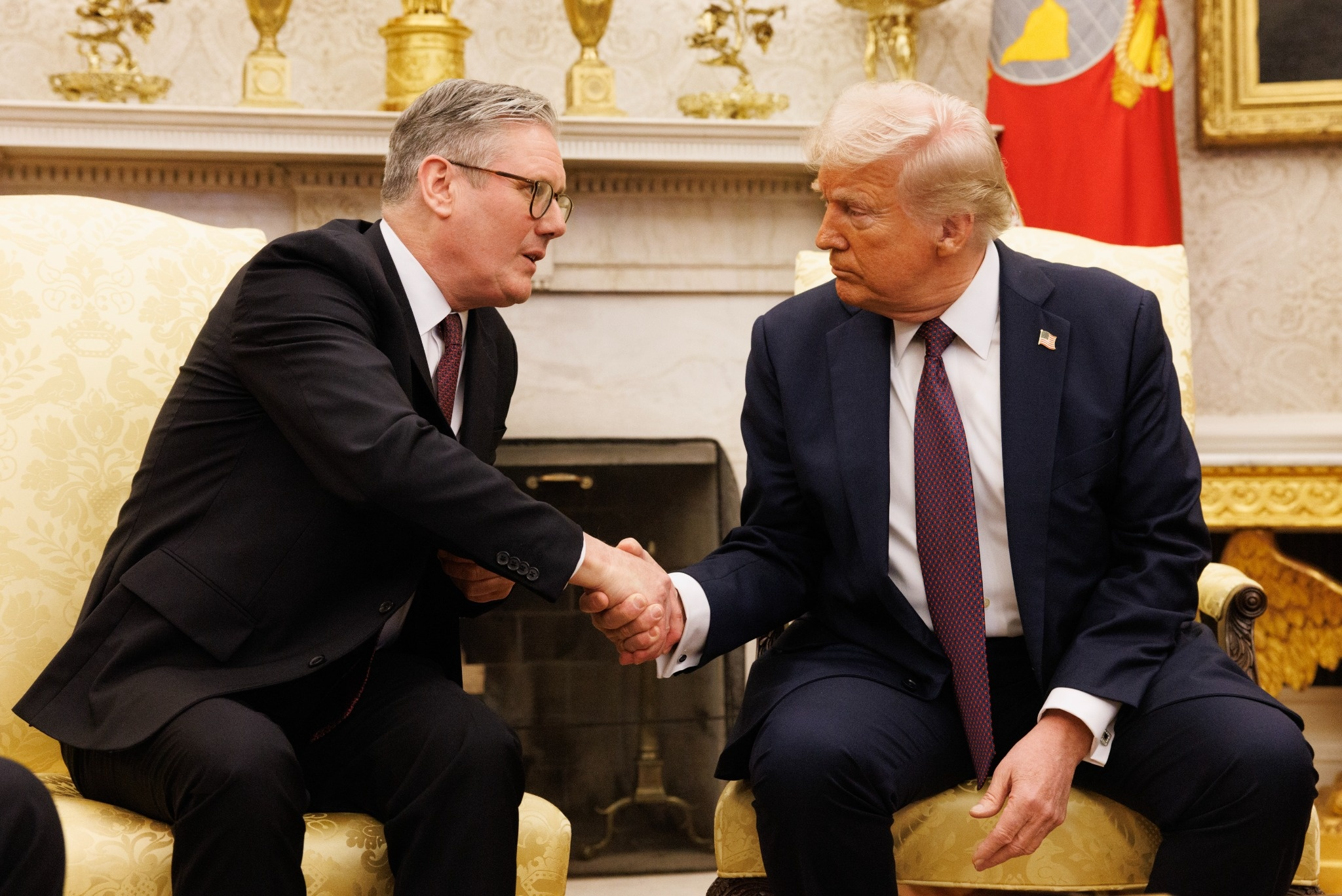
The trans-Atlantic “special relationship” has come under renewed strain after US President Donald Trump publicly criticised UK Prime Minister Sir Keir Starmer, dismissing him as “no Winston Churchill” during remarks about Britain’s stance on American military action against Iran.
Speaking in Washington this week, Trump expressed frustration over what he described as hesitation from London in permitting the United States to use British-controlled military bases to launch strikes. He suggested that the UK’s approach reflected a weakening of historic defence ties between the two allies.
The unusually personal tone of the criticism has drawn attention on both sides of the Atlantic, with Downing Street declining to respond directly to the “Churchill” comparison but reaffirming its commitment to a “strong and pragmatic” relationship with Washington.
Dispute Over Diego Garcia and UK Bases
At the centre of the diplomatic row is access to key strategic infrastructure, notably the joint UK-US base on Diego Garcia in the Chagos Islands and RAF facilities including RAF Fairford in Gloucestershire.
The White House had sought authorisation for US aircraft to use British territory for operations connected to escalating hostilities with Iran. The UK government initially resisted granting approval for offensive sorties, citing legal considerations and the need for clear alignment with international law.
Downing Street sources indicated that ministers were concerned about the scope and proportionality of potential strikes, particularly in light of broader regional instability. The UK later agreed to allow limited defensive use of facilities, primarily to protect allied assets and personnel from missile and drone attacks.
Prime Minister Starmer has stressed that Britain will not participate in open-ended military action without defined objectives and parliamentary scrutiny. In a statement to MPs, he underlined that “the safety of British citizens and service personnel remains paramount”.
RAF Operations and Defensive Posture
British forces are already active in the region. RAF aircraft operating from RAF Akrotiri in Cyprus have been conducting protective patrols and defensive missions following Iranian missile and drone activity targeting coalition positions.
The Ministry of Defence has confirmed that UK assets are focused on deterrence and force protection rather than offensive operations. A COBRA emergency meeting chaired by the Prime Minister last week reviewed contingency planning and regional security implications.
Defence analysts note that Diego Garcia remains strategically vital for long-range air operations and logistics in the Indo-Pacific and Middle East. Any restriction on its use carries operational and symbolic weight within NATO and allied planning circles.
Political Fallout in Westminster and Washington
Trump’s remarks have prompted sharp reactions across the UK political spectrum. Some Conservative figures argue that reluctance to support Washington risks weakening Britain’s global influence. Others, including several Labour MPs, maintain that caution reflects lessons learned from previous Middle East interventions.
Public opinion polling in early 2026 suggests significant scepticism among UK voters about deeper military involvement in Iran, particularly without a UN mandate.
In Washington, Trump has framed the disagreement as part of a broader reassessment of US alliances. He has criticised other European governments for similar hesitations and suggested that defence cooperation and trade relationships could be reviewed.
Implications for Health, Technology and National Resilience
While primarily geopolitical, the dispute carries secondary implications for the UK’s health and technology sectors.
Heightened regional instability places pressure on defence-linked supply chains, including cyber-security infrastructure and satellite communications systems that underpin NHS digital services. Military escalation can also disrupt global semiconductor markets, with downstream effects on medical device manufacturing and AI-driven health technologies.
Security analysts further warn of increased cyber-threat activity targeting allied nations during periods of diplomatic friction. Healthcare systems remain a known vulnerability for hostile state actors, raising concerns about resilience planning within NHS trusts.
For UK technology firms operating in dual-use AI, drone systems and advanced analytics, shifting US-UK defence dynamics could influence procurement priorities and regulatory alignment.
A Test for the ‘Special Relationship’
Despite the heated rhetoric, officials on both sides insist that operational cooperation continues. Intelligence sharing and joint planning mechanisms remain active, and defence channels are reportedly functioning normally.
Nevertheless, Trump’s “no Churchill” remark marks one of the sharpest public rebukes of a British prime minister by a US president in recent years. As tensions in the Middle East evolve, the episode represents a significant test of alliance diplomacy — balancing historic ties with modern political realities.
For Britain, the challenge lies in sustaining strategic partnership with Washington while maintaining legal integrity, domestic legitimacy and long-term national resilience.
Picture credit:
Prime Minister Keir Starmer meets US President Donald Trump at the White House, Washington DC, 27 February 2025. Official No 10 Downing Street photograph by Simon Dawson. © Crown copyright 2025. Licensed under the Open Government Licence v3.0.
Source:
No 10 Downing Street (via Flickr) – https://www.flickr.com/photos/number10gov/


.jpg)
.jpg)