
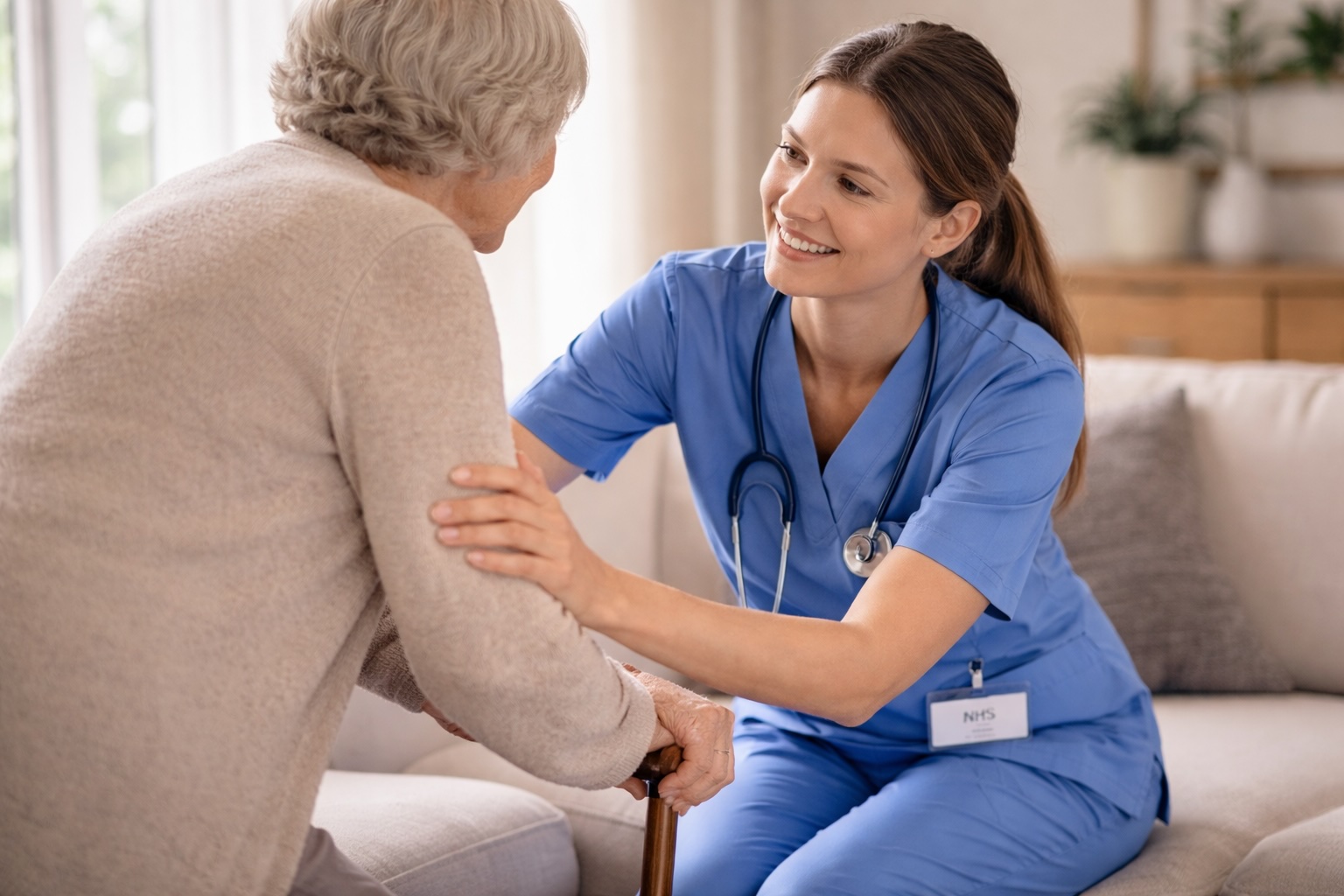
Major expansion of ‘hospital at home’ care
Sheffield Teaching Hospitals NHS Foundation Trust has expanded its “hospital at home” service, enabling more frail patients aged over 65 to receive hospital-level treatment in their own homes rather than being admitted to wards.
The initiative is designed to reduce avoidable hospital admissions while maintaining the same clinical standards as inpatient care. Under the expanded model, patients can now access a wide range of acute treatments at home, including intravenous therapies, blood tests and electrocardiogram (ECG) monitoring. The service is part of a broader NHS strategy to shift care closer to home, particularly for older people with complex health needs who are at higher risk of deterioration during hospital stays.
Multidisciplinary teams deliver acute care at home
A central feature of the programme is its multidisciplinary approach. Patients are supported by a team that includes consultant physicians, advanced clinical practitioners, nurses, pharmacists and therapists, ensuring comprehensive and coordinated care.
This model mirrors traditional hospital care but is delivered in a domestic setting, with regular visits from healthcare professionals and access to specialist input when required. Patients remain under the care of a consultant throughout their treatment, maintaining continuity and clinical oversight. The service also allows patients to be fast-tracked for diagnostic investigations such as CT scans when necessary, with appointments arranged on a day-case basis to avoid overnight admission. By combining hospital expertise with community delivery, the model aims to provide safe, high-quality care without the disruption associated with inpatient stays.
Improving outcomes for frail older patients
The expansion is particularly targeted at frail older people, a group that often experiences poorer outcomes when admitted to hospital. Evidence suggests that hospital environments can increase the risk of complications such as falls, infections and loss of independence. By enabling patients to remain in familiar surroundings, the “hospital at home” approach supports faster recovery and helps maintain physical and cognitive function. It also reduces the stress associated with hospital admission, both for patients and their families. Eligibility criteria typically include patients who are moderately or severely frail and experiencing an acute illness that would otherwise require hospitalisation, but who can be safely managed at home with appropriate support. The model also allows for earlier discharge from hospital, freeing up beds for patients who require more intensive or specialised care.
Digital and remote monitoring underpin the model
Digital health technologies play a key role in enabling hospital-level care outside traditional settings. Remote monitoring tools allow clinicians to track vital signs and respond quickly to any changes in a patient’s condition. Electronic patient records and integrated data systems ensure that information is shared seamlessly between hospital and community teams, supporting coordinated decision-making.
This aligns with the wider NHS push towards “virtual wards”, where patients are monitored and treated remotely while remaining under hospital supervision. Globally, hospital-at-home models have gained traction in recent years, particularly following the Covid-19 pandemic, which accelerated the adoption of telehealth and remote care solutions.
Reducing pressure on hospitals and emergency care
The expansion of Sheffield’s service comes at a time of sustained pressure on NHS hospitals, with high bed occupancy rates and growing demand from an ageing population. By treating suitable patients at home, the model helps to alleviate pressure on wards and emergency departments, improving patient flow and reducing waiting times.
Health leaders emphasise that this approach is not about replacing hospitals, but about using resources more effectively. Patients who genuinely need inpatient care can still access it, while others benefit from a more personalised and less disruptive alternative. The initiative also supports broader system efficiency, reducing travel for patients and carers and enabling more flexible use of clinical staff.
A blueprint for future NHS care delivery
The expansion of Sheffield’s “hospital at home” service reflects a wider shift in NHS policy towards community-based, patient-centred care. As demand continues to rise, models that combine digital technology, multidisciplinary teams and home-based delivery are increasingly seen as essential to maintaining sustainable healthcare systems. If successful, the approach could serve as a blueprint for other trusts looking to expand virtual ward capacity and reduce reliance on traditional hospital infrastructure.
For frail patients in particular, the benefits are clear: receiving high-quality care in the comfort of their own home, while avoiding the risks associated with hospital admission. As the NHS continues to evolve, initiatives like this highlight how innovation in care delivery is supported by technology and new clinical models which can improve outcomes while addressing some of the system’s most pressing challenges.



.png)
.png)
.jpg)