

The Missing Dimension in Healthcare Data
Healthcare systems capture extraordinary volumes of biological data yet they consistently miss one of the most direct signals of health: how patients actually feel. Laboratory results, imaging, prescriptions, and hospital activity are measured in detail, but the patient’s own experience of improvement or deterioration is rarely captured in a structured, continuous way. As a result, modern healthcare operates with high resolution clinical data but relatively limited insight into real patient health states.
This gap is particularly important in chronic disease, rare conditions, and complex treatment pathways where clinical measurements alone do not fully reflect how patients experience their health trajectory.
Patient-stated health preferences provide a direct way to address this.
The Limitations of Traditional Preference Research
Traditional health preference research often relies on complex elicitation frameworks designed to quantify how individuals value different health states. These methods are academically rigorous but slow to design and deploy, often limiting the scale and frequency at which patient preferences can be captured.
However, the most informative signal patients can provide is often much simpler.
Patients living with chronic conditions typically know immediately whether their health today is meaningfully better, worse, or unchanged compared with a recent period of time. When this signal is captured longitudinally it provides a highly interpretable indicator of real health trajectory.
Instead of relying solely on clinical proxies, healthcare systems can begin to observe how patients experience disease and treatment in real time.
Capturing Health Signals at Scale
Sanius Health has developed infrastructure designed to capture these patient-stated health signals continuously across multiple disease populations. The platform integrates hospital records, treatment exposure data, laboratory results, and imaging with longitudinal physiological monitoring from connected devices including heart rhythm data, sleep patterns, oxygen levels, and activity metrics.
Alongside these objective datasets, structured patient signals such as wellbeing, fatigue, symptom burden, and perceived health improvement are captured through simple and repeatable reporting mechanisms. These signals require minimal effort from patients yet generate high value longitudinal datasets when analysed at scale.
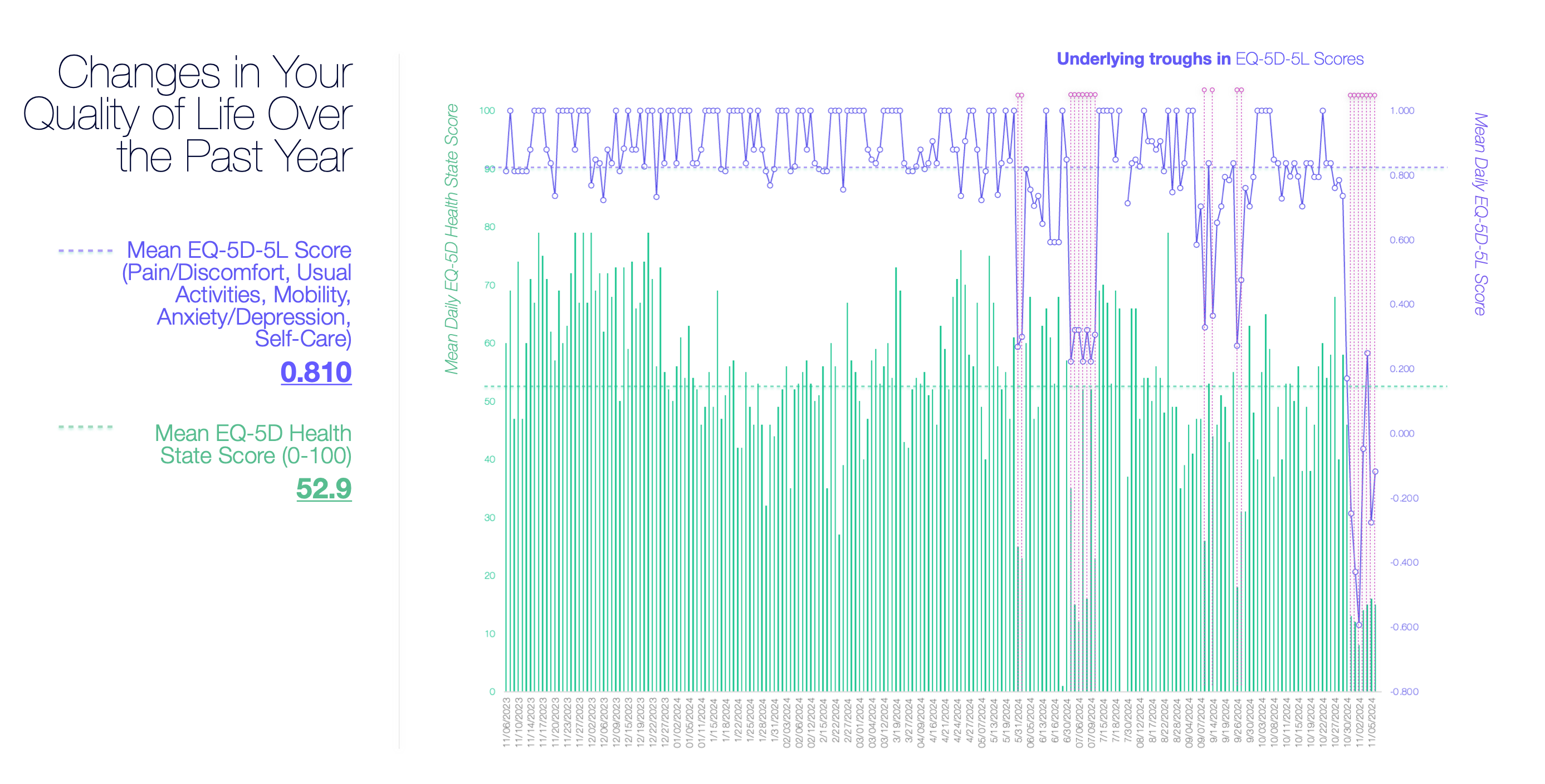
The resulting infrastructure produces a continuous representation of patient health trajectories rather than isolated snapshots of disease.
From Patient Signals to Clinical Insight
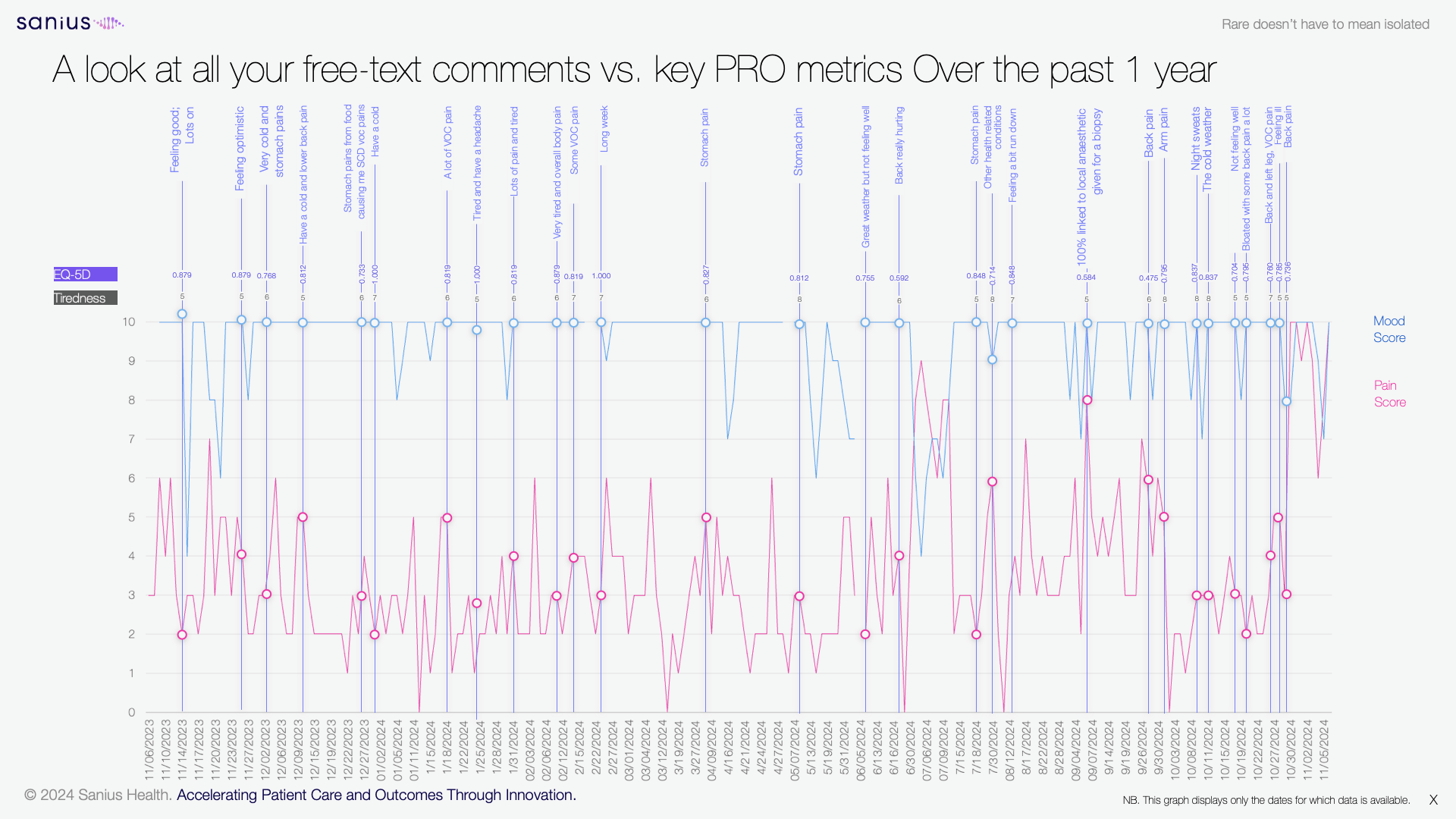
When analysed together, patient-reported health states and clinical measurements reveal patterns that are often invisible within traditional datasets. Subtle changes in fatigue, wellbeing, or perceived health frequently precede measurable clinical deterioration. These signals can therefore act as early indicators of disease progression or treatment response.
For clinicians this provides a new layer of insight into disease management. Instead of reacting to acute events, care teams can identify early deterioration signals and intervene earlier in the patient journey.
A New Layer for Real-World Evidence
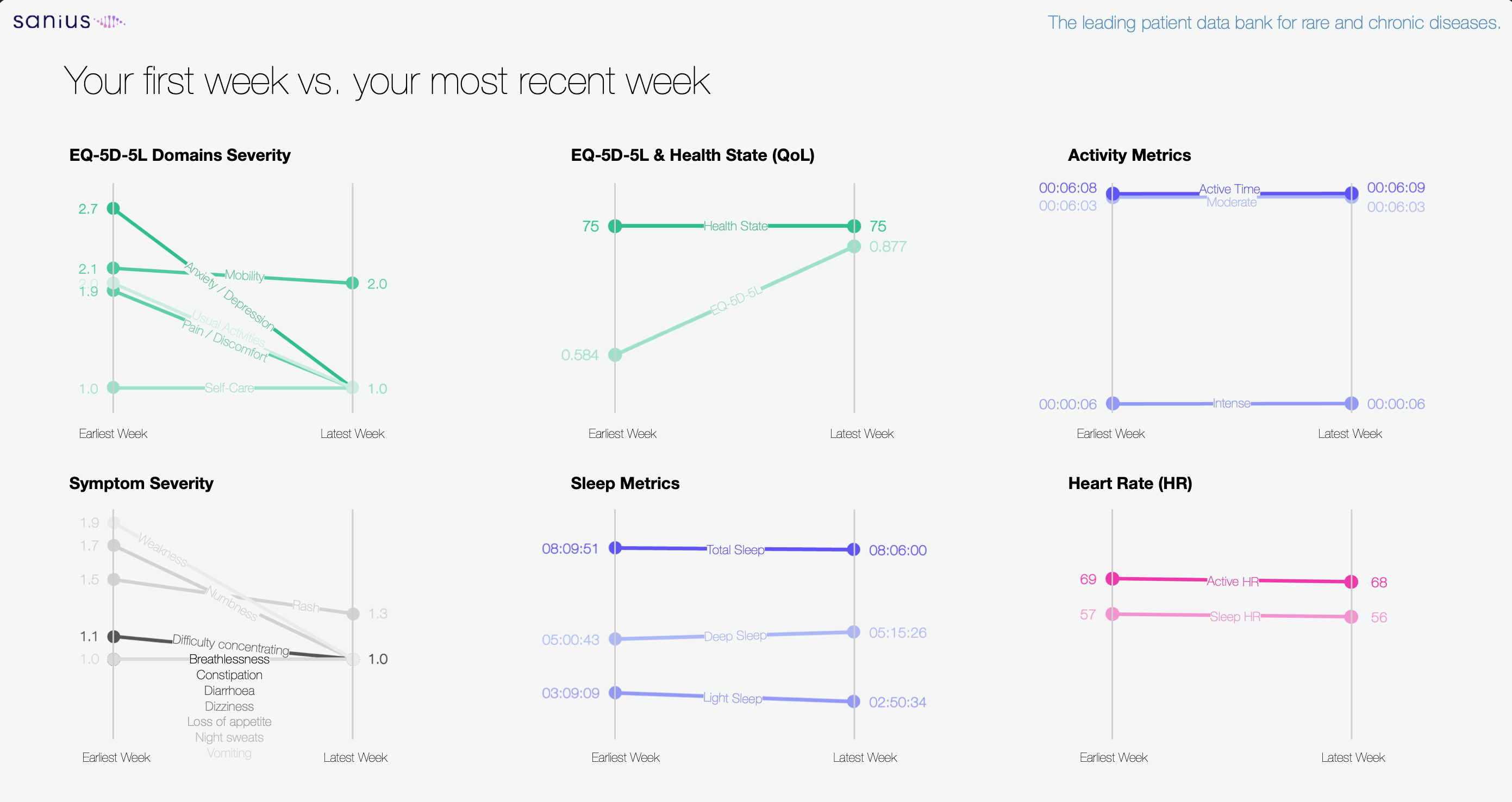
For researchers and life sciences organisations the value is equally significant. Longitudinal patient-stated health signals provide a scalable source of real-world evidence that reflects both biological response and lived treatment experience. When combined with structured clinical data, these datasets can support therapy evaluation, health technology assessment, and clinical trial design while improving the understanding of how treatments perform in real clinical environments.
Cross-Disease Learning and Predictive Insight
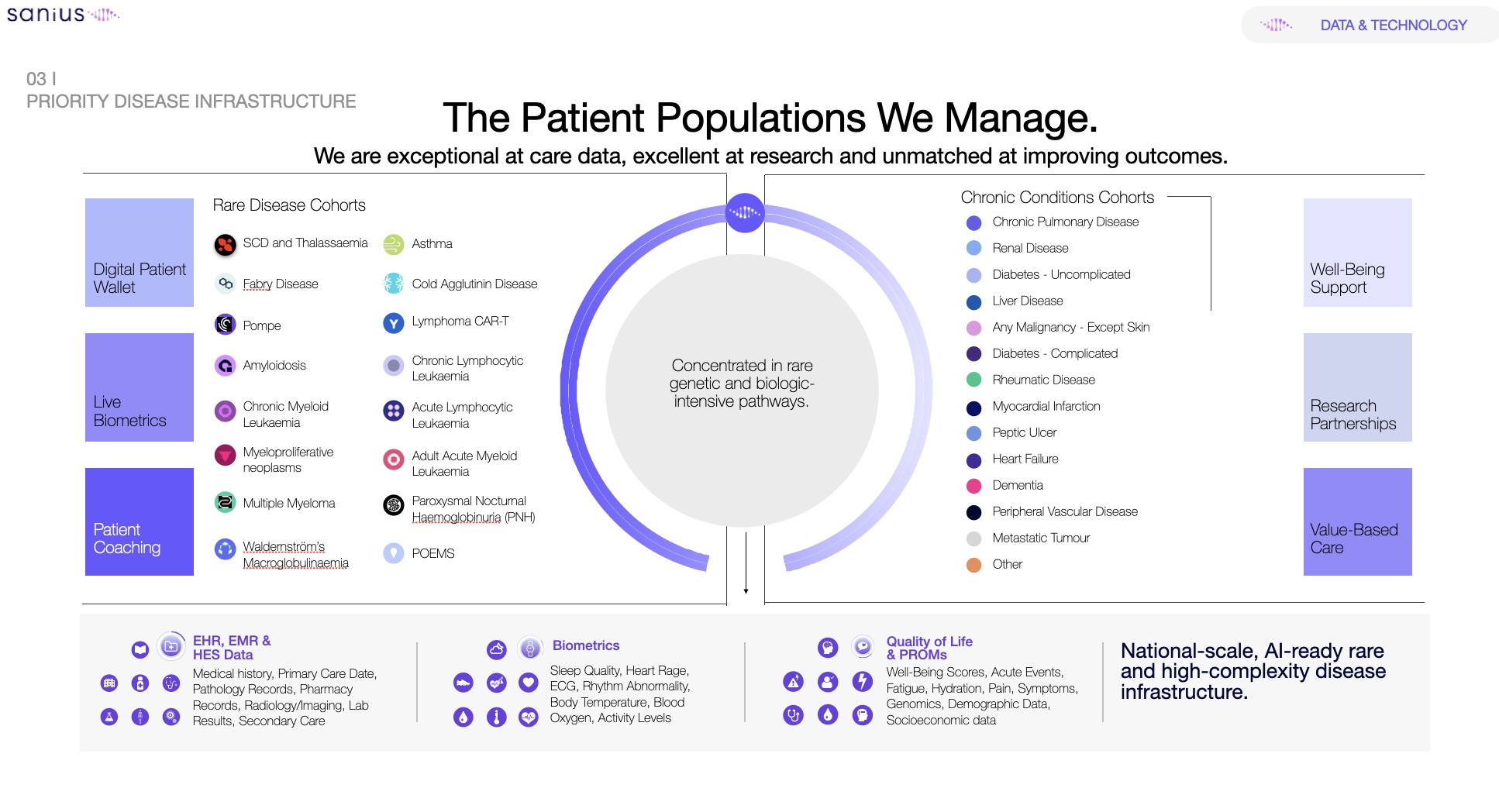
Importantly, this approach is not limited to a single disease. Many early signals of deterioration such as fatigue, sleep disruption, or reduced wellbeing appear across multiple conditions. By capturing patient-stated health preferences across rare diseases, oncology pathways, haematological disorders, and complex chronic conditions, the Sanius platform can identify cross-population patterns that strengthen predictive modelling and clinical insight.
This cross-disease infrastructure transforms patient-reported health signals from isolated observations into a scalable research and healthcare data layer.
Measuring Health, Not Just Disease
The principle is straightforward.
Patients already know how their health is changing. When that knowledge is captured continuously and integrated with clinical and physiological data, it becomes a powerful indicator of real-world health state.
By transforming simple patient-stated signals into structured longitudinal data, Sanius Health is helping to build a more complete evidence framework for healthcare and research.



.png)

.jpg)