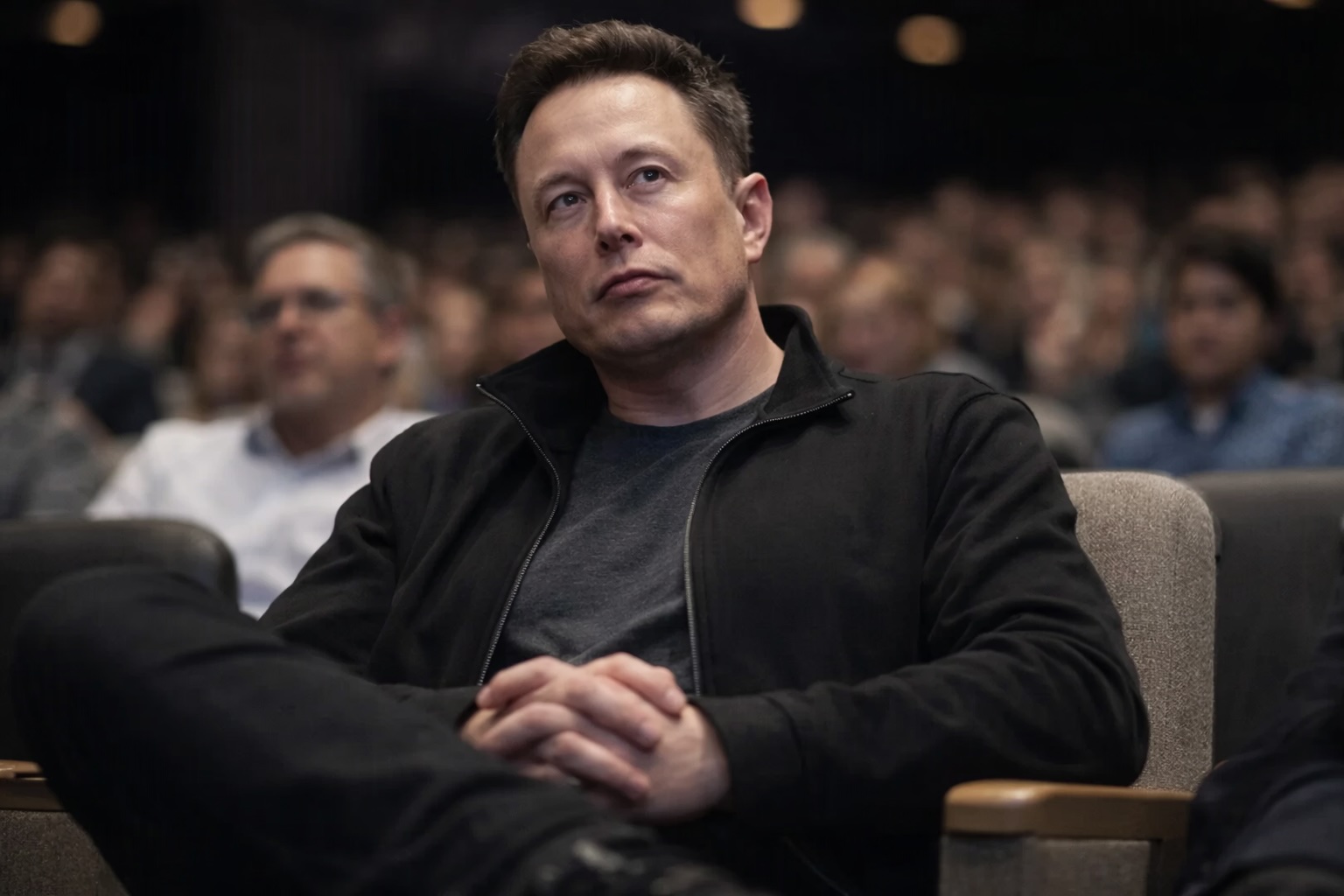
A US federal judge has cast doubt on Elon Musk’s claim for up to $134 billion in damages from OpenAI and Microsoft, describing key calculations behind the claim as effectively “numbers out of the air”. The comments came during pre-trial proceedings in California, where the court is preparing for a high-profile jury trial scheduled for April 2026.
Despite expressing scepticism about the methodology used by Musk’s expert witness, the judge declined to exclude the testimony entirely. Instead, the court ruled that the evidence could still be presented at trial, allowing a jury to weigh its credibility alongside competing expert analysis from the defence. The case has become one of the most closely watched legal battles in the artificial intelligence sector, with implications for how early investors and founders might claim value from rapidly expanding AI companies.
Origins of the legal dispute
The lawsuit centres on Musk’s role as an early co-founder and backer of OpenAI, which he helped launch in 2015 as a non-profit research organisation focused on developing artificial intelligence for the benefit of humanity. Musk later left the company’s board in 2018, several years before the organisation began transforming into a commercial AI powerhouse.
Musk’s legal claim argues that OpenAI abandoned its original non-profit mission and shifted towards a profit-driven structure, particularly through its deep commercial partnership with Microsoft. According to court filings, Musk alleges that this strategic shift allowed the company and its partners to generate enormous financial gains from technology that he helped establish.
His legal team argues that these profits represent “wrongful gains” that should be partly returned to him. The damages calculation suggests OpenAI may have gained between roughly $65 billion and $109 billion from Musk’s early involvement, while Microsoft may have gained between about $13 billion and $25 billion through its collaboration with the company. Together, these estimates underpin Musk’s demand for as much as $134 billion in compensation.
Court scepticism over expert analysis
However, the judge overseeing the case has expressed significant doubts about the economic modelling used to produce the damages estimate. During hearings examining expert testimony, the court questioned whether the calculations had sufficient empirical support, suggesting that some figures appeared to be speculative.
According to reports from the hearing, the judge indicated that parts of the expert analysis appeared to rely on assumptions rather than verifiable financial data. Nonetheless, the court stopped short of excluding the testimony entirely, concluding that disputes over methodology could instead be explored during cross-examination at trial. Legal experts say this approach is common in complex technology disputes, where economic models are often contested but still permitted as evidence. Ultimately, jurors will decide how much weight to give competing analyses of the companies’ value and Musk’s contribution.
OpenAI and Microsoft reject allegations
Both OpenAI and Microsoft have strongly rejected Musk’s claims. Lawyers representing the companies argue that the lawsuit lacks merit and misrepresents the evolution of OpenAI’s business model. OpenAI has described the case as baseless and suggested it forms part of a broader dispute between Musk and the organisation he helped create. Microsoft’s legal team has also denied any wrongdoing, stating there is no evidence that the company “aided and abetted” misconduct related to OpenAI’s transition to a hybrid profit structure. The defendants have separately challenged Musk’s damages calculations in court filings, arguing that the figures exaggerate the value of his early contributions and fail to account for the billions of dollars invested by other partners and investors.
Implications for the AI industry
The upcoming trial is likely to draw intense scrutiny across the technology sector, particularly as the commercial stakes surrounding artificial intelligence continue to escalate. OpenAI is now widely viewed as one of the most influential AI companies in the world, thanks largely to the success of its generative AI systems such as ChatGPT. For policymakers and technology investors, the dispute also raises broader questions about the governance of AI research organisations and the legal rights of early founders in rapidly evolving technology ventures.
If Musk were to succeed in recovering a significant share of the claimed damages, it could reshape how ownership and financial returns are structured in future AI start-ups. Conversely, a decisive victory for OpenAI and Microsoft would reinforce the ability of technology firms to pivot from non-profit research models to commercial platforms without retroactive claims from former backers. With the trial expected to begin in late April in California, the courtroom battle between Musk and OpenAI is set to become a defining legal test of the rapidly expanding global AI economy


.jpg)
.jpg)