

Shortly before seven in the morning during a British heatwave, the operational picture in a large south London hospital is already several hours old. The night team has handed over. The early discharge meeting is beginning in a room that smells of cold coffee and photocopier warmth. On screen, a live data feed shows how many patients are waiting in the emergency department, how many beds are occupied, how many patients have been in the department for more than four hours, and how many are clinically ready to leave a ward but cannot, because somewhere in the wider system a social care assessment, a community package, a family who hasn't yet answered their phone, something is not yet resolved. These patients are sometimes called, with a clinical bluntness that is itself revealing, "stranded". The morning's first task is to work out which of them can be moved, and by whom, and when.
This is not a crisis. This is a regular day. The meeting lasts forty minutes. The participants are calm, measured, evidently practised. But underneath that composure is something that does not appear in performance tables or ministerial statements: the sheer cognitive burden of running a large NHS organisation in the current moment. Not just the operational complexity: the beds, the flows, the competing pressures, but the knowledge that the system sitting behind all of it is itself under strain.
The people who hold this complexity together day after day are rarely the ones who appear on the covers of policy documents. They are the chief operating officers: a professional cohort that is simultaneously central to NHS delivery and oddly under-examined. Not the chief executives who carry public accountability, not the chief medical officers who carry clinical authority, but the operators: the people accountable for performance, flow, patient experience, staff rostering, theatre utilisation, delayed discharge, infection control, and the hundred other moving parts that determine whether a hospital functions well on any given day.
The argument for operational redesign has rarely been made more concretely than at St George's University Hospitals in south-west London. In a system that has long managed by retrospect, discovering problems through reports written after the fact: Tara Argent has built something different. The Georges Line is not, at its core, a technology project. It is a philosophy of visibility. A real-time operational layer that connects arrival, diagnostics, beds, discharge, and escalation into a single view of hospital flow, refreshed continuously and accessible to those who can act on what it shows.
Across London, at West London NHS Trust, Christopher Hilton holds a position that illuminates something different about NHS operational leadership. He is a consultant liaison psychiatrist as well as Chief Operating Officer: a combination that is, even now, unusual enough to be worth examining. Mental health and community services occupy a different register of NHS pressure than acute hospitals. The emergencies are less immediately visible. The patients are more likely to be caught in cycles of contact with multiple services simultaneously. The measure of successful care is rarely a clean discharge but something messier: stability, function, a relationship with a community team that holds. Managing these organisations requires a tolerance for ambiguity that is structurally different from acute flow management.
Hilton's clinical background shapes what he notices. His stated interests, emergency psychiatry, frailty, the interface between physical and mental health, integrated care, describe not a set of academic preoccupations but a map of the places where NHS systems most commonly fail. Patients with complex mental health needs and physical comorbidities move through the system in ways it was not designed to accommodate. Every handover is a risk. Every gap between services is a potential crisis.
His appointment in 2024 as lead director for the Hounslow Borough Based Partnership adds a further layer: the integration work that promises to join general practice, community services, social care, and secondary care into something approaching a coherent whole. That work proceeds slowly, because the barriers are not primarily technical but organisational, financial, and political. The incentives of different parts of the system do not naturally align. Trust takes time to build and is easily broken by structural change. Hilton's dual identity, as clinician and as operator, gives him a form of credibility in those conversations that purely managerial figures sometimes struggle to establish.
The nature of grounded authority, of knowing a problem not from briefing papers but from having stood inside it, is central to understanding Emma Rowland's significance at this particular moment. Rowland has been a consultant emergency physician at Homerton Healthcare since 2012. She became Chief Operating Officer. And then, recently, NHS England appointed her as national clinical lead for urgent and emergency care.
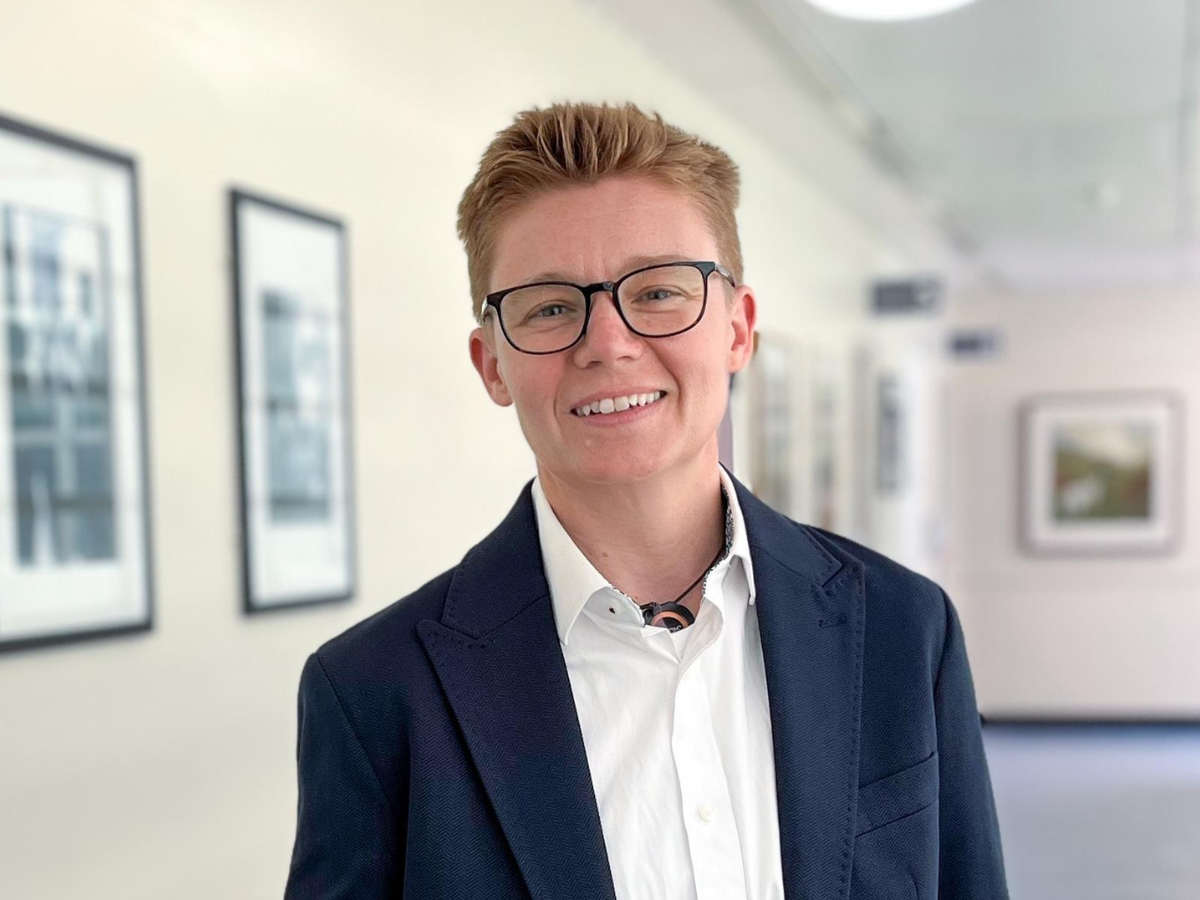
The combination of roles is deliberate. A national lead who remains a practising COO can speak about recovery plans with direct operational authority, knowing not just what the plan says but what it costs to implement, what breaks under pressure, what the emergency department looks like at eleven on a Friday night when the social care package fell through and the ambulances are stacking outside. Emergency medicine is, among all clinical disciplines, the one that most directly reflects the state of the whole system. It receives everything the rest of the NHS cannot contain. Exit block: the condition in which patients ready for a ward bed or home cannot move because those spaces are not available, is not an emergency department problem. It is a hospital problem. A health economy problem. A social care problem. Understanding it requires someone who has sat with it at the point of delivery.
Rowland's team at Homerton received two Outstanding ratings from the Care Quality Commission in emergency medicine; a result that reflects not a single successful inspection but something sustained and repeatable. She has worked across north-east London on ambulance handovers and urgent treatment centres, and contributed directly to the national UEC recovery plan. Her appointment to a national position did not remove her from practice. That choice, by NHS England, says something about what the organisation believes it needs: not leadership that observes operational reality at a distance, but leadership that carries it.
At Camden and Islington NHS Foundation Trust, Graeme Caul's leadership sits within a different tradition entirely. He joined services in Camden in 2010 and has remained, moving through managing director roles for two divisions and into the deputy COO and then COO position. That continuity matters more than it might initially seem. Institutional memory in the NHS is a genuine resource, and one that is being steadily eroded by the rate of leadership movement that now characterises the sector. Trusts change their chief executives with a frequency that would alarm most private-sector boards. COOs follow. The cumulative loss of accumulated knowledge; of what has been tried, what failed and why, which partnerships are genuinely productive and which consume energy without delivering is real, if difficult to measure.
Caul's accountability spans community and mental health services, working alongside the chief medical and nursing officers on operational performance, quality, and delivery. He oversees Trust programmes and contributes to system-level work through the Cavendish Square Group, a London-wide collaboration focused on integration and improvement. The work of integration, between health and social care, between community and secondary services, between the planned and unplanned, is unglamorous by comparison with digital innovation or acute performance recovery. It involves negotiation, relationship maintenance, alignment of incentives that were not designed to align. It is slow. It is often invisible from the outside.
It is also, arguably, where the long-term sustainability of NHS care will be determined.
What connects these four individuals is not a common style or a shared philosophy but a common condition: the experience of holding responsibility for systems that are, in different ways, operating at or beyond their designed capacity. Each of them has developed particular ways of making decisions under sustained pressure, frameworks, habits of attention, ways of distributing accountability into their organisations rather than carrying it all personally. Each operates in a different corner of the NHS, serving different populations, managing different kinds of complexity.
The NHS spent much of the past decade debating structures: which organisations should merge, which tiers should be abolished, what integrated care systems would finally achieve that its predecessors had not. Those debates have produced real organisational change, and the jury on its effects remains genuinely out. What they did not change is the fundamental task of operational leadership: someone, somewhere, has to ensure that the patient in the corridor gets to the bed; that the ambulance outside can hand over and return to the road; that the ward the patient needs is staffed, and clean, and expecting them.
The pressure on that task is not diminishing. Demand is rising in ways that are structural rather than cyclical: ageing populations, higher rates of complex multi-morbidity, growing mental health need among younger age groups that will not ease as those cohorts age. Financial constraint is tightening rather than loosening. The workforce, though growing in absolute numbers, is distributed unevenly and remains fatigued in ways that surveys measure imperfectly
What the best NHS operators seem to share is a quality that is difficult to name precisely but easy to recognise. It is something like calibrated seriousness: a willingness to look at systems as they actually are rather than as they are supposed to be, and to build improvement on that accurate account rather than on optimism.
In the years ahead, that will probably need to be enough. The NHS will not be saved by any single innovation, or any single generation of leaders. It will be sustained, if it is sustained, by people who understand what they are holding together and why, and who return to the work each morning with that understanding intact.
What that asks of them, over time, is a question the institution has not yet fully reckoned with.
To view Distilled Post’s Top 50 NHS COOs in full, click: Top50 NHS COOs



.jpg)
.jpg)