Europe is being reshaped by three once-in-a-century forces at the same time: artificial intelligence, the climate transition and the future of healthcare. Of the three, healthcare may prove the most consequential. It sits at the intersection of ageing populations, workforce shortages, fiscal pressure and accelerating scientific capability. It is also one of the few domains where economic competitiveness, public trust and national resilience collide directly.
That collision is already reshaping Europe’s health technology landscape. Over the past decade, technology has grown from around 4 percent of European GDP to approximately 15 percent today. Health technology is no longer a marginal contributor to that growth. It sits alongside fintech, energy and security as one of its most durable drivers, drawing capital, talent and political attention in equal measure.
The nature of health innovation has changed. A decade ago, much of Europe’s digital health activity centred on consumer-facing apps and incremental digitisation. That phase is receding. Today, health innovation is increasingly built on deep technological infrastructure: advanced compute, large-scale clinical data pipelines, simulation environments and regulated AI deployment frameworks. These are becoming the operating system of modern healthcare rather than optional add-ons.
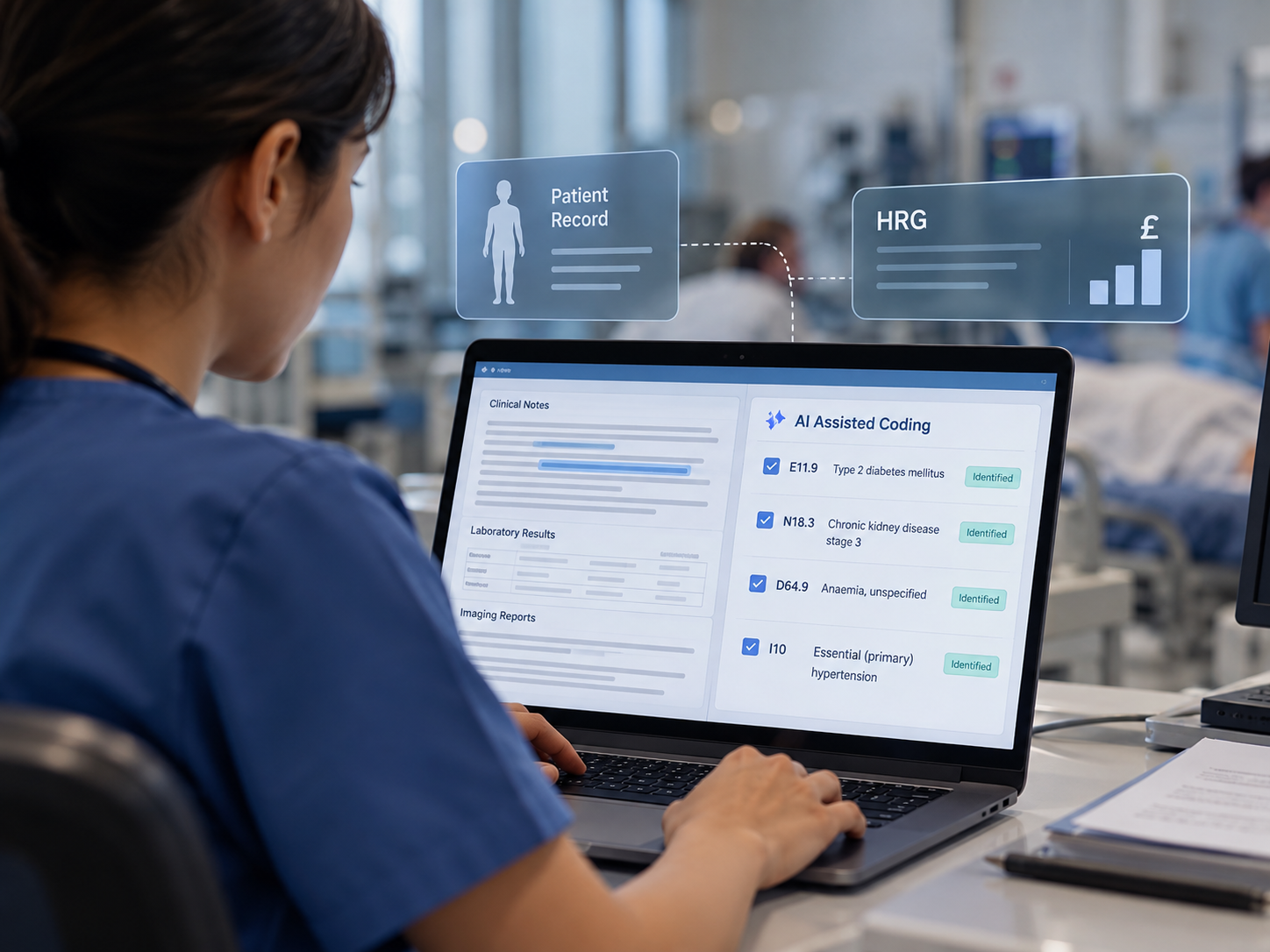
Artificial intelligence illustrates the shift. In Europe, AI is no longer treated as a standalone sector competing for attention. It is an enabling layer embedded across diagnostics, imaging, oncology, genomics and drug discovery. Around 31 percent of all European venture funding in 2025 flowed into AI-driven companies, many operating inside health and life sciences rather than consumer technology. The focus is not automation for its own sake, but compressing timelines, improving clinical decision-making and expanding what overstretched systems can realistically deliver.
This maturity is reflected in the companies now reaching scale. Europe’s health tech ecosystem is producing platforms that function as infrastructure rather than point solutions. Wearables have evolved into longitudinal health data platforms, with companies such as Oura on track for around $2 billion in annual revenue in 2025. Digital care access platforms like Doctolib have embedded themselves into national healthcare workflows, becoming operational dependencies rather than optional tools. In medtech, companies such as CMR Surgical are competing globally in robotic surgery, a field once assumed to be dominated exclusively by US incumbents.
Precision medicine has emerged as one of the clearest proving grounds. AI-enabled oncology platforms are shortening the path from research insight to personalised treatment by analysing complex biological and clinical data at scale. In drug discovery, machine learning is reducing early-stage cost and uncertainty, helping therapies move from hypothesis to trial faster and with higher confidence. These advances are occurring inside regulated environments, under clinical scrutiny, and increasingly at system scale.
The economic foundations are strong, but a structural weakness remains. Europe employs around 4.6 million people in tech, a workforce growing faster than that of the United States. Deep tech now accounts for roughly 36 percent of all European venture capital, signalling a decisive shift away from short-cycle consumer models. Yet when companies reach the growth stage, capital thins out. US startups remain roughly twice as likely as European peers to raise funding rounds above $50 million, particularly in capital-intensive fields such as biotech, medtech and AI-driven clinical platforms.
This gap has predictable consequences. European companies prove the science, then look elsewhere to scale. It is not a failure of innovation or ambition. It is a failure of follow-through. Public sector demand reinforces the challenge. Despite repeated commitments, only around 9 percent of European public procurement spend currently goes to innovation, less than half of the EU’s own 20 percent target. In healthcare, this matters disproportionately. Without predictable procurement pathways, even clinically validated technologies struggle to embed at system level. Innovation stalls not because solutions are unready, but because institutions are unwilling or unable to buy.
This matters because health technology has crossed a strategic threshold. Digital health, biotech and clinical AI now sit alongside energy, defence and climate as pillars of national resilience. Dependence on external platforms for diagnostics, data infrastructure or therapeutic development carries long-term economic and security risk. Europe’s advantage lies in its combination of scientific depth, regulatory discipline and public trust. In an era of scrutiny over how health data is used and how AI is deployed, those attributes are assets, not constraints.
The path forward is clear. If European pension and insurance funds were allocated to innovation at levels comparable to the United States, an estimated $210 billion of additional long-term capital could be unlocked. Greater regulatory unity would reduce friction that still fragments scale-up pathways. Reforming university spin-out structures would help ensure that publicly funded breakthroughs reach patients and markets at global speed.
Health technology is no longer a niche sector or a policy experiment. It is becoming foundational infrastructure for economic growth, system sustainability and population health. The next decade will not be defined by whether Europe can innovate in healthcare, but by whether it is willing to fund, procure and scale the future of health it has already built.


.jpg)

.jpg)