
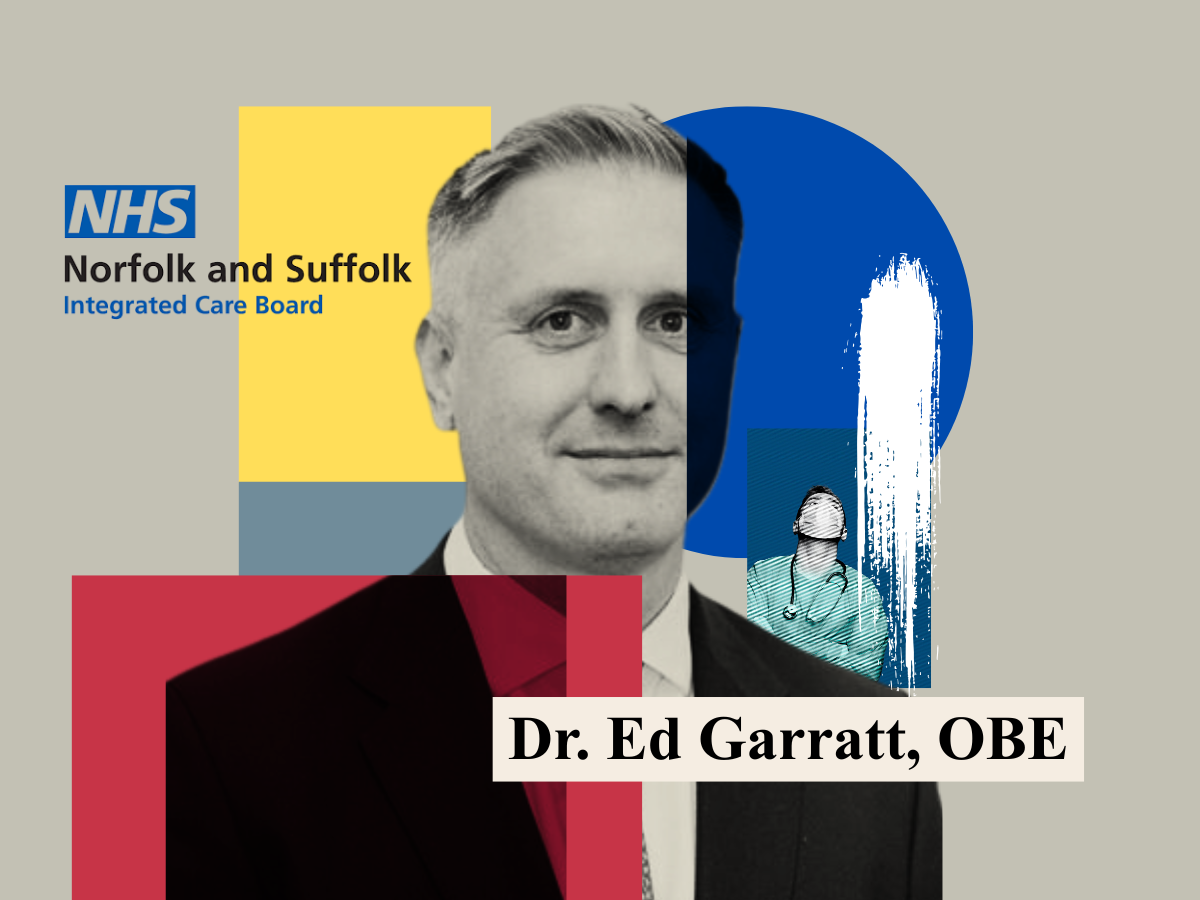
The launch of the merged Norfolk and Suffolk Integrated Care Board on April 1, 2026, under the leadership of Ed Garratt OBE, represents one of the most significant organisational developments within the NHS this year. Bringing together services for approximately 1.7 million people, the new structure creates a system of scale, but also one of considerable complexity.
Garratt’s leadership has been defined by the ability to manage this transition while maintaining a focus on delivery. Achieving a 20 percent reduction in running costs during the merger process reflects a level of operational discipline that is critical in periods of structural change. It ensures that integration is not achieved at the expense of performance.
At the same time, his strategy has emphasised the role of digital infrastructure in enabling system-wide efficiency. By early 2026, more than 1.1 million repeat prescriptions had been processed through robotic process automation. This has created capacity equivalent to approximately 7.75 full-time staff members annually, allowing those teams to redirect their efforts towards direct patient care. Using the Federated Data Platform, the ICB now efficiently manages population health, wait list, and has successfully integrated data around Continuing Care to ensure patients remain well after discharge.
This focus on automation is complemented by a broader push towards digital engagement. Monthly NHS App log-ins have increased by 11.5 percent, indicating a growing shift towards digital channels as a primary interface between patients and the health system. This trend not only improves access, but also reduces administrative burden across services.
Garratt’s approach also incorporates targeted clinical innovation. An AI-supported musculoskeletal pilot has reduced waiting times for back pain treatment by 55 percent, freeing up significant clinical capacity and improving patient experience. This demonstrates how digital tools, when applied effectively, can deliver measurable outcomes within specific pathways.
What distinguishes Garratt’s leadership is the ability to operate at both structural and operational levels simultaneously. The merger itself is a complex organisational achievement, requiring coordination across multiple entities. However, its success ultimately depends on whether it translates into improved outcomes for patients and staff.
Early indicators suggest that this is beginning to occur. Automation, digital engagement and pathway redesign are being implemented as part of a coordinated strategy, rather than isolated initiatives. This creates a system in which improvements reinforce one another, amplifying their overall impact.
In the context of an NHS increasingly oriented towards integrated care and data, Norfolk and Suffolk provides an early example of what such systems can achieve. Under Garratt, integration is not simply a matter of governance, but a practical framework for delivering care more efficiently and effectively.
As the model continues to evolve, the challenge will be to sustain this momentum while navigating the ongoing pressures facing the health service. Garratt’s leadership suggests that, with the right balance of discipline and innovation, large-scale transformation can be translated into tangible improvements at the point of care.



.png)
.png)
.jpg)