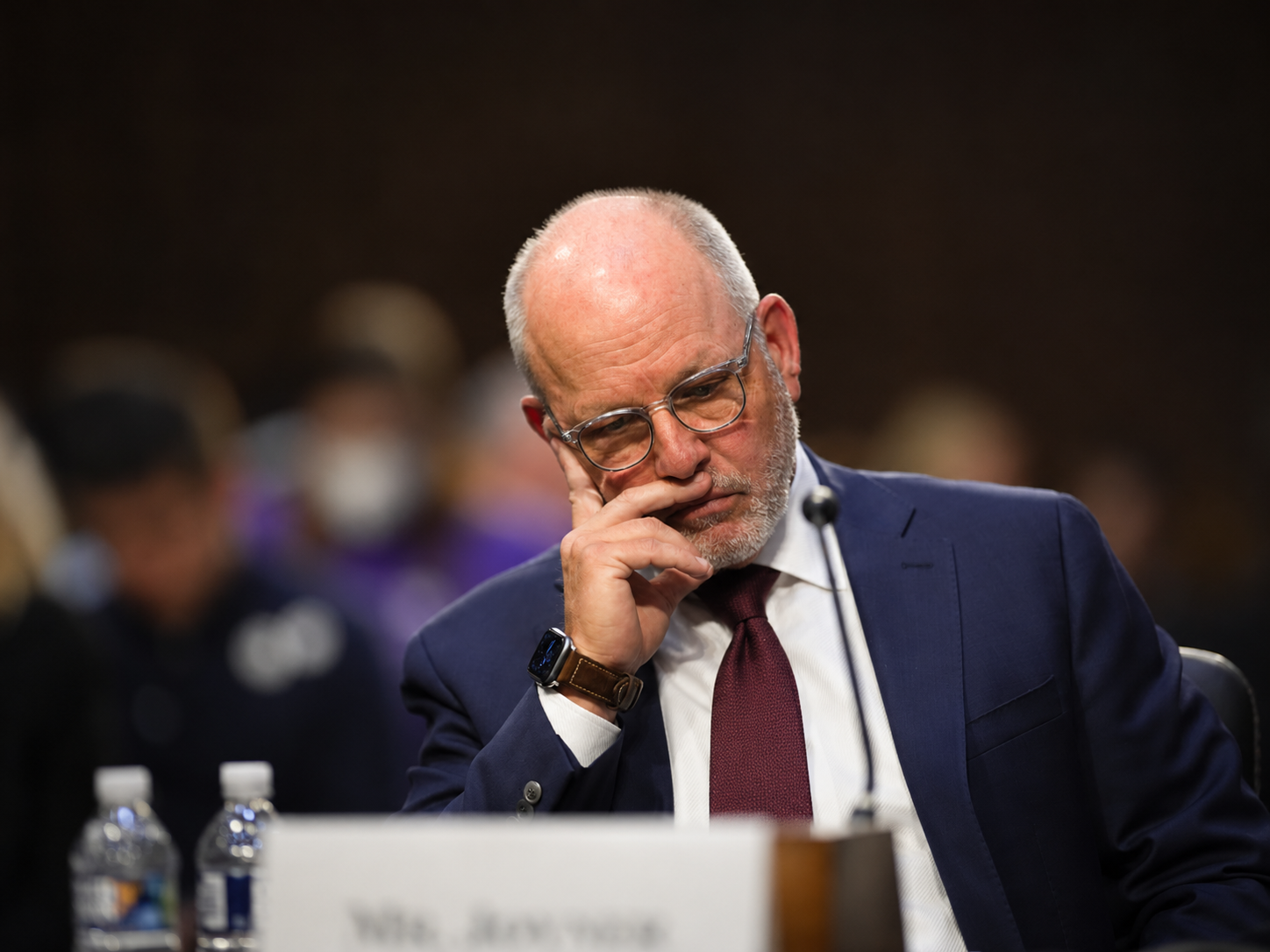
David Joyner, Chairman and Chief Executive Officer of CVS Health as of 4th November 2026
When CVS Health told investors on 4 November that it would divide itself in two, its share price fell by more than 12 per cent before the market closed. The company had paid roughly $70 billion for the insurer Aetna in 2018 to demonstrate that health insurance, pharmacy benefits and the neighbourhood drugstore belonged under one roof. Eight years later, its board has concluded that they belong apart. By the first half of 2028, the 9,000 pharmacies, along with their clinics and mail-order service, will become a listed company of their own. The insurer Aetna and the Caremark benefits manager will stay under the CVS Health name and David Joyner, together with a primary care and home visit arm.
The immediate cause is political. Three groups, CVS Health, UnitedHealth and Cigna, handle around four-fifths of American pharmacy benefits, and that concentration has drawn hostility from both parties. Legislators in states such as Arkansas and Tennessee have moved to stop one entity from running both a benefits manager and retail pharmacies, and Congress has entertained bills aimed at the same target. A company that once defended integration as the source of efficiency now treats it as a regulatory liability. Investors had their own grievance, since the combined structure missed performance targets and the shares slid sharply through late 2024.
None of this describes the NHS, and it would be a mistake to stretch the comparison. England has no benefit managers collecting rebates, no insurers deciding which treatments a patient may receive, and no commercial gatekeeper between a prescription and its payer. A single national purchaser holds bargaining power that American payers can only approximate through consolidation. The relevance to Britain is therefore indirect, and it is greatest where the NHS meets commercial actors at its edges.
Start with the high street. Government policy for England depends on moving care out of hospitals, and community pharmacy is cast as a front door for minor illness, contraception, blood pressure checks and vaccination. Pharmacy First, launched in early 2024, gave that ambition a national form. Yet the sector asked to absorb this work has endured years of closures and persistent complaints about dispensing margins. The CVS decision is instructive because retail is widely regarded as the weaker half of the group. For years the insurance and benefits businesses cushioned the shop floor. Cut loose, the pharmacy company must justify its estate through dispensing and clinic income alone. Ministers and commissioners asking pharmacies to carry more clinical work should read that as a warning about unit economics. An access strategy is only as dependable as the balance sheet beneath it, and Boots, the largest chain in Britain, belongs to an American parent that has had upheaval of its own.
Medicines pricing offers a second line of influence. Pharmacy benefit managers sit at the centre of the American rebate system, which has long rewarded high list prices. If federal and state action loosens their grip, manufacturers will see the economics of US launches change, and they have already pressed other wealthy countries to pay more. The UK moved in that direction last year, agreeing a higher threshold for new medicines and a gentler rebate scheme in a deal tied to American tariff relief. How much of that arrangement survives a reshaped US market is uncertain, and the effect will not be visible before 2028. Still, the government's life sciences ambitions depend on companies placing Britain early in their launch sequences, and that choice is made in boardrooms watching the American price settle. NHS England and the Department of Health and Social Care should expect the valuation arguments to reopen.
The third line concerns who owns care itself. The retained CVS Health business will include the senior clinics of Oak Street Health and the home visit provider Signify Health, so a payer that also delivers care will survive the breakup. American regulators appear to tolerate that model for now, but the debate over conflicts of interest has not ended. English readers will recall the controversy when a US insurer held GP contracts in London, and the unease it provoked among patients and staff. As integrated care boards pursue neighbourhood health models and commission from larger providers, they will meet proposals from organisations that combine care delivery with finance. The Provider Selection Regime gives commissioners latitude, and the CVS episode supplies a reference point for using it. Where margin accumulates and who holds the patient data are fair questions to put to any partner, however polished its pitch.
The NHS has long possessed the connected structure that American conglomerates tried to assemble by acquisition, and it operates under public accountability and a single funding stream. That is an asset, and procurement decisions should protect it.
CVS has judged that scale without a visible public benefit has become a liability, and that legislators and investors will no longer extend the benefit of the doubt. British health leaders face a quieter version of the same test. Commercial partners will be needed to deliver community capacity, new medicines and digital tools, and the NHS will keep public confidence only if it can explain, in plain terms, what each arrangement gives patients. The lesson from Woonsocket is that integration gets judged by its results, and the judgement arrives eventually.