
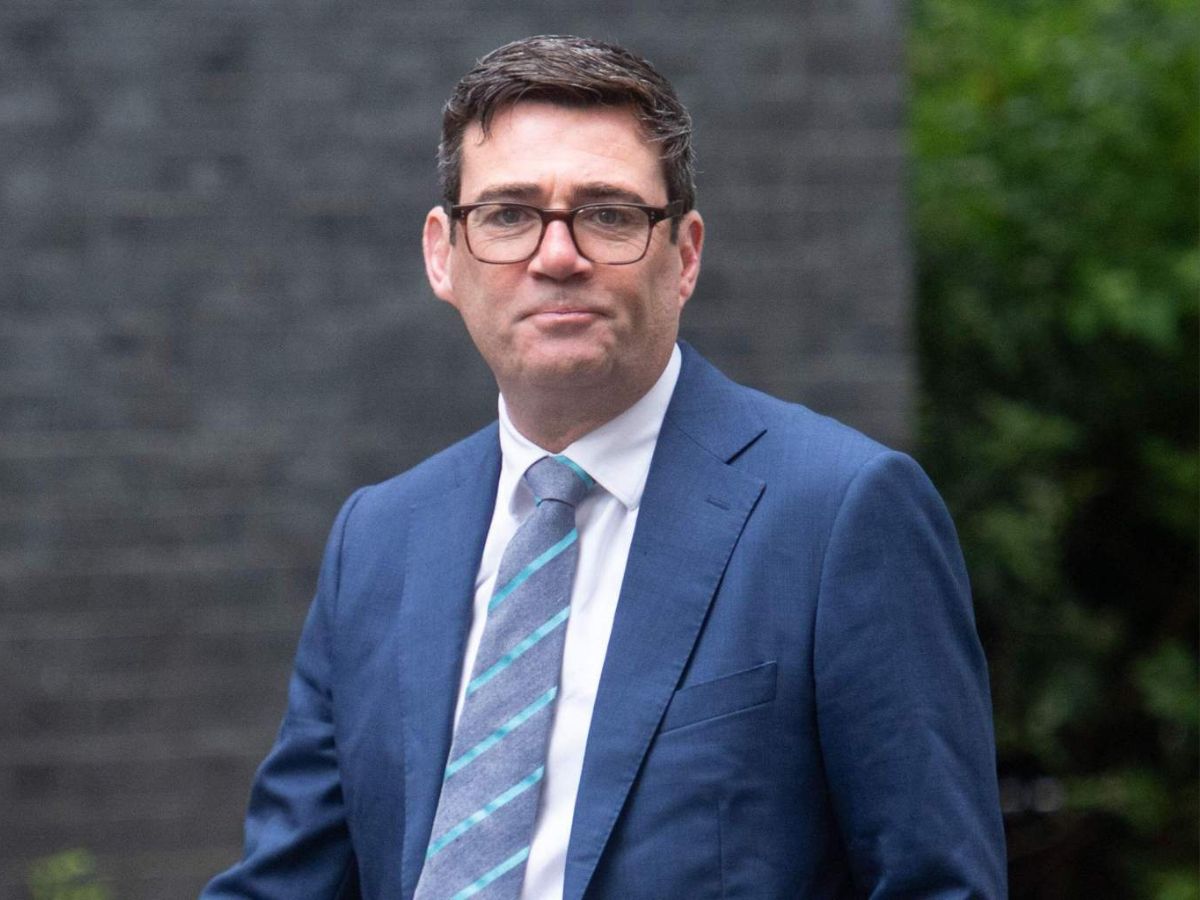
Andy Burnham, the former Greater Manchester mayor and prospective Labour MP widely seen as a future leadership contender, has declared that he would overhaul England's adult social care system within his first year in office if he became prime minister. The pledge puts him at odds with the Starmer government's considerably more cautious approach, which has opted for a phased review process stretching well into the next decade. Whether Burnham's intervention reshapes Labour's internal debate or remains a political pressure point, the scale of the crisis he is describing is not in dispute.
Requests for publicly funded social care reached two million in 2024–25, up from 1.8 million in 2015–16. One of the more telling changes within that figure is where demand is coming from. Applications from working-age adults have risen by 31 per cent, reflecting the growing burden of conditions such as acquired brain injuries, long-term neurological disorders, and complex mental health needs. These are conditions with direct roots in the health system: people leaving NHS care who require ongoing support that the health service is not equipped, or funded, to provide. The boundary between health and social care has always been contested, but as NHS discharge pressures mount, that boundary is where the system most visibly breaks.
Social care sits outside the NHS entirely. It is administered and means-tested by local councils, not by central government, and individuals with assets above the threshold are required to fund their own care. That frequently means depleting savings or selling family homes. Councils, meanwhile, carry a statutory duty to provide care regardless of what central government allocates to them, and a decade of funding reductions has left many unable to balance their budgets without cutting other services.
The private sector has expanded to fill the gap left by collapsing council provision. Because local authorities can only afford to commission care at relatively low baseline rates, a pronounced two-tier market has taken hold. Self-funding individuals are routinely charged higher rates, effectively subsidising state-funded residents in the same facilities. The imbalance distorts both pricing and quality across the sector. Underpinning much of this is the largely invisible contribution of unpaid family carers, whose work has been valued at £184 billion annually. Without that informal labour, the system would require considerably more formal provision than currently exists.
The government's formal response is the Casey Commission, an independent review led by the cross-bench peer Lady Casey tasked with establishing a National Care Service. The structure of that review has drawn sustained criticism. An initial report is due in 2026, a full review in 2028, and implementation is not expected until 2036. Charities and local authority directors have argued that a decade-long timeline treats an immediate collapse as a manageable long-term problem. Lady Casey herself, in a March 2026 assessment, described the current system as held together by "add-ons, workarounds, sticking plasters and glue," and warned of an unavoidable demographic reckoning as the population ages.
The government currently spends £32 billion annually on adult social care via local authorities. Councils are already overspending that allocation and cutting municipal services to compensate. A fair pay agreement for care workers has been introduced to address a vacancy figure exceeding 100,000 posts, backed by £500 million in additional funding. The Local Government Association has been direct in its assessment: that figure is insufficient and will place further pressure on council budgets that have no remaining flexibility.
Full structural reform, whether modelled on Scotland's free personal care system or on a lifetime spending cap of the kind recommended by previous reviews, is estimated to require up to £36 billion a year by 2030. That figure would almost certainly require increases to income tax or National Insurance, a conversation the government has been reluctant to open. What Burnham's intervention does, whatever its practical prospects, is force that conversation back into view. The question is not whether the system needs fundamental change. It is whether anyone in government is prepared to say so and legislate accordingly before the pressures become unmanageable.



.jpg)
.jpg)